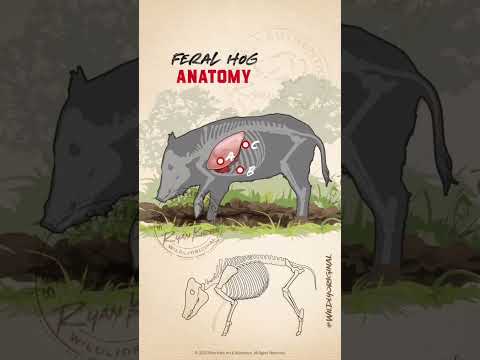
So, picture this: you’re sitting at a barbecue, munching on some ribs, and you can’t help but wonder, just how is it that pigs are so darn… piggy? Their anatomy and physiology are actually way cooler than you’d think.
I mean, seriously! Did you know that pigs have near-human-like organs? Yeah, it’s wild. They’ve got all these systems working together in such an efficient way. Kinda makes you think twice about that bacon, huh?
But it’s not just about what they taste like—it’s about how they’re made. From their oh-so-funky snouts to those surprising digestive systems, hogs are a fascinating mix of biology and evolution.
So let’s dive into the intriguing world of hog anatomy and physiology together! You might learn something new; who knows?
Exploring Pig Anatomy: Insights into Biological Functions and Comparative Science
So, let’s talk about pigs! Yeah, those cute pink creatures rolling around in the mud. But there’s so much more going on beneath that snout! Pigs are fascinating animals not just because of their adorable appearances but also due to their incredibly complex anatomy. Seriously, if you were to peek inside a pig, you’d find some amazing structures that tell us a lot about biology and even human health.
First off, let’s check out the digestive system. Pigs are omnivores, which means they eat both plants and meat. Their stomach is divided into different sections—just like ours! The food passes through the stomach into the intestines for nutrient absorption. You know what’s cool? They have a similar digestive process to humans. This makes pigs super valuable in research as we try to understand human digestion and nutrition.
Now, switching gears a bit—let’s talk about the heart. A pig’s heart is really similar in size and structure to a human heart. This similarity has made pigs great models for studying cardiovascular diseases. For instance, scientists often use pig hearts in experiments linked to heart transplants. Just think about it, next time you see bacon on your plate!
The respiratory system? Oh man! Pigs have a pretty efficient way of breathing. Their lungs are spongy and well-structured, allowing them to take in oxygen effectively. And when you watch them breathing, it almost looks like an art form—those little bellies expanding rhythmically! Efficient lungs help them stay active and energetic.
And then there are the senses! Pigs have an impressive sense of smell—like crazy good! They have more odor receptors than dogs do. Seriously! This is why they’re often used for sniffing out truffles in forests; they can locate these gourmet mushrooms buried underground without breaking a sweat.
Comparative anatomy is another exciting angle when looking at pigs. Researchers often compare pig anatomy with other animals (like cows or sheep) to understand evolutionary relationships and functions better. This helps scientists learn which traits have evolved over time and which ones are conserved across species.
You might’ve heard about how students study anatomy using pig dissections in schools or colleges; there’s a reason for that too! The similarities between pig organs and human organs provide students with hands-on experience while learning about anatomy without using human cadavers.
A little anecdote: I once visited a farm where I watched some kids learn about pigs by actually observing their movements and behaviors up close—it was awesome! The kids were fascinated by how intelligent these animals really are; honestly, they were soaking up knowledge faster than sponges do!
In summary, exploring pig anatomy opens up doors not only into understanding these remarkable creatures but also gives us insights into various biological functions relevant to humans too. So next time someone brings up hogs at dinner or you’re flipping through channels on TV seeing those cute hogs doing their thing—you’ll know there’s way more than meets the eye!
Exploring the Unique Digestive System of Pigs: Insights from Animal Science
Pigs are often underestimated when it comes to their digestive system. Seriously, if you take a closer look, it’s actually super fascinating! Their digestive system is quite unique and plays a big role in how they process food.
First off, let’s talk about **why pigs are so interesting**. Pigs are omnivores, which means they can eat just about anything. They’re like the garbage disposals of the animal kingdom! This diverse diet impacts their digestive system a lot.
Now, when food enters a pig’s mouth, the first thing that happens is chewing. Pigs have strong teeth that help break down food into smaller pieces. This is important because smaller pieces are easier to digest. You follow me? After chewing, the food mixes with saliva and then heads down the esophagus.
Once it hits the stomach, there’s more going on than you might think. Pigs have a single-chambered stomach which is quite different from animals like cows that have multiple chambers for fermentation. In pigs’ stomachs, **enzymes and acids** work hard to break down proteins and kill off any pesky bacteria.
After the stomach stage, partially digested food moves into the small intestine. This bit is where most digestion and nutrient absorption happen! Here’s what’s cool: pigs can absorb nutrients really efficiently due to special structures called villi lining their intestines—these little guys increase surface area for absorption.
Then we have the **large intestine**, where things start getting interesting again. Pigs don’t ferment food like cows do; instead, they absorb water and electrolytes here before everything moves on out of their systems.
You might wonder why this matters in farming or animal science? Well, understanding pig digestion helps farmers figure out better feeding strategies. If you can provide nutrients that match how pigs digest food best, you’ll see healthier animals and maybe even better meat quality!
Also, did you know that studying pigs also gives insights into human health? Pigs share a lot of genetic similarities with us humans when it comes to physiology—like skin and organ structure—which makes them perfect models for research!
So yeah, those cute little piggies aren’t just rolling around in mud; they’ve got this incredible digestive system under all that skin! Their unique adaptations help them thrive in various environments while providing valuable lessons for both agriculture and medicine. Isn’t that something?
Exploring the Unique Anatomical Features of Swine: A Scientific Perspective
Swine, or pigs as we usually call them, are not just cute and cuddly creatures. They have some really unique anatomical features that help them thrive in various environments. Let’s break it down a bit!
First off, you might notice that pigs have this adorable snout. But did you know their snouts are actually super sensitive? Pigs rely on their sense of smell a lot. In fact, they have around 1,100 olfactory receptor genes! That’s way more than we do—humans only have about 400. This means they can sniff out food and even detect certain scents from miles away.
Now, let’s chat about their skin. Pigs have skin that’s surprisingly thick, which protects them from injuries and harsh weather. Their skin also has very few sweat glands, so they can get pretty hot during the summer months. You’ll often see pigs rolling in mud or water to cool off and protect themselves from sunburn! Isn’t that clever?
Their feet are another fascinating feature! Pigs have what we call cloven hooves. It means their feet are split into two parts. This structure gives them better stability when walking on uneven ground, which is something to think about if you’ve ever seen one trotting around in a muddy field!
Pigs are omnivores, and their teeth reflect that diet quite well. They possess a mix of sharp canine teeth for tearing food and flat molars for grinding it down. It’s like having the best of both worlds when it comes to eating!
If you look at their digestive system, you’ll discover it’s pretty efficient too! Pigs have a simple stomach—just like ours—but what’s cool is how they process food quickly to extract nutrients effectively.
- Stomach: It works efficiently to break down food.
- Liver: Plays an essential role in metabolic processes.
- Cecum: Acts as a fermentation chamber for further digestion.
An interesting aspect of hog anatomy is their social behavior connected to anatomy. Pigs are known for being quite intelligent and social animals! Their brain structure allows them not only to learn commands but also to develop strong bonds with other pigs.
You know how we sometimes relate personality traits with physical features? Well, pigs often display varied personalities based on their anatomical health too! For instance, healthy pigs tend to be active and curious, while those with anatomical issues might be less so.
If you ever get the chance to see some pigs up close—and maybe give them a scratch behind the ear—just think about all these amazing adaptations! The next time someone mentions swine anatomy, you’ll be ready to share some fascinating facts that really do highlight how these creatures live their best lives!
So, you know how pigs are often seen as these dirty animals rolling around in mud? Well, there’s a whole lot more going on with them under the surface that’s actually pretty fascinating. Seriously, the anatomy and physiology of hogs are like a hidden treasure trove of quirky surprises.
For starters, let’s talk about their stomachs. Pigs have a unique digestive system that actually has the capacity to break down stuff we can’t—a bit like their own personal composting machines! They’ve got not one, not two, but four compartments in their stomachs which helps them process all sorts of food efficiently. Imagine being able to chow down on almost everything from veggies to grains and turning that into energy—what a superpower!
And then there’s their skin. Pigs don’t really sweat much which makes total sense considering how they cool off by wallowing in mud. That mud isn’t just for fun; it acts like sunscreen and keeps them from overheating. It’s like they’ve got their own natural spa treatment going on! I remember this one time at the fair when I saw all these piglets playing in the mud, and it was adorable but also kind of brilliant when you think about it.
Speaking of brilliance, did you know pigs have an incredible sense of smell? Their noses are super sensitive—better than dogs even! This is partly why they’re used in truffle hunting; they can sniff out those gourmet fungi buried underground better than anyone else. Such an unexpected skill from a creature people often overlook!
Oh, and let’s not forget their brains. Pigs are pretty smart! They can learn tricks faster than some dogs and show emotions too—like joy or even sadness. I mean, who knew pigs could be such deep thinkers?
But here’s the kicker: while many animals have specialized features adapted to specific habitats or lifestyles, pigs seem to be these versatile creatures capable of thriving in various environments—from farms to forests.
It’s funny how we sometimes box animals into certain stereotypes without understanding the remarkable biology behind them. Exploring hog anatomy and physiology opens up a world you wouldn’t typically think about when looking at these fascinating creatures lounging around in their pens or splashing about in muddy waters.
So next time you come across a pig—or a plate piled high with pork—take a moment to appreciate all that goes on beneath the surface. There’s really so much more than meets the eye!