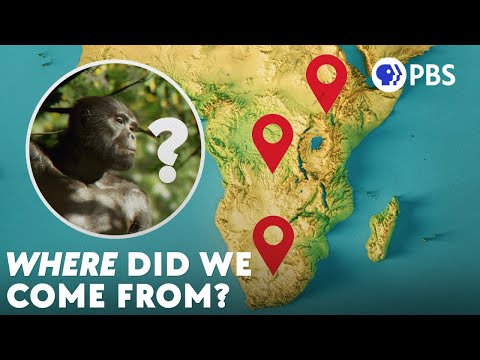
So, picture this: you’re at a party, and someone brings up human origins. Suddenly, everyone’s eyes glaze over, right? But hold on! It’s actually pretty cool stuff.
Think about it! We all started from some tiny cells in the primordial goo ages ago. Wild, huh? Just a couple of lucky particles bumbled into each other and boom—here we are!
But the tale is way more complex than that. We’ve got fossils popping up like surprise guests at a family reunion, each with stories to tell. And honestly, who doesn’t love a good story about where we came from?
So let’s take a stroll down this fascinating path together. You ready to dig into the science behind how we went from ape-like ancestors to binge-watching on the couch? Because trust me, it’s going to be an interesting ride!
Exploring Human Origins: Insights from the Science of Anthropology and Evolutionary Biology
Exploring human origins is like peeling back the layers of an onion, you know? Each layer reveals something new and fascinating about where we came from. The journey into our past is led by two main scientific fields: anthropology and evolutionary biology. These disciplines work together to help us understand the complex story of how we evolved as modern humans.
Anatomy Tells Our Story
Anthropologists study our physical traits and behaviors, digging into fossils to track changes over millions of years. For instance, when examining hominid skulls, they look at features like jaw size and brain capacity. Think about it: bigger brains typically indicate greater cognitive abilities. A famous example is *Australopithecus afarensis*, like the famous “Lucy,” who lived around 3.2 million years ago. Her blend of ape-like and human-like features gives us hints about how early humans might have walked on two legs while still having some traits for climbing trees.
Evolution Is a Gradual Process
In evolutionary biology, scientists explore how species change over time through natural selection, which basically means that those best suited to their environment survive and reproduce. Here’s a neat thought: consider the difference between modern humans (*Homo sapiens*) and our closest extinct relatives like *Neanderthals*. Both groups coexisted for thousands of years in Europe and Asia, but eventually, *Homo sapiens* thrived while Neanderthals did not.
So why did that happen? Some theories suggest that our ancestors had better tools or social structures. But it’s also possible that climate change and competition played a role. You see, it’s not just one factor but an entire web of elements influencing survival.
Genetics Paints a Broader Picture
Then there’s genetics—the icing on the cake! Recent advances in DNA technology allow scientists to explore genetic material from ancient bones. This has helped us uncover surprising insights about interbreeding among species. For example, we now know that many people outside Africa carry some *Neanderthal* DNA! This adds depth to understanding not just where we originated from but also how interconnected we are with other hominins.
Additionally, some genetic variations are linked to adaptations that helped us survive in different environments—like skin color variations related to sunlight exposure. Isn’t it wild how much your genes can tell about where you fit in the grand story?
Cultural Development
Alongside physical evolution came cultural evolution—our ability to create tools, art, language, and social structures! Anthropologists study artifacts like cave paintings or early tools made from stone or bone to piece together aspects of life for early humans.
Imagine standing before a cave wall covered in ancient drawings depicting hunts or rituals; they give you chills! They not only show artistic expression but also hint at social cooperation among groups—essential for survival in harsh environments.
The Big Picture
So what does this all mean? Well, exploring human origins is a never-ending adventure filled with astonishing discoveries and plenty of surprises! It reminds us how interconnected all life is on Earth—a tapestry woven through time with threads from different eras blending together.
Even though there are gaps in our knowledge—like missing fossils or incomplete data—the journey continues as new finds keep popping up every year! So next time you think about where you come from, remember: you’re part of an incredible story shaped by countless generations before you—an ever-evolving masterpiece!
Exploring Hominini: Insights into Human Evolution and Ancestry in Modern Science
So, let’s talk about Hominini, shall we? This is the scientific tribe that includes not just us, Homo sapiens, but also our closest extinct relatives. We’re talking about the likes of Neanderthals and Denisovans. It’s like a family reunion from way back when!
When you think about human evolution, it’s kind of mind-blowing. Imagine this: over millions of years, our ancestors went from swinging in trees to standing upright and using tools. That journey involved some really interesting adaptations. For instance, as we evolved, our brains got larger, which helped us develop language and complex societies.
- Fossil Evidence: One critical piece in understanding Hominini is fossil evidence. Bones found in Africa show changes in skull shape and size over time. Think about how your older sibling has different features than you; fossils give us clues about how earlier humans looked.
- Genetic Studies: Nowadays, scientists use DNA to trace back our ancestry—like a genetic detective story! They’ve discovered that modern humans share a small percentage of DNA with Neanderthals. This means at some point we were living alongside them—not just out in the wild dodging dinosaurs!
- Cultural Evolution: The shift from simple tool-making to art and language reflects our species’ unique cognitive abilities. Remember cave paintings? Those are evidence of early humans expressing themselves creatively—like an ancient version of social media!
The journey isn’t all rosy though. For example, not every branch of the family tree made it. Neanderthals thrived for thousands of years but eventually disappeared around 40,000 years ago for reasons still debated by scientists today—climate change? Competition with modern humans?
You know what else is cool? Studies often uncover new species or subspecies all the time! Just when you think we have it all figured out, someone discovers a jawbone or tooth that shifts everything we thought we knew.
The ongoing exploration into Hominini has sparked much debate among researchers about what makes us uniquely human. Is it our capacity for abstract thought? Our use of complex language? Or maybe it’s just having a good laugh with friends around a campfire?
So yeah, exploring Hominini, even today with advanced technology and fresh discoveries, offers incredible insights into who we are as humans and where we come from. It’s an exciting journey filled with twists and turns that keeps evolving—just like us!
Exploring Human Origins: A Comprehensive PDF Guide to the Scientific Journey of Our Ancestry
Sure! Let’s talk about human origins and how scientists piece together the story of where we came from. It’s like a giant puzzle, and every new discovery adds another piece to the picture.
The story starts millions of years ago. Our journey isn’t just about us—it’s about the whole family tree that includes our ancient relatives and even some critters that aren’t around anymore. So, basically, we share a common ancestor with chimpanzees and gorillas. Isn’t that mind-blowing?
The Timeline of Our Ancestry
So here’s how things break down in rough terms:
- Africa is ground zero for humanity. Around 200,000 years ago, modern humans (Homo sapiens) first appeared there.
- Before us, Neanderthals walked the Earth. They lived in Europe and Asia until about 40,000 years ago.
- Earlier relatives, like Homo erectus, roamed around from about 1.9 million to as recently as 110,000 years ago.
- Then there are australopithecines, like “Lucy.” She lived around 3.2 million years ago in Africa and is one of our oldest relatives.
Now imagine being a kid back then! Picture Lucy wandering through the tall grasses of ancient Africa, learning to walk on two legs while avoiding predators. That was pretty brave!
The Tools We Use to Trace History
Scientists rely on several methods to uncover our past:
- Paleontology: This is where they study fossils—those ancient bones tell tales! The way these bones look helps determine how different species are related.
- Dna Analysis: With modern technology, we can analyze DNA from fossils or even living people! It’s like having a genetic time machine that shows connections across generations.
- Cultural Artifacts: Tools and art pieces found at dig sites give clues about how early humans lived and what they valued.
Imagine finding a stone tool left behind by an ancestor—it’s like holding their hand through time!
The Migration Story
Around 60,000 years ago or so, some groups of Homo sapiens began to leave Africa. They traveled across continents, facing loads of challenges along the way:
- Migrating Outwards: These early travelers reached places like Asia, Australia, and eventually Europe.
- Cultural Exchange: As they moved around and interacted with other hominins (like Neanderthals), they exchanged ideas—and genes!
- The Ice Age: They dealt with harsh climates; think woolly mammoths roaming about!
Isn’t it fascinating? Each step they took set the stage for where we are now.
The Importance of Understanding Human Origins
Looking into our ancestry helps us understand not just who we are but also why we act the way we do today:
- Cultural Identity: Knowing our roots fosters connection among diverse groups today.
- Evolving Traits:This reveals why certain traits became prevalent—like bipedalism or brain size—for survival.
- Coping with Change:If we see how our ancestors adapted over time, it can inspire us to deal with challenges today.
Just think about it—understanding your family history brings you closer to your identity.
In short, exploring human origins isn’t just science; it’s storytelling! You’re piecing together this magnificent saga that connects us all as humanity traverses through time. Each discovery adds depth not only to our history but also gives insights into who we might become next—you feel me?
You know, thinking about where we come from is like staring into a cosmic mirror. It’s pretty mind-boggling to consider how our journey as humans—our roots, our evolution—has unfolded over millions of years. When you dig into the science behind it, it feels like you’re unlocking a massive family album filled with ancient relatives.
I remember a time when I stumbled across some old fossils in a dusty museum. They were these tiny fragments of bone—like pieces of a puzzle that seemed so far removed from our everyday lives. But as I stood there, it hit me: each fragment told a story of survival, adaptation, and connection. These weren’t just relics; they were my ancestors’ keepsakes.
So here’s the thing: tracing our origins isn’t just about where we came from; it’s about understanding what makes us human. The research encompasses everything—archaeology, genetics, even anthropology. Scientists have been piecing together clues for ages now, like detectives on the trail of an age-old mystery. You’ve got the Neanderthals and Denisovans among us too! Imagine them braving the harsh climates while we’re struggling to find matching socks on chilly mornings!
And let’s talk about DNA for a sec. I mean wow! Our genetic code is kind of like an ancient recipe book that tells us exactly what we are made of—and more importantly, who we share bits and pieces with across time and geography. Isn’t it wild to think that just by studying our genes, scientists are making connections between folks living in Africa today and those who roamed Europe tens of thousands of years ago?
But here’s the kicker: reflecting on this journey isn’t solely about science; it’s also deeply personal. Every little discovery nudges us to examine what it means to be part of this vast tapestry called humanity—our shared experiences and challenges.
You see? The saga of human origins is not just written in textbooks but also embedded in every conversation we have, every culture we embrace, and every dream we chase together as one species finding its way through time. It’s this beautiful mix of science and storytelling that keeps me fascinated—it’s like peeling back layers to reveal the beating heart of humanity itself!