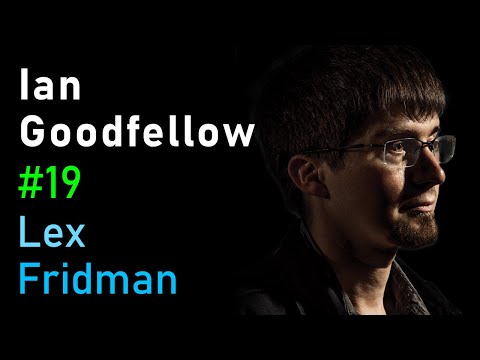
You know, there’s this hilarious moment in tech where machines started actually getting pretty smart. Like, one minute we’re clueless about AI, and the next, we’re watching robots play chess and beat grandmasters. Crazy, huh?
Then enters Ian Goodfellow. This guy is a rockstar in the AI world. Seriously! If you’ve ever wondered how your phone can recognize your face or how Netflix suggests that perfect movie for you, Ian’s work plays a huge role in that.
He came up with this thing called Generative Adversarial Networks, or GANs for short. Sounds fancy, right? But it basically means creating new images or content that feels real—like magic!
So let’s chat about what makes his contributions so special. You’ll see why he’s a big deal in machine learning and what it all means for us regular folks. Buckle up!
Ian Goodfellow’s Pioneering Contributions to Artificial Intelligence and Science
So, let’s talk about Ian Goodfellow. If you’ve been following the world of artificial intelligence, you might have heard his name pop up quite a bit. This guy isn’t just any researcher; he’s like a rockstar in the field of AI and machine learning!
One of his biggest achievements is the invention of Generative Adversarial Networks (GANs). Okay, so what are GANs? Imagine two AIs playing a game against each other. One tries to create something new—like fake images—while the other tries to figure out if those images are real or not. This back-and-forth creates some seriously impressive outputs. Like, you can generate images that look almost as real as a photograph! It’s wild.
- The concept behind GANs: Basically, one network generates and the other discriminates. They improve each other.
- Applications: From creating art to making synthetic data for training other models, GANs are everywhere!
You know, there was even this moment when Goodfellow published his paper on GANs in 2014. It blew up! Researchers everywhere started experimenting with them. You could feel the buzz in academic circles—like, “Have you tried using GANs yet?” It made some people’s heads spin!
Another cool point about Goodfellow is how he’s always thought about ethical considerations in AI. He understands that it isn’t just about building smart machines; it’s also about building them responsibly.The tech can be used for good or bad, and he wants to make sure it leans toward good.
- AI ethics: Goodfellow often emphasizes the importance of ensuring that AI systems are safe and fair.
- Cautionary voices: He encourages developers to think critically about their work’s impact on society.
I remember reading an interview where he talked about how AI can mimic human behavior but also reflect our biases! That really struck me because it shows how much responsibility creators have—to make sure their creations don’t perpetuate harmful stereotypes or discrimination.
And speaking of education, Goodfellow co-authored one of the most popular textbooks on deep learning—“Deep Learning.” If you’re looking to dive into this field, chances are you’ll come across this book sooner rather than later! It covers everything from basic concepts to more advanced topics, helping to shape future generations of AI researchers.
- The textbook: It’s like a comprehensive guide for anyone interested in deep learning technologies.
- Cultivating talent: His contributions extend beyond research; he plays a big role in teaching others!
You might wonder what’s next for someone like Ian Goodfellow after all these contributions. Well, he continues to push boundaries by working on advanced topics like reinforcement learning, which is all about training AI through rewards and penalties—kind of like training a puppy (minus the cute puppy eyes).
The bottom line? Ian Goodfellow has made some monumental strides in AI that have fundamentally changed how we interact with technology today—and honestly, that’s pretty exciting stuff! More than anything else, it’s inspiring to see someone using their genius not just for innovation but also with a moral compass guiding them along the way.
Exploring the Pioneers: Who is Considered the Father of AI and Machine Learning in Science?
So, you’ve probably heard a lot about artificial intelligence and all that jazz, right? The thing is, the world of AI has some serious pioneers who kicked off this whole journey. One name that pops up more often than a cat meme on the internet is Ian Goodfellow. But what makes him so special, and why do people even call him a big deal in AI?
Who is Ian Goodfellow? Well, he’s a brilliant researcher who made some groundbreaking contributions to machine learning. He’s not just any researcher; he’s like the rockstar of deep learning! You see, he came up with something called Generative Adversarial Networks (GANs) back in 2014. Think of GANs as two neural networks playing tug-of-war. One tries to create fake data while the other judges whether it’s real or not. This back-and-forth leads to really convincing images or sounds—like super realistic photos that don’t exist!
And what’s cool about Ian is that he started this super exciting field of GANs when he was still pretty young—a PhD student! Imagine being in your twenties and changing how computers learn. That’s seriously inspiring.
Now let’s talk about why people consider him one of the fathers of AI. Here are some key points:
- Innovation: His work has opened the door to many new applications—from art generation to realistic simulations for training self-driving cars.
- Impact: GANs have influenced tons of research since their introduction, making them essential in today’s AI landscape.
- Accessibility: Ian also really believes in sharing knowledge. He co-authored “Deep Learning,” a textbook that’s like the bible for those diving into this field.
Now, if we go back in time a bit, there are others who laid down some serious groundwork in AI before Ian came along. Guys like Alan Turing and John McCarthy were pivotal too. Turing proposed ideas about computing machines way back during World War II, while McCarthy actually coined the term “artificial intelligence.” Without their foundational work, we wouldn’t be having these conversations today.
But here’s where it gets emotional—imagine being someone who contributed to such an expanding field! It must feel pretty amazing for Ian to see how his creation is helping artists create new worlds or improving healthcare with accurate diagnosis tools.
So yeah, while we can’t name just one dad for all of AI since it’s been a team effort over decades (and generations!), you can’t ignore Ian Goodfellow’s monumental impact on machine learning. He stands out as someone who’s sparked creativity and innovation at every turn.
In this whirlwind world of AI advancements, you can definitely count on pioneers like Goodfellow continuing to shape our future—with machines learning faster than ever before! It’s like living in science fiction but with real-life implications every day!
Exploring Ian Goodfellow’s Deep Learning Book: Key Concepts and Insights in Modern Science
When you think about the world of artificial intelligence, Ian Goodfellow definitely stands out. He’s like one of those rock stars in the AI field, especially with his book on deep learning. This book isn’t just any manual; it’s like a treasure chest filled with insights that have shaped the modern landscape of machine learning.
First off, let’s talk about what deep learning actually is. Picture this: it’s a type of machine learning that uses algorithms modeled after our brains called neural networks. These networks are made up of layers, and they can learn to recognize patterns in data—like how you might recognize your friend’s face in a crowd.
One important contribution from Goodfellow is the concept of Generative Adversarial Networks (GANs). Imagine two players in a game: one tries to create fake images, and the other tries to detect which ones are real. Over time, they both get better at their skills. This idea has opened doors to amazing applications, like creating hyper-realistic photographs or even artworks that never existed before!
- Backpropagation: Goodfellow delves into this crucial algorithm used for training neural networks. It helps adjust weights within the network by calculating errors and correcting them—kind of like fixing mistakes in your homework.
- Convolutional Neural Networks (CNNs): He explains how these are particularly effective for image processing tasks. Think about how your phone can recognize faces or objects; CNNs are key players behind that magic.
- Regularization techniques: This part focuses on preventing overfitting—the problem when a model learns too much detail from training data and performs poorly on new data. You want your model to be smart but not too much!
The book doesn’t stop there; it also includes discussions on optimization techniques. Have you ever tried hitting the perfect formula for success? Well, optimizing neural networks is similar—it’s all about finding the best direction to minimize errors and improve accuracy.
You know how exciting it is when you solve a puzzle? That’s how Goodfellow feels about AI challenges! He emphasizes that progress isn’t just about theories but also practical implementations. His insights inspire more researchers and developers not just to think outside the box but also to build new boxes entirely!
If you’re into building things yourself, Goodfellow encourages experimenting with hands-on projects too. After all, nothing beats actually trying it out! Plus, he shares various resources and references throughout his book for those who want to dig deeper into specific topics.
In short, Ian Goodfellow’s work has undoubtedly pushed deep learning forward in remarkable ways. His book teaches not only fundamental concepts but also inspires curiosity and creativity—qualities we need as we stand on the brink of endless possibilities in AI technology.
So, let’s chat a bit about Ian Goodfellow. He’s one of those names that pop up all the time when people talk about AI and machine learning. Seriously, the guy is kind of a big deal in the field. I remember this one time I was sitting in a café, scrolling through my feed when I stumbled across his work on generative adversarial networks, or GANs for short. Like, wow!
Okay, here’s the scoop: GANs are these cool systems where two neural networks basically battle it out. One tries to generate fake data while the other tries to figure out if it’s real or not. It’s like playing poker with your friend who is always trying to bluff you! In this case, they learn from each other, getting better and better until that fake data becomes super convincing. Imagine creating realistic images or even music entirely from scratch! That’s some next-level stuff.
If you think about it, Goodfellow’s work has changed how we create and interpret images and videos today. I mean, he opened up a whole new world of possibilities for artists, researchers, and even marketers. Remember those deepfake videos that started popping up? Well, they’re based on principles found in GANs!
But it’s not just about generating stuff. His contributions stretch into making machine learning more accessible through tools like TensorFlow and PyTorch. It’s like he handed everyone the keys to a car but also taught them how to drive it safely—how cool is that?
I really think his passion for teaching shines through too. The way he breaks down complicated ideas makes them easier for folks who are just starting out. There was this moment during an online lecture—I was mesmerized by how he explained complex algorithms with simple analogies that clicked instantly for me.
In reflecting on Ian Goodfellow’s journey so far, it feels like he truly embodies the spirit of exploration in tech—always pushing boundaries while sharing his knowledge along the way. So when we talk about AI today and all its wild applications—from self-driving cars to enhancing medical imaging—Goodfellow’s fingerprints are definitely somewhere on that canvas.
Just goes to show how one person’s ideas can ripple outwards and change everything around us! If you’re curious about where AI might go next or what wild thing someone will come up with next—it’s exciting to think his work could be part of that future too!