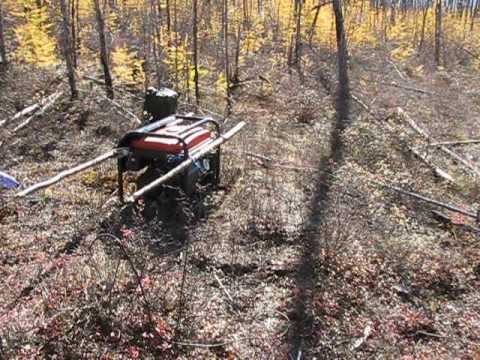
So, picture this: you’re out camping in some remote woods, right? You’ve got your s’mores and the stars above, when suddenly someone starts talking about induced polarization. I know, sounds like a party killer! But hang on.
You see, while you’re roasting marshmallows, geophysicists are out there using these cool techniques to study the Earth. Yep! Induced polarization is like a cool detective tool that helps figure out what’s hiding beneath our feet.
It’s like when you find a hidden treasure chest after digging in the sand—only instead of gold coins, it’s information about mineral deposits or groundwater. Sounds pretty neat, huh?
In this chat, we’ll dive into what induced polarization is all about and why it matters in geophysical research. Trust me, it’s not just for nerds in lab coats. It’s got real-world applications and makes discovering underground secrets kind of exciting! So grab that coffee and let’s unravel this together!
Induced Polarization Techniques in Geophysical Research: Insights and Applications in Earth Sciences
Induced Polarization (IP) techniques are pretty cool tools used in geophysical research. They help scientists get insights into the Earth’s subsurface materials. This method basically measures the electrical properties of rocks and soils, which can tell us a lot about what lies beneath our feet.
So, here’s how it works. When an electrical current is applied to the ground, some materials will store that energy for a bit—like a battery. But not all materials do this equally. Minerals like clay and sulfides tend to have higher polarizability, meaning they can hold that charge longer. By measuring this “induced polarization,” researchers can infer what types of materials are in the ground.
Now, let’s break down why this matters:
- Resource Exploration: IP is super useful in mining and oil exploration. Companies use it to locate minerals like copper or precious metals.
- Environmental Studies: Scientists can also assess contamination in soils or groundwater. For example, areas affected by industrial waste may show distinct IP signatures.
- Geotechnical Engineering: When building structures, engineers want to know what they’re dealing with underground! IP helps them identify unstable ground or rock layers.
One time, I remember reading about a team using IP near an old mining site. They were trying to find hidden deposits without digging everywhere first—kind of like using a treasure map! They found areas with high polarizability that indicated mineral richness below the surface. Talk about smart digging!
But wait—there’s more! The technique isn’t just for finding resources. It extends into other realms too:
- Hydrogeology: IP can help locate aquifers and track water flow underground. Water-saturated zones often lead to distinct electrical responses.
- Tectonic Studies: It sheds light on fault lines and volcanic activity by mapping changes in subsurface properties.
It’s honestly fascinating how something as simple as measuring how electricity moves through the Earth can reveal so much about geology!
Despite its advantages, IP techniques have their challenges too—like needing a solid understanding of local geology for accurate interpretation or managing interference from nearby structures.
In summary, Induced Polarization Techniques play a huge role in geophysical research by providing vital information about what’s under our feet—whether it’s precious resources, potential hazards, or even clues about our planet’s history. Isn’t it amazing how much we can learn from just peering below the surface?
Induced Polarization Techniques in Geophysical Research: A Case Study and Application Insights
The concept behind IP involves sending an electrical current through the ground and then measuring the voltage response. This technique is particularly useful for locating minerals and understanding subsurface structures. Here’s how it typically works:
- Electrode Setup: A series of electrodes are placed on the surface of the ground.
- Current Injection: An electric current is injected into the ground through some of those electrodes.
- Voltage Measurement: The resulting voltage is then measured at other electrodes.
Now, there’s something cool about this technique—it can reveal not just conductivity but also information about how charges move through materials. It works well for identifying things like metallic ores or clay deposits.
Let me tell you a little story that illustrates its practical use. A few years ago, a team was working in a region known for its mineral wealth but faced challenges locating certain deposits. They employed IP techniques and, after some detailed measurements and analysis, they were able to pinpoint areas rich in copper deposits that traditional surveys had missed. Pretty neat, right? It really shows how these methods can make a difference.
In terms of applications, IP techniques can be used for several purposes:
- Mineral Exploration: Searching for valuable minerals like gold or copper.
- Environmental Studies: Finding contaminants in soil or groundwater.
- Civil Engineering: Assessing ground conditions before construction projects.
A fascinating aspect of IP is its sensitivity to different materials. For instance, areas with high clay content show different responses compared to sandy regions because clay has better charge storage capabilities.
However, it’s not all smooth sailing; these techniques come with some challenges too. Factors like noise from nearby power sources or geological heterogeneity can complicate data interpretation. It’s kind of like trying to hear someone talking at a loud party—sometimes it’s hard to pick up what you really need to know!
Overall, when it comes down to it, Induced Polarization offers a unique window into what’s hidden beneath our feet. Whether it’s discovering new resources or aiding environmental assessments, this technique plays a significant role in making sense of Earth’s mysteries.
Advancements in Induced Polarization Methodology for Enhanced Mineral Exploration Techniques
Induced polarization—or IP for short—is like giving a little jolt to the earth and seeing how it responds. This method is super handy in mineral exploration, helping geologists find hidden treasures like copper or gold buried beneath layers of rock. So, let’s dig into some recent advancements in this field.
Understanding Induced Polarization
The whole idea behind IP is pretty cool. When you send an electrical current through the ground, some materials—like metals—can temporarily hold onto that charge. It’s like when you rub a balloon on your head and it sticks to the wall for a bit. The ground can do something similar!
Now, what has changed over the years? Technology has come a long way. Traditional methods often had trouble pinpointing exact locations or depths of these hidden minerals. But advancements in measurement techniques have really upped the game.
Improved Data Collection
Newer devices can collect data much faster and with greater precision than before. Like, instead of hours or days to map an area, it could just take a fraction of that time! This means that teams can spend less time out in the field and more time analyzing what they’ve found.
Imagine waiting all winter for your birthday only to discover someone made you a surprise party instead! That’s kind of how geologists feel when their new tech picks up more signals than they expected.
Using Machine Learning
One fascinating twist in IP methodology is the use of machine learning algorithms. These smart systems can analyze tons of data and help identify patterns that humans might miss. Picture having a super-fast assistant sifting through mountains of boring paperwork so you can focus on the fun stuff—like making decisions based on the juicy insights they find!
This technology isn’t just about speed; it’s also about accuracy. The better we understand our data, the easier it becomes to determine whether we’re staring at a promising mineral deposit or just another rock formation trying to trick us.
Multi-Method Integration
Another exciting trend is combining IP with other geophysical methods. You know how sometimes two heads are better than one? Well, merging different techniques—like seismic surveys or magnetic measurements—can give scientists a fuller picture of what’s going on underground.
This multi-method approach helps confirm findings from IP alone and reduces uncertainty in exploration efforts. It’s sort of like checking your answers after finishing a tough math problem; double-checking boosts confidence!
Field Applications and Case Studies
There have been real-world examples where these advanced methods made big differences! For instance, researchers used enhanced IP techniques successfully in areas thought previously barren but ended up revealing rich mineral deposits there.
By using sophisticated equipment alongside traditional practices, teams are uncovering valuable resources while minimizing environmental impact—a win-win situation!
In summary, advancements in induced polarization methodology are shaking things up in mineral exploration by making data collection faster and more accurate while integrating new technologies for even better results. Just like how water finds its way around rocks in a stream, this ever-evolving field continues to push boundaries as explorers seek new horizons under our feet!
Induced polarization techniques in geophysical research are pretty interesting, to say the least. Picture yourself wandering through a dense forest, the air thick with moisture and mystery. You have this gut feeling that beneath your feet, there’s something valuable buried—maybe minerals or groundwater. Now, how do you figure out what’s down there without digging a massive hole? That’s where induced polarization (IP) comes in.
You know, the basic idea behind this technique is to send an electrical current into the ground and see how it behaves. When you apply an electrical field, some materials respond differently over time. It’s like when you poke someone and they react instantly but then calm down after a bit—same concept! The way different materials—like clay, rocks, or metals—store and release energy gives scientists clues about what lies beneath.
I remember the first time I heard about this technique from a friend studying geology. She described how IP can help locate underground water sources in arid areas—not just for scientists but for communities that really need it. It was a lightbulb moment for me! The thought that we could use science not just for knowledge but to directly impact people’s lives really hit home.
Of course, working with IP isn’t all sunshine and rainbows. You have to deal with noise from other sources and understand the geology of your area super well—that means lots of maps and data! But when everything clicks together, it feels like solving a puzzle.
It amazes me how technology shapes our understanding of Earth. Induced polarization might sound technical and complex at first glance, but at its core, it’s about connecting people to resources and uncovering secrets hidden right below us. And honestly? That just makes me appreciate our planet even more!