So, imagine this: you’re at a party, and someone tells a hilarious joke. Everyone laughs, but one guy in the corner is busy calculating the probability of that joke making people laugh again. Kinda weird, right? But that’s the thing about math—it sneaks into our lives when we least expect it.
Now, let’s talk about mathematical statistics. It’s not just for nerdy scientists hunched over spreadsheets—although, okay, there’s a little of that too. It’s all around us! Think about it: every time you hear about a poll predicting election results or the latest medical breakthroughs, there’s some serious number crunching behind those headlines.
And let’s be real for just a sec. Statistics can feel like that awkward friend who shows up at parties but no one knows how to include. You might roll your eyes at those graphs and numbers, thinking they’re boring or confusing. But I promise they hold secrets to understanding our world in ways that are way cooler than you’d think.
So grab your imaginary calculator and let’s unravel how mathematical statistics plays a starring role not just in science and research but in pretty much everything we do—from sports stats to climate change studies. Trust me; you’re gonna want to stick around for this ride!
The Essential Role of Mathematical Statistics in Advancing Scientific Research
So, let’s talk about **mathematical statistics** and why it’s like the unsung hero of scientific research. If you’ve ever wondered how scientists figure out what the heck is going on with their data, you’re not alone. Basically, mathematical statistics helps researchers make sense of the chaos that is their experiments and observations.
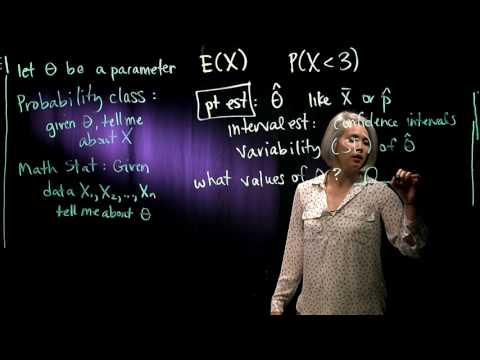
First off, what do we mean by mathematical statistics? It’s about using **mathematical theories and methods** to analyze data effectively. This means not just crunching numbers but understanding patterns and relationships that can tell us more about the world around us.
One essential role of mathematical statistics is hypothesis testing. Let’s say a scientist has a new drug they think works better than the old one. They’ll collect data from trials where some people get the new drug and others get the placebo. The scientist will use statistical tests to figure out if any differences in results are due to chance or if it’s really because of the drug itself. This step is crucial because making claims without enough evidence can lead to misinformation.
Another key area is predictive modeling. Imagine climate scientists trying to predict future weather patterns based on past data—sounds tricky, right? Well, they use statistical models to account for various factors like temperature changes, humidity levels, and even human actions. These models can help predict things like droughts or floods, which are super important for planning our future.
And then there’s data visualization. Seriously, a picture can be worth a thousand words! Statistics help experts create visual representations of their findings—charts, graphs, or even more complex visuals that make trends easier to see at a glance. You know when you look at a graph and suddenly everything clicks? That’s math in action!
Now let’s touch on something emotional here—think about medical research during a health crisis. Researchers have had to analyze vast amounts of data in short periods. The speed at which they process this information could literally save lives! Mathematical statistics allows them to model outbreak patterns or assess whether treatments work effectively—which brings hope in times of uncertainty.
And oh! Don’t forget sample size determination. A small study might lead to questionable conclusions because it doesn’t capture enough variability from the larger population. Statistical methods help researchers decide how many samples they need so they can be confident in their conclusions.
So yeah, without mathematical statistics, scientific research would be pretty much like throwing darts blindfolded—it’d be super challenging to hit anything meaningful! It provides structure and rigor that transforms raw data into solid knowledge we can trust.
In summary:
These areas showcase just how foundational mathematical statistics is for scientific discovery. It’s like having a trusty toolbox that equips scientists with everything they need to dig deeper into understanding our complex world. And who wouldn’t want that clarity?
Assessing the Difficulty of Mathematical Statistics: Insights for Science Students
So, you’re diving into the world of mathematical statistics, huh? Exciting stuff! But let’s be real: it can feel like a beast sometimes. Whether you’re a student in science or just someone curious about numbers, understanding how difficult this subject can be is key.
First off, what’s mathematical statistics? Well, it’s all about making sense of data using math and probability. You’re not just crunching numbers; you’re trying to find patterns and make decisions based on what those numbers are telling you. And that’s super important in fields like biology, psychology, and even engineering.
- Conceptual Foundation: Many students stumble at the theoretical concepts. You’ve got stuff like distributions (normal, binomial), hypothesis testing, and confidence intervals. It’s like learning a new language! Some people find it easier once they relate these ideas to real-world scenarios.
- Mathematical Rigor: You know why some folks say stats is hard? It requires solid math skills—think calculus and linear algebra. If you can’t wrap your head around those basics, the advanced topics might feel like climbing a mountain without gear.
- Practical Application: The practical side brings its own challenges. Analyzing data sets can get tricky—especially when you’re dealing with large amounts of data or when the numbers don’t behave as expected!
- Lorem ipsum dolor sit amet: Mistakes happen! Even experienced statisticians mess up sometimes because life is chaotic and unpredictable. Learning to deal with variability can be overwhelming but is essential for effective research.
I remember my buddy struggling with this back in college. He loved biology but found stats confusing—like trying to read hieroglyphics without a dictionary. We sat down one afternoon, pulled up some real studies online, and suddenly things started clicking! Connecting theory to practice made it way less daunting.
Another thing worth mentioning is software literacy. These days, you’ll likely use programs like R or Python to crunch your data points instead of doing everything by hand (thank goodness!). But even that has a learning curve if you’re not familiar with coding concepts!
The whole process isn’t just about memorizing formulas or computational skills though; it also involves critical thinking. You have to be able to interpret results correctly—and trust me—that takes time to master!
Lastly, remember that difficulty varies from person to person—what’s tough for one might not phase another at all. So don’t stress too much! With patience and practice, mathematical statistics can become a powerful tool in your scientific arsenal.
If anything resonates here or sparks a lightbulb moment for you—grab it! Dive deeper into those areas that intrigue you the most; after all, that’s where the magic happens.
Exploring the Applications of Mathematical Statistics in Scientific Research and Analysis
Mathematical statistics is like the secret sauce in scientific research. It helps us make sense of all the numbers and data we collect while exploring everything from biology to physics. So, let’s break down how this fascinating field plays a crucial role in helping scientists uncover truths about our world.
Firstly, one of the key applications of mathematical statistics is in data analysis. When researchers gather data, they’re faced with mountains of numbers. Here’s where statistics steps in! It allows scientists to summarize and interpret that data effectively. They can find trends or patterns that might otherwise remain hidden.
Imagine a team studying climate change. They might collect temperature readings from various places over decades. By applying statistical techniques, they can determine if there’s a significant warming trend or if the changes are just random fluctuations. This doesn’t just sound cool; it’s vital for making informed decisions about climate action.
Another important application is in hypothesis testing. Scientists often start with a hypothesis—basically, an educated guess about what they think will happen. Statistical methods help them test these guesses to see if they’re true or not.
Let’s say you want to know if a new drug actually works better than an existing one. Researchers would conduct experiments and analyze the results using statistical tests. This helps them decide whether any observed effects are real or just due to random chance.
There’s also the part where statisticians design experiments. Good experimental design is essential for collecting meaningful data. By using principles from mathematical statistics, researchers can figure out how many samples they need, how to randomize their subjects, or what type of controls are necessary to make their experiments robust.
Also, there are things like confidence intervals. Ever hear someone say something like “we’re 95% confident”? That’s statistical jargon for saying they’ve calculated a range where they’re pretty sure the true value lies based on their sample data. It’s super important in research because it gives us an idea of how reliable our findings are.
Then there’s regression analysis—it sounds complicated but stick with me! This technique helps scientists understand relationships between variables. For instance, if someone wanted to study how exercise affects weight loss, regression could show them just how strong that connection really is.
Now let’s chat about sample size determination. Scientists need enough people (or things) in their studies to ensure their results mean something statistically. Too small a sample might lead to incorrect conclusions that could misguide future research or policy decisions.
In fields like healthcare and social sciences, good use of mathematical statistics can have profound implications, you know? Think about clinical trials for new medications; accurate statistical analyses help ensure safety and efficacy before drugs hit the market.
So yeah, mathematical statistics isn’t just some dry math stuff; it actively shapes our understanding and advancements across countless scientific fields—helping us answer big questions while ensuring we get reliable answers from our data! Whether it’s tracking disease outbreaks or understanding our universe’s origins, it’s all tied together with that secret blend known as math stats!
You know, when you think about math, it can feel a bit dry, right? It’s numbers and formulas that often seem a world away from the “real” stuff. But here’s the thing: mathematical statistics is like the unsung hero behind many of the breakthroughs we see in science and research. Seriously!
Imagine sitting in a lab, surrounded by bubbling test tubes and high-tech equipment. You’re hunting for a cure for some nasty disease, trying different chemical compounds in hopes of finding that magical mix. But how do you know if what you’re doing is even working? That’s where stats come into play! They help researchers sift through heaps of data to spot trends and patterns that might not be obvious at first glance.
I remember this one time in school when I worked on a project about plant growth. We had two groups of plants—one got regular sunlight, while the other got some funky LED lights. After weeks of watering and measuring, it seemed like one group was thriving more than the other. But honestly? It was hard to say for sure without some serious number crunching. Statistical methods helped me analyze my results—turns out it wasn’t just luck; the LED lights actually made a difference! That moment was an eye-opener for me, seeing firsthand how math isn’t just about solving problems but understanding them.
Statistical tools help scientists figure out if their findings are significant or just random chance messing with their heads. Ever hear of p-values? They sound confusing—like some secret code—but they basically tell us if results hold water or if they’re just flukes, you know?
And let’s not forget about surveys or polls, which are crucial in social sciences! Want to know what people really think about climate change or healthcare? Stats provide a way to collect opinions from potentially thousands of individuals and make sense of that noise.
But here’s something to chew on: with great power comes great responsibility! Misusing stats can lead to false conclusions, and that can cause real harm. Remember when certain studies use tiny sample sizes or misinterpret data? Yeah, those can throw us off track. So researchers have to be super careful—and ethical—in their applications.
In short, mathematical statistics isn’t just some abstract notion floating around academia; it’s at the heart of research that shapes our world every day. From health breakthroughs to environmental studies—it weaves into so much we might take for granted. Next time you hear someone mention stats in relation to science, maybe think twice before zoning out—it’s way more exciting than it seems!