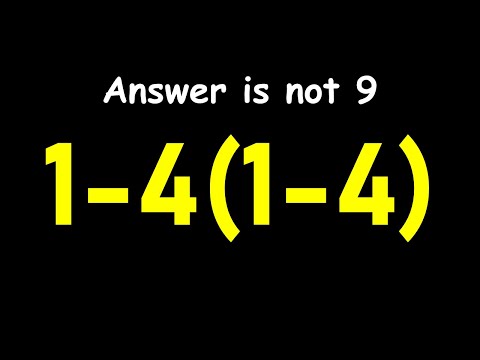
You know that moment when you’re mixing ingredients for a recipe, and you realize you forgot the order? One mishap with baking soda instead of flour, and boom! Your cake’s a mess. Yup, that’s kind of like what happens in math too.
So, imagine trying to solve a scientific problem without following the right order of operations. It’s like trying to build a Lego set but forgetting the instruction manual—total chaos!
Math has this secret sauce called “order of operations.” It tells you how to tackle problems step-by-step so everything makes sense in the end. If you don’t follow it, well, let’s just say your outcomes might be surprising… and not in a good way!
Let’s kick things off and break it down together. Sound fun?
Understanding the Sequence of Operations in Scientific Problem Solving
So, let’s chat about something that might sound a bit geeky but is totally essential—understanding the **sequence of operations in scientific problem solving.** You know, when you’ve got a math problem or any scientific equation, there’s a way to go about it to get it right. It’s like following a recipe; if you bake cookies and forget the sugar, well…good luck with that!
Order of Operations is your best friend here. It tells you which calculations to do first in any equation. If we hit it with some letters, we get PEMDAS (or BIDMAS in some places, depending on where you are). Here’s what’s up with that:
- Parentheses: Do anything inside parentheses first. So if you’ve got (2 + 3), that equals 5.
- Exponents: Next, tackle any exponents. Like if you’ve got 5^2 (that means 5 times itself), which is 25.
- Multiplication and Division: These happen next from left to right. So if you see 6 * 3 / 2, you’d first do the multiplication (18), then divide by 2 to get 9.
- Addition and Subtraction: Finally, handle addition and subtraction from left to right as well. Like in the case of 7 + 3 – 2; you’d do (7 + 3) first to get 10 and then subtract to arrive at 8.
Now think about this for a sec—how many times have we flubbed up an answer because we didn’t follow these steps? I remember once during a lab session back in school; I tried calculating something without heeding the order of operations—yikes! My results were all over the place; I almost had a mini meltdown!
But seriously, when you’re solving scientific problems involving formulas or equations, sticking to this order helps ensure logical consistency. For instance, let’s say you have an equation like:
F = ma
Here **F** represents force while **m** is mass and **a** is acceleration. Let’s say your mass is 10 kg and acceleration is (3 + 2) m/s².
First up—figure out what’s in parentheses! So that’s (3 + 2) = **5**.
Next step? Multiply! You need to calculate F as follows:
F = m * a = 10 kg * 5 m/s² = **50 N**!
This whole process makes sure your answers are consistent and accurate every time. That’s why grasping these rules turns chaos into clarity!
And don’t worry if it seems tricky at first—the more problems you solve using these steps, the better it gets! Just keep practicing because following that sequence will save your sanity down the road.
So yeah, remember those PEMDAS/BIDMAS rules whenever you’re crunching numbers or tackling equations—it really does make all the difference!
Mastering Scientific Problem Solving: A Comprehensive Worksheet on the Mathematical Order of Operations
Alright, let’s talk about the mathematical order of operations—you know, that thing that helps us solve math problems correctly. It’s like following a recipe; if you skip a step or mix things up, your dish might just turn into a mess. In math, getting this order right is super important, especially in scientific problem solving.
So, the order of operations is usually remembered by the acronym PEMDAS. It stands for:
- P: Parentheses first
- E: Exponents (or powers)
- M: Multiplication and division (from left to right)
- A: Addition and subtraction (from left to right)
You follow this order when you’re faced with different operations in a single equation. Let me break this down for you with a little story.
Imagine you’re baking cookies for a school bake sale. You have your ingredients lined up: flour, sugar, eggs… but wait! The recipe tells you to mix 2 cups of sugar with 3 cups of flour before adding anything else. If you just dump all your ingredients together without mixing these first two, well, good luck with that cookie dough! Same goes for math: if you ignore parentheses and just start adding or multiplying however you want, the answer can get totally off track.
Let’s look at an example:
If we have: 3 + 4 × (6 – 2)
You’ll want to start inside those parentheses first:
- (6 – 2) = 4
Now your equation looks like this: 3 + 4 × 4
Next up are multiplication and division from left to right:
- 4 × 4 = 16
Your final step is adding:
- 3 + 16 = 19
This gives you the result of your original equation as **19**. Easy peasy if you follow the steps!
You might be thinking—what happens when there are exponents? Well, that’s handled before any multiplication or addition too. For instance:
If we have 2 + 3² × (5 -1), we handle it like this:
- (5 -1) = 4 goes first.
- Then calculate the exponent: **3² = 9**.
- Your equation now looks like: **2 + 9 × 4**.
Now multiply before adding:
- 9 × 4 =36; finally add:**
This gives us: **2 +36 =38**!
The beauty here? Each time you’re solving a problem scientifically—like calculating concentrations or forces—you’re using these simple rules to get it right every time. Messing up the order can lead to big mistakes, especially in research or experiments where precision counts!
The thing is—whether it’s cookies or chemistry—it pays off to get it straight from the start. So keep honing those order-of-operations skills! They aren’t just for school; they’ll pop up whenever you’re dealing with numbers in real life too!
Mastering the Mathematical Order of Operations: Essential Examples for Scientific Problem Solving
Alright, let’s chat about the mathematical order of operations. If you’ve ever sat in front of a math problem and thought, “Wait, am I doing this right?” you’re not alone. This little set of rules can turn a tangled mess into something neat and tidy. You follow me?
The order of operations is basically like a recipe for solving math problems correctly. When you have different operations like addition, subtraction, multiplication, and division in one equation, you gotta know what to do first. It’s kind of like figuring out which ingredients to add to your dish first so it turns out just right!
You might’ve heard the phrase “PEMDAS” or “BODMAS” floating around. It stands for:
- P/B: Parentheses/Brackets first
- E/O: Exponents/Orders (like squares and square roots)
- M/D: Multiplication and Division (from left to right)
- A/S: Addition and Subtraction (from left to right)
So let’s break that down a bit. Imagine you’re baking cookies. Before throwing everything in a bowl, you start with the dry ingredients—flour first! That’s like tackling what’s inside parentheses before anything else.
For example, in the equation 3 + 6 × (5 + 4) ÷ 3 – 7, here’s what happens:
- First, deal with the parentheses: 5 + 4 = **9**.
- Next up is multiplication: **6 × 9 = 54**.
- Then division: **54 ÷ 3 = 18**.
- Add it all together: **3 + 18 – 7** = **14**.
You see how that flows? The order makes it clearer! Now imagine trying to bake cookies without following the recipe—it could end up as a gooey mess!
This becomes super useful in scientific problem solving too. Say you’re plugging numbers into a formula while calculating speed or force; if you mess up the order of operations, your answers could go from accurate to totally off base! Like if you’re trying to remember how far you’ve traveled over time at a certain speed but miscalculate because you didn’t handle the math properly—yikes!
An example from science might be calculating force with Newton’s second law: F = ma. If you’re figuring out what happens when mass changes while keeping acceleration constant, getting your numbers wrong could really change your results! Always use PEMDAS/BODMAS for clarity.
The bottom line? Mastering this order helps keep your calculations straight while preventing those pesky little errors that can sneak in when you’re winging it. And hey, next time someone mentions PEMDAS at dinner—or wherever—you can confidently share how important mastering this is for everything from baking cookies to calculating forces!
You know what’s funny? When I was in school, math and science felt like two separate worlds. I mean, one was all about numbers, operations, and formulas, while the other focused on experiments and the universe’s mysteries. But as I grew older, I realized they are totally intertwined. A good example of this is the order of operations in math, which is super crucial when tackling scientific problems.
So picture this: it’s late at night, and you’re knee-deep in homework. The formula for calculating velocity pops up, and it requires you to do some tricky calculations. You need to remember that old acronym “PEMDAS” (parentheses, exponents, multiplication and division from left to right, addition and subtraction from left to right) if you want to get the right answer. Trust me—if you forget that order and just wing it, your results could be way off.
One time back in high school during a physics project about projectile motion (you know—like launching water balloons), my friend David thought he could just add everything together without following any order. Let’s just say his balloon went in the wrong direction… like straight up instead of across! It was a total disaster but also a valuable lesson: knowing how to apply mathematical operations correctly can either save your project or mess it all up.
In science, we often deal with complex equations where there are multiple steps involved. Imagine trying to calculate the force of an object using f=ma—you’ve got mass (m) and acceleration (a) involved there. If you don’t follow those steps properly when plugging numbers in—the result? Totally unreliable data!
And here’s the thing: when we connect math with scientific inquiry, we’re not just crunching numbers; we’re understanding how our world works! Think about chemists mixing substances or environmental scientists predicting climate changes—they rely on these mathematical principles every day.
So next time you’re tackling a scientific problem that involves some math magic—be mindful of that order of operations. Your brain will thank you later when everything adds up neatly… or at least doesn’t end in a water balloon fiasco!