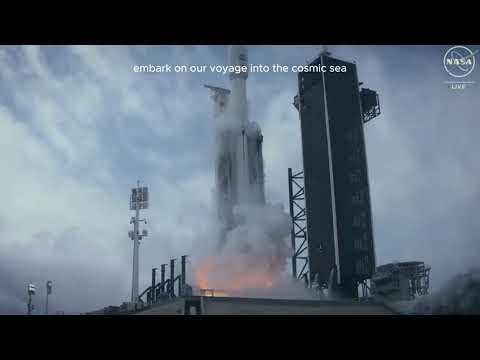
So, picture this: You’re lying on the grass, staring up at the night sky. Suddenly, you spot a shooting star. You make a wish—maybe for the latest tech gadget or to finally remember that embarrassing dance move from last weekend. Seriously, who wouldn’t want that?
But then it hits you—what is really out there? The universe is kinda mind-blowing, right? Stars, planets, galaxies… and then there’s us on this tiny speck of dust called Earth. It’s wild!
Now imagine if we could connect those cosmic dots between Earth and space. What stories would they tell? What secrets could we unlock about our place in all of this? You know what I mean?
Let’s explore how science bridges the gap between where we stand and where the stars are. Our journey starts now!
The Crucial Role of Earth and Space Science in Understanding Our Planet and the Universe
Earth and space science are like two best buddies that help us figure out not only our planet but also what’s going on in the universe. It’s amazing how these fields connect. They’re crucial for understanding everything from climate change to cosmic events. Let’s break this down a bit.
First off, **Earth science** involves studying our home planet. This includes geology, meteorology, oceanography, and more. Did you know that understanding the soil we stand on helps scientists predict earthquakes? That’s right! By studying how tectonic plates move, researchers can get a grip on when and where quakes might happen.
Then there’s **space science**. This dives into the cosmos, looking at stars, planets, and galaxies far beyond our reach. Take the Mars rovers, for instance. They collect data about the Martian surface and atmosphere, which helps us learn about potential life beyond Earth—and also adds to our knowledge about how planets form and change over time.
Now let’s connect these two sciences. You see, they often overlap in fascinating ways. For example:
- Climate Studies: Earth and space scientists work together to monitor climate change using satellites that observe weather patterns from above.
- Natural Disasters: Understanding how solar activity affects Earth’s magnetic field can help us predict geomagnetic storms that might disrupt communication systems or power grids.
- Astrobiology: Exploring extreme environments on Earth helps scientists figure out what life might look like on other planets.
One time while hiking in a national park, I stumbled upon a beautiful rock formation that was millions of years old! Just thinking about how much Earth has changed over time really blew my mind. Those rocks tell stories about volcanic eruptions and ancient oceans—living proof of Earth’s dynamic history.
Also, studying places like the poles or deep oceans teaches us about Earth’s systems as they adapt to change—especially with climate shifts ramping up due to human activity. This information is essential for making predictions about future conditions.
In contrast, when we look up at the stars using powerful telescopes or spacecraft like Hubble or James Webb, it lends insight into how galaxies form and evolve over billions of years! Isn’t it wild that studying something so far away can help explain why we’re here?
In short, **the interplay between Earth and space science is vital** for grasping not just where we come from but also where we’re headed as a planet and as cosmic beings exploring an ever-expanding universe. Each discovery generates more questions than answers—but isn’t that what makes it all so exciting?
Exploring the Interconnectedness of Earth and Space: Unveiling Scientific Relationships
Exploring the connections between Earth and space is like piecing together a giant cosmic puzzle. Everything is linked in ways we might not even realize. When you think about it, our planet doesn’t just float aimlessly in the vastness; it’s part of an intricate web of relationships that influence everything from weather patterns to the very air we breathe.
One big connection is **gravity**. It’s the force that keeps us grounded and also holds the Moon in orbit around Earth. Imagine how different life would be without it! If gravity were weaker, you’d probably feel like jumping on a trampoline all day long, but also, things like oceans and atmospheres might not exist as we know them.
Another critical relationship involves **solar energy**. The Sun beams down energy to our planet, fueling life through photosynthesis. Plants use sunlight to grow, which then feeds animals (and us). 🌱 It’s a beautiful cycle! Without this constant influx of solar energy, Earth would be a frozen wasteland.
Then there’s **the atmosphere**. This thin layer of gases protects us from harmful radiation from space while also trapping heat—kind of like a blanket. Our atmosphere isn’t just important for keeping us warm; it also plays a role in weather patterns and climate change. Tornadoes, hurricanes—these powerful phenomena are influenced by both Earth’s atmosphere and solar activity.
Don’t forget about **space weather** either! Solar flares can send streams of charged particles racing through space, which can disrupt satellites or even create beautiful auroras here on Earth. Seriously, have you ever seen the Northern Lights? They’re basically nature’s light show brought to you by interactions between our planet’s magnetic field and solar winds!
And let’s talk about **Earth’s place in the Milky Way galaxy**. Our home isn’t just perched randomly; it’s spinning around with billions of other stars in a galactic dance. The position within our galaxy impacts how much cosmic radiation hits us as well as how often events like asteroid impacts occur.
There are more subtle connections too, such as how changes on Earth can influence space exploration decisions—like when scientists choose where to land rovers on Mars based on similarities with Earth’s terrain.
In short, every element connects to another in this vast system we inhabit—and understanding these relationships opens your eyes to how deeply intertwined everything really is. It makes you appreciate not only the planet beneath your feet but also the boundless universe above! Isn’t that wild?
Unlocking the Universe: The Impact of Space Exploration on Advancing Scientific Knowledge
The universe is like this massive puzzle, you know? Each piece helps us understand more about where we fit in all of that. When we talk about **space exploration**, we’re really diving into the ways we’ve learned more about everything—from our own planet to distant galaxies.
Space exploration has pushed the boundaries of knowledge. Think back to when humans first set foot on the Moon in 1969. That wasn’t just a giant leap for mankind; it was a major breakthrough in understanding our own solar system. It showed us that Earth isn’t the only place where things are happening.
You see, with every mission, scientists gather data that helps us answer big questions. Like, why do planets form? What’s out there beyond what we can see? Well, take the Hubble Space Telescope as an example. Launched back in 1990, it’s given us stunning images and insights into space. We’ve peered back billions of years to see galaxies forming, which is totally mind-blowing!
And then there’s Mars! We’ve sent rovers like Perseverance and Curiosity to explore its surface. They’re not just wandering around taking selfies (although they do take cool pictures!). They’re also drilling into rocks and analyzing soil samples to look for signs of past life—like ancient microbes or even water.
Scientific collaboration across borders is another huge plus of space exploration. Countries are joining forces to tackle complex challenges together. The International Space Station (ISS) is a prime example of that teamwork in action! Scientists from all over work side by side up there to understand everything from how plants grow in microgravity to how long-term space travel affects human health.
Space exploration also drives advancements on Earth. Many technologies we use today came from research aimed at solving space-related problems. Ever wondered who invented scratch-resistant lenses? Yep! NASA was looking for better materials for their spacecraft and—boom—we got glasses that don’t easily scratch up!
But it doesn’t stop there; it inspires people too! There’s something electrifying about gazing at the night sky and knowing humans are out there exploring it. Kids dream bigger when they hear stories about astronauts or watch rockets launch live on TV. It plants seeds of curiosity which can lead them down paths toward science and technology careers.
So when you think about the impact of space exploration, remember it’s not just about discovering new worlds or floating around in zero gravity—it shapes our understanding, fosters collaboration, drives innovation, and stirs up dreams within each one of us.
In essence, each rocket launch or telescope image adds a little more light to our understanding of the cosmos and ourselves. How cool is that?
Alright, so here’s a thought that’s been bouncing around in my head: the connection between Earth and space isn’t just this big, cosmic thing out there. It’s more like a bridge – and you know what? That bridge is built on curiosity, exploration, and our desire to understand where we fit into this whole universe.
I remember this one time I was at a local science fair, and they had this amazing setup showing how satellites track weather patterns. Watching kids, wide-eyed with wonder as they learned how something up in space could affect their day-to-day lives – it sent shivers down my spine. Like, wow! Winning the battle against that willy-nilly rainstorm isn’t just down to meteorologists on Earth; those fancy satellites are keeping us informed from way up high! It’s all connected.
And let me tell you about astronauts. These brave folks venture into the unknown for us. They float around in zero gravity, conduct experiments that help us understand not just space but our home planet too. They’re literally bridging that gap for us! Their findings can lead to advancements in medicine or technology here on Earth – isn’t that cool? Space exploration is like this vast ocean of knowledge that brings back treasures we didn’t even know we needed.
But it’s not just about cool gadgets or rockets; there’s something deeper going on too. It’s about perspective. When we look up at the stars, we see possibility and wonder. The more we learn about space, the more we appreciate our little blue planet spinning in all its glory. It’s like each discovery whispers to us about our responsibility to take care of Earth because it’s part of a bigger picture – one that stretches far beyond what we can see.
So yeah, bridging Earth and space isn’t just scientific jargon tossed around by experts; it’s personal! It connects us all like threads in a cosmic tapestry. Each stitch represents knowledge gained through exploration and curiosity—reminding us of our place in the universe while nurturing our responsibility towards our home. Seriously, isn’t it mind-blowing how interconnected everything is? That’s what inspires you and me to keep asking questions and seeking answers!