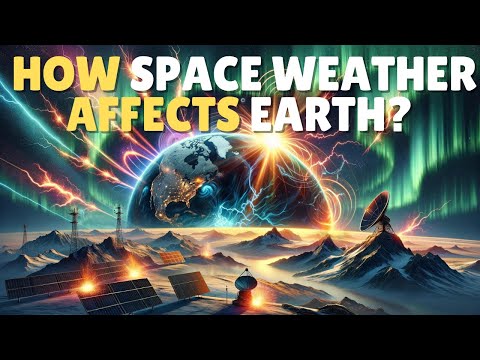
Okay, so picture this: you’re lounging on your couch, scrolling through your phone, when suddenly it goes all wonky. Apps freeze, the screen flickers, and you’re like, “What the heck?!” But what if I told you that solar flares could cause that chaos?
Yeah, seriously! Space isn’t just a vacuum of stars and planets. It’s got its own weather too—like lightning storms but in outer space! And surprise, surprise—this “space weather” can mess with our gadgets down here on Earth.
You might be thinking, “How does that even work?” Well, it’s all about those wild bursts of energy from the sun. They can rock our planet’s magnetic field and cause all sorts of trouble for satellites and power grids.
So let’s chat about this mysterious space stuff. It affects everything from GPS to power outages. You know you wanna know more!
Understanding Space Weather: Impacts on Earth and Technological Systems
Space weather sounds like something out of a sci-fi movie, but it’s real and can seriously affect us on Earth. Basically, space weather refers to the environmental conditions in space, especially around our planet and in the solar system. This is mostly influenced by the sun, where crazy things happen that can send high-energy particles and radiations our way.
So, what does this mean? Well, when there are coronal mass ejections (CMEs) or solar flares—big explosions on the sun’s surface—these can unleash streams of charged particles. When these particles reach Earth, they can interact with our atmosphere. This is where it gets wild: this interaction results in phenomena like auroras, those beautiful lights you sometimes see in the night sky near the poles.
But hold up! It’s not just pretty lights we have to think about. Space weather can also mess with technology here on Earth. Think about your phone or GPS; they rely on satellites that orbit above us. When there’s intense solar activity, it can cause disruptions to these satellites’ signals or even damage their electronics! Imagine driving and suddenly losing GPS guidance because of a solar flare—definitely a buzzkill.
- Communication Systems: Radio waves can be affected during solar storms. This means that flights over polar regions might lose contact for hours!
- Power Grids: High-energy particles can induce electric currents in power grids, potentially causing blackouts or equipment failures.
- Aviation Risks: Airlines often reroute flights depending on space weather forecasts to avoid radiation exposure at high altitudes.
You might be thinking: “How do we even know when all this is happening?” Good question! There are various monitoring systems and satellites specifically designed to keep an eye on solar activity. The Solar Dynamics Observatory, for instance, watches the Sun constantly and sends alerts when there are significant changes.
This brings me back to a story I read about some astronauts who were aboard the International Space Station when a significant solar storm hit. Luckily, they had early warnings from Earth’s monitoring systems and were able to take protective measures—like staying more inside the station until things calmed down. Can you imagine being up there while this cosmic event’s happening? That must’ve been surreal!
The thing is, as we become more reliant on technology every day, understanding space weather becomes increasingly crucial. We need to anticipate how those wild solar activities might impact our lives here on Earth; it’s not just about avoiding blackouts but also keeping people safe as we venture beyond our planet’s atmosphere.
In wrapping this up: space weather isn’t just some distant phenomenon; it’s something that directly impacts us all—our technology and even how we navigate daily life. Understanding it helps us prep for potential tech hiccups and ensures we’re not caught off guard by Mother Nature’s cosmic tantrums!
Understanding Space Weather: Its Impact on Earth and the Science Behind Solar Activity
So, space weather is a real thing, and it can totally mess with us here on Earth! It’s not about sunny days or rainy spells; we’re talking about solar activity that can have some serious effects. You might be curious about how all this works, so let’s break it down.
First off, space weather mainly comes from the Sun. The Sun isn’t just a giant ball of fire; it emits a ton of energy in the form of solar wind, which is basically a stream of charged particles. Sometimes, this wind gets really energetic, especially during **solar storms**. These storms happen when the Sun releases bursts of energy—think of them like solar fireworks!
Now, when these charged particles hit Earth’s atmosphere, they can cause a lot of chaos. For instance:
- They can disrupt radio communications.
- They may knock out satellites.
- They even affect power grids!
Yeah, it sounds intense, but let me tell you a quick story to put this into perspective. Remember that big blackout back in 1989 in Quebec? Just so you know—one reason it happened was because of a solar storm! Crazy right? The storm sent powerful geomagnetic currents down to Earth, which overloaded the power systems. Millions were left without electricity for hours.
But wait! It’s not all doom and gloom. When solar activity ramps up and those particles interact with our atmosphere at the poles, we get those stunning **auroras**—the Northern and Southern Lights! It’s like nature’s light show and a reminder that while space weather can be disruptive, it’s also pretty beautiful.
Another cool thing is that scientists study all this using satellites and ground-based observatories to keep an eye on solar activity. They use data from instruments that measure magnetic fields and particle fluxes to predict when storms might hit—kind of like weather forecasting but for space!
So basically, understanding space weather helps us prepare for its impact on technology and daily life here on Earth. We’re still learning about how much these cosmic events affect us—you follow me? But knowing that the Sun isn’t just shining away without consequences helps us appreciate our place in the universe a little more.
In short: Space weather is powered by our Sun’s wild behavior! And while it can mean trouble for tech down here on Earth—and sometimes even cause major outages—it reminds us how connected everything really is in this vast cosmos we call home.
Understanding Space Weather: Its Impact on Earth and Our Environment
So, let’s talk about **space weather**, right? It’s not something we hear about every day unless you’re really into astronomy. But it’s super important! Basically, space weather refers to the environmental conditions in space, particularly concerning solar activity. You’ve probably heard of things like **solar flares** and **coronal mass ejections** (CMEs). These are big deals because they can mess with our technology here on Earth.
When the sun throws out a solar flare or a CME, it releases a ton of energy and charged particles into space. These particles can hit Earth’s magnetic field, which is like an invisible shield protecting our planet. Sometimes this interaction creates beautiful auroras, you know? Those spectacular lights in the sky that people go crazy for. But there’s more to it than just pretty colors!
You may be wondering how this affects daily life. Well, let’s break it down:
- Technology Disruption: Space weather can interfere with GPS satellites and communication systems. Imagine trying to get directions on your phone but ending up lost because the signals got scrambled by solar activity!
- Pipelines and Power Grids: Geomagnetic storms caused by these solar events can induce currents in pipelines and power grids. This can lead to outages or even damage equipment if they’re not prepared for it.
- Aviation Hazards: Pilots flying at high altitudes need to be aware of space weather too! Increased radiation exposure during solar storms can be a risk for them.
- Astronaut Safety: For astronauts aboard the International Space Station, solar events create a hazardous environment. They have to monitor space weather closely to protect themselves from harmful radiation.
So why care about all this? Well, as we rely more and more on technology—like smartphones and satellites—the impact of space weather only becomes more significant. I remember when a massive storm hit back in 1989; it knocked out power in Quebec for nearly a day! Millions were affected just because of an event happening light-years away.
But hold up! Not everything is doom and gloom. Scientists are getting better at predicting space weather thanks to advancements in technology and research. They’ve got tools that help them monitor the sun’s activity so they can warn us ahead of time when something might be coming our way.
In short, understanding **space weather** helps us stay prepared—not just for cool phenomena like auroras but also for protecting the tech we depend on every single day. And isn’t that pretty neat?
Alright, so let’s talk about space weather. It’s one of those topics that might sound super technical at first, but it actually relates to all of us in a really cool way. I remember staring up at the stars during a camping trip with friends when we were kids, just totally captivated by the night sky. We were joking about aliens and wishing we could reach out to them. Little did we know how interconnected we actually are to what’s happening up there!
So, space weather refers to the conditions in space that can affect our planet—stuff like solar flares and coronal mass ejections. Basically, the sun is this gigantic ball of energy, and sometimes it gets a bit restless. When it erupts, it sends particles flying towards Earth. Those particles can mess with our magnetic field and atmosphere.
Now, you might be thinking: “What’s the big deal?” Well, those solar flares can disrupt satellites! Yeah, the very things that help us navigate on our phones or stream our favorite shows can get all wonky due to these space weather events. Imagine you’re trying to find your way to a concert using GPS and suddenly – boom – you’re lost because some solar activity decided to throw things off.
And it doesn’t stop there! Space weather can also cause power outages here on Earth by disrupting electrical grids. There was this infamous incident in 1989 where a geomagnetic storm knocked out power across Quebec for about nine hours! Can you imagine? One minute you’re cozy at home watching TV, and the next you’re left in the dark just because of something happening millions of miles away.
Oh! And then there’s radio communication too—you know how frustrating it is when your call drops? Just think how much worse that gets for pilots trying to land planes or ships navigating through rough waters when their communications are affected by solar activity.
So yeah, while we sometimes think of outer space as just stars and planets—and maybe aliens too—it has real effects down here on Earth. Space weather reminds us how connected we are; like little pawns in a grand cosmic game. And honestly? It makes me feel pretty small but also super curious about what else is out there beyond our blue planet. The more I learn about it all, the more I realize we’ve kinda got our work cut out for us in understanding how these cosmic events impact life on Earth—and maybe even figuring out how to protect ourselves from them!