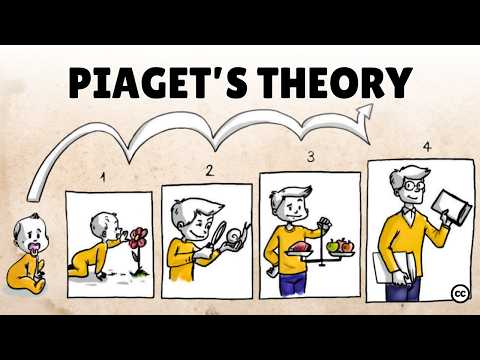
You know that moment when a kid asks, “Why is the sky blue?” It’s like a light bulb just went off in their head! Kids are naturally curious, right? And that curiosity is super important for learning.
That’s where Piaget comes in. He was this brilliant Swiss psychologist who really dug into how kids think and learn as they grow up. Imagine him sitting there, watching children play and explore, and realizing there’s a whole world of thought processes happening behind their innocent smiles!
He came up with this cool theory that breaks down child development into stages. Like, each age has its own way of understanding the world. Think of it like unlocking different levels in a video game—each level brings new challenges and skills.
So yeah, if you’ve ever wondered why your little cousin suddenly understands how to count or why they believe in magic one day but not the next, Piaget has your back! His insights can help us see childhood through a whole new lens. Pretty neat, huh?
Exploring Piaget’s Perspective on the Role of Learning in Cognitive Development: Insights from Psychological Science
Piaget was a Swiss psychologist who really shook things up in the 20th century with his ideas about how kids grow and learn. You know, it’s pretty wild to think about how our brains develop from tiny squishy things into complex machines that can solve problems, understand math, or even contemplate the universe. Piaget had this theory that cognitive development happens in stages, and it’s all about how children interact with the world around them.
Cognitive Development Stages: According to Piaget, there are four key stages children go through:
So yeah, learning plays a huge role here! Piaget argued that children learn best when they actively engage with their environment rather than just passively absorbing information. When Piaget observed kids doing experiments with blocks or playing games, he noticed that genuine interaction leads to deeper understanding.
Assimilation vs Accommodation: Two key processes in Piaget’s theory are assimilation and accommodation. These terms sound fancy but are pretty simple:
This twirling dance between assimilation and accommodation is crucial in learning because it allows for growth in understanding as kids encounter new experiences.
To put it simply: Piget believed children aren’t just mini adults; they see the world differently depending on where they are cognitive-wise.. It really paints a picture of why individualized learning matters so much today!
Overall, Piaget’s perspective tells us that educational methods should cater to these stages since every kid learns at their own pace. It’s kind of mind-boggling—and honestly beautiful—to see how interconnected everything is when it comes to growth! So next time you watch a child explore or try something new, remember: they’re not just playing; they’re building their understanding of the world around them bit by bit!
Exploring Piaget’s Theory: The Pivotal Contribution to Developmental Psychology and Science
Jean Piaget was a Swiss psychologist who made waves in the field of developmental psychology. You see, he had this idea that kids think differently than adults, and that blew people’s minds back in the day. His theory is all about how children move through stages of cognitive development, and honestly, it’s still super relevant today.
Piaget’s stages are pretty straightforward but also deep when you think about them. He identified four main stages:
- Sensorimotor Stage: This is from birth to about 2 years old. Babies learn about the world through their senses and actions. Imagine a baby playing with a rattle—it’s all about feeling and exploring sound.
- Preoperational Stage: From ages 2 to 7, kids start using language and symbols. They might pretend a banana is a phone! But they can be pretty egocentric during this time—they see the world only from their own perspective.
- Concrete Operational Stage: This stage runs from ages 7 to around 11 years. Here, kids start thinking logically about concrete events. They understand the concept of conservation—like knowing that if you pour water from a tall glass into a wide one, it’s still the same amount of liquid.
- Formal Operational Stage: Finally, from age 12 onwards, adolescents develop the ability to think abstractly and reason logically. They can ponder hypothetical situations or imagine future possibilities—like dreaming up different careers!
What’s fascinating is how Piaget didn’t just drop these theories out of thin air; he actually observed children at play! Can you imagine him sitting there watching kids figure things out? It must’ve been like watching little scientists in action.
Now, one thing that stands out is his idea of schemas. Schemas are mental models we use to organize knowledge. When you first see a dog, maybe you think it’s just like every other furry creature you’ve seen before. But as you meet different kinds of dogs—big ones, small ones—you adjust your schema for “dog.” This process is called accommodation. And when your schema fits new information like puzzle pieces—that’s called assimilation.
So how does all this play into learning? Well, teachers can use Piaget’s insights to create lessons that match students’ cognitive abilities. For example, introducing basic math concepts through hands-on activities makes more sense for younger learners who are still in those earlier stages.
His work reshaped not just psychology but education too! Schools started focusing more on active learning rather than rote memorization—thank goodness for that! Knowing what stage a child is in helps educators tailor their teaching methods effectively.
In short, Piaget’s contributions have laid down an important framework for understanding how children grow mentally and emotionally over time. He taught us that respecting where children are in their intellectual journey isn’t just kind; it’s essential for effective learning!
So next time you see kids exploring or playing pretend, remember: they’re not just goofing off—they’re actively constructing their understanding of the world around them!
The Influence of Jean Piaget on Educational Practices and Scientific Understanding
Jean Piaget was a Swiss psychologist who completely transformed how we think about children’s learning and development. Born in 1896, he focused on understanding how kids perceive the world around them. And guess what? His work laid the groundwork for modern educational practices!
You see, Piaget believed that children are like little scientists, actively exploring their environments. They don’t just soak up information; they construct knowledge through experiences. He introduced us to stages of development—sensorimotor, preoperational, concrete operational, and formal operational. Each stage shows how a child’s thinking evolves.
So, let’s break that down a bit:
- Sensorimotor stage: From birth to about 2 years, babies learn through their senses. They touch, taste, and see—every little thing is an adventure.
- Preoperational stage: This is from ages 2 to 7. Kids start to use language but may struggle with logic and seeing others’ viewpoints. An example? A child might think everyone sees the world exactly as they do.
- Concrete operational stage: Here’s where it gets interesting! From ages 7 to 11, kids begin to think logically about concrete events—like understanding that if you pour water into a taller glass, it doesn’t mean there’s more water.
- Formal operational stage: Starting around age 12, people can think abstractly and can handle hypothetical situations—kind of like planning for the future or analyzing complex problems.
Piaget’s ideas have influenced various educational practices dramatically. For example, many classrooms today encourage hands-on activities instead of rote memorization. Think about science experiments in school; students aren’t just reading from a textbook—they’re experiencing concepts firsthand!
Now, here’s something cool: Piaget stressed the importance of social interaction in learning too! When kids talk and play together, they learn from each other. Remember those times building forts with friends? That wasn’t just play; it was teamwork and problem-solving in action.
But here’s a twist: not all educators agree with every part of Piaget’s theory anymore. Some say life isn’t as neat as his stages suggest. Children sometimes show skills from different stages at once or skip steps altogether.
That said, his influence is huge! Educators across the globe still use his principles today because they remind us that teaching isn’t just about pouring knowledge into kids’ heads but shaping curious minds ready to explore their world.
To wrap it all up: Jean Piaget didn’t just reshape psychology; he set the foundation for how we understand learning itself! If you’ve ever watched a child build Lego towers or imagine new worlds during playtime, you can thank Piaget for helping us understand why that exploration is so important.
You know, when you think about how kids learn and grow, it’s pretty incredible. Jean Piaget was this Swiss psychologist who dove deep into the minds of children. I remember being in school and hearing about his theories—it was kind of a revelation, honestly!
So, basically, Piaget believed that kids aren’t just mini adults. They think differently and go through stages as they grow up. Imagine the wonder of a toddler discovering that when they drop something, it falls! That’s what he called the sensorimotor stage. It’s like their own little experiments.
Then you have the preoperational stage. It’s where kids get super imaginative but also struggle a bit with logic. I can still picture my niece at that age—she would put her toys in a line and insist they were having a meeting! That kind of creative play is essential for their cognitive development.
As kids move on to the concrete operational stage, they start grasping more logical ideas but still need tangible experiences to understand them fully. I mean, think about how hard it is to explain things like gravity to a kid without showing them!
And then there’s the formal operational stage, where teens can think abstractly and critically. Man, if only some adults could channel that energy sometimes!
Piaget taught us that learning isn’t just about memorizing facts; it’s way more about interacting with the world around us and making sense of it step by step. He showed that education should be tailored to these developmental stages—something we still try to implement in classrooms today.
So yeah, when you break it down like this, you realize just how much impact Piaget had on education and psychology as a whole. It’s all about understanding how kids tick so we can help them flourish in their unique ways! What a legacy he left behind!