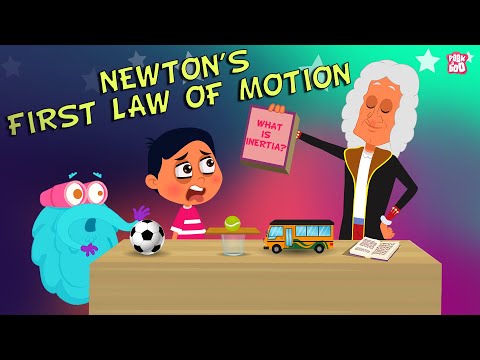
You know what’s wild? I once tried to ride my bike hands-free for, like, two seconds. It didn’t end well. I went zooming down the street, arms flailing, and boom! Right into a bush. But hey, let’s talk about what really happened there: kinematics!
So, kinematics is all about motion. Like, why do things move the way they do? Ever wonder how fast that soccer ball flies when you kick it? Or what happens when a car slams on the brakes? The science behind that is kinda magical.
It’s not just numbers and formulas; it’s like the choreography of our everyday life. Forces are pulling and pushing all around us! And trust me, this stuff isn’t just for science geeks in lab coats. It connects to everything we do—like riding a bike… even if you crash into bushes sometimes!
Exploring the Kinematics of Motion: Understanding the Principles of Movement in Physics
So, let’s chat about kinematics, that’s the fancy word we use when we talk about motion in physics. It’s all about understanding how things move without getting into the nitty-gritty of why they move, you know? Like, why does a ball roll down a hill? Kinematics breaks that down into pretty simple stuff—think distance, speed, and direction!
First off, **distance** and **displacement** are key players in this game. Distance is how much ground you cover, like when you jog around the park; that’s a straight-up number. But displacement? That’s more about where you started and where you ended up. If you jog in a big circle, your displacement is zero because you’re back where you began! Crazy, huh?
Then there’s **speed** and **velocity**. Speed tells us how fast something is moving—like when you’re racing your friend on bikes. You might pedal at 15 kilometers per hour—that’s speed! Velocity tweaks it a bit though because it includes direction too. So if you’re zipping East at 15 kilometers per hour, now we’re talking about velocity.
Now let’s take it up a notch with **acceleration**. This is how quickly your velocity changes over time—not just how fast you’re going, but if you’re speeding up or slowing down. Picture this: You’re driving and suddenly hit the gas! Your car accelerates forward quickly—or maybe you’re coming to a stop at a red light. That change in speed is acceleration.
Here are some key concepts to keep in mind:
- Uniform Motion: This means moving at a constant speed in a straight line.
- Non-Uniform Motion: Here we’re talking about changing speeds or directions—basically anything that’s not straight from point A to point B.
- Graphs of Motion: They can show us relationships between distance and time or acceleration over time—helping visualize movement!
So imagine watching a bird take flight. At first, it’s sitting still on a branch (that moment of rest), then it flaps its wings and accelerates upward until it reaches cruising altitude—how cool is that? Watching this dance really brings kinematics alive!
In real life applications like sports or driving cars, kinematics helps athletes optimize their performance or helps engineers design safer vehicles by understanding how quickly things can stop or change direction.
Anyway, kinematics isn’t just numbers and equations; it’s like the underlying script of every motion we see in our everyday lives! So next time you ride your bike or throw a ball around with your friends, think about all those principles at play—even if they’re not always visible! Pretty neat stuff if you ask me!
Understanding the Relationship Between Forces and Motion in Kinematics: A Comprehensive Overview
Alright, let’s get into the whole relationship between forces and motion in kinematics. It might sound complicated, but once you break it down, it’s really like a dance. You know how one step leads to another? Forces and motion work in a similar way.
Kinematics is all about describing motion—like how fast something is going or where it’s headed. But here’s the kicker: motion doesn’t happen in a vacuum; it needs forces. Picture this: you’re playing soccer. The kick you give the ball is a force that makes it move. Without that kick, the ball just sits there, right?
Now let’s talk about some key concepts:
The classic example of these interactions is Newton’s Second Law of Motion: Force = Mass x Acceleration. It tells us how much force we need to apply based on how heavy the object is and how quickly we want to change its speed. If you’re trying to lift your little brother off his chair versus lifting your big dog off the couch, that’s gonna feel different depending on their mass!
Another interesting aspect of kinematics is velocity, which tells us both speed and direction. Imagine you’re riding your bike down the street; if you’re going straight at 10 mph—that’s your velocity! Now if you make a sudden turn while maintaining that speed? That’s acceleration changing direction!
Oh man, I remember one time when I was riding my bike downhill (freezing cold wind in my face), and I hit some gravel! I had to lean into the turn just right to avoid crashing—yeah, that was all about forces acting on me and my bike!
Finally, don’t forget about friction. This force opposes motion—it can slow things down or even stop them entirely. Like when you’re trying to slide on a hardwood floor but end up stopping because of friction between your shoes and the floor.
So there ya go! Understanding forces in relation to motion gives us insight into everything from daily life events—like biking through gravel—to complex systems in physics. The essence lies in observing how these forces interact with motions around us every day!
Exploring the Four Types of Motion in Kinematics: A Comprehensive Guide to Understanding Motion in Physics
So, let’s chat about motion! You know, motion is like the heart of physics. It’s all around us, whether you’re running to catch the bus or watching a ball bounce. Kinematics is the field that studies this movement, and it helps us understand how things move in space over time. There are basically four main types of motion in kinematics: linear motion, rotational motion, oscillatory motion, and translational motion. Let’s break them down one by one, shall we?
Linear Motion: This is the simplest type of motion. Imagine you’re driving straight down a road. Here, your car moves along a straight path. In linear motion, objects can either move at a constant speed or accelerate (like when you step on the gas). So, if you’re cruising along at 60 miles per hour on a flat road without changing speed, that’s constant linear motion! But if you suddenly speed up to 70 miles per hour—boom! You’ve got acceleration happening.
Rotational Motion: Now let’s swirl things around a bit! Rotational motion happens when an object spins around an axis. Think about Earth spinning on its axis—or maybe even a merry-go-round at the park. When something rotates, every point on it moves in a circle around that central spot. If you’ve ever spun a basketball on your finger, that ball’s surface is moving in rotational motion while your finger sits still in the center.
Oscillatory Motion: Oscillatory motion is like swinging back and forth. Picture yourself on a swing at the playground; you go forward and backward repeatedly. It has rhythm! This kind of movement cycles between two points—the highest point of your swing and the lowest point. Some great examples are pendulums ticking away or even the way strings vibrate on a guitar when you strum them.
Translational Motion: This might sound fancy but hang tight! Translational motion refers to an object moving from one place to another without rotating or oscillating. So when you kick a soccer ball across the field? Yup—that’s translational! The ball travels through space from one location to another instead of spinning or swinging around.
Now here’s where it gets cool: sometimes these types of motions overlap! Like when you’re driving your car (linear) while listening to music (oscillatory vibrations), or doing donuts in your driveway (rotational)! Isn’t physics just like life? Each type of movement plays its role and tells its story.
Understanding these basic types can make sense of soooo many things happening in our world daily! Whether it’s sports, transportations or even just everyday tasks—motion is everywhere.
So next time you’re out there moving around—remember there’s some pretty nifty science behind what you’re doing!
Kinematics, huh? It’s like the choreography behind how things move, you know? Imagine watching a dance performance. Each dancer has their own rhythm, speed, and style. Kinematics is sort of the science behind that movement—it tells us how fast things are going and what direction they’re dancing in.
When I was a kid, I remember running around the playground. One minute, I’d be sprinting to catch my friend on the swings. The next minute, I’d be slowing down because that big slide looked a bit scary. Those little shifts in speed and direction? That’s kinematics doing its thing right there! It’s all about understanding how an object changes its position over time. You follow me?
So let’s break it down a bit. Kinematics deals with concepts like velocity and acceleration—big words that sound complicated but really just describe how fast you’re moving and how that speed changes over time. Velocity is all about your speed plus direction—like saying you’re cruising at 10 miles per hour towards the ice cream truck while your friend is running ahead to get there first!
Acceleration? That’s when you hit the gas or hit the brakes.(like coming down that slide) It can either make you go faster or slow you down. Think about it: when you push off from the ground to jump high into the air—that upward motion mixes in some serious physics magic!
There are equations that help explain all this stuff too—like (d = vt + frac{1}{2}at^2). Okay, maybe that looks a bit scary at first glance (math can be super intimidating!), but it just means distance traveled depends on how fast you’re moving and any acceleration happening along the way.
But here’s something cool: kinematics isn’t just for physics class; it pops up everywhere! Ever watched a car chase in an action movie? Those crazy fast turns and heart-stopping moments? Yeah, they’ve got some serious kinematic principles backing them up to make everything seem real!
In everyday life, whether it’s tossing a ball or driving your bike down a hill quickly while feeling totally free—kinematics helps shape those experiences. It’s pretty neat when you think about it: motion isn’t just random; there are rules and patterns governing it all.
So next time you’re out playing or just chilling watching something move around, consider this awesome dance of forces at work behind every little shift and sway of motion—it’s science doing its funky thing!