So, picture this: you’re at a party, and someone tells you they can tell you what’s in your favorite ice cream just by smelling it. Sounds a bit bonkers, right? But with mass spectrometry, that kinda thing is totally possible!
Imagine being able to analyze complex mixtures of organic compounds without breaking a sweat. Yeah, that’s what mass spectrometry can do—like a superpower for chemists!
This technology has come a long way and is making waves in organic chemistry research. It’s like finding out your favorite band has a new album—exciting stuff!
You know, every time I think about how scientists unravel the mysteries of molecules using this technique, it blows my mind. It’s not just about the nerdy details; it’s about making sense of the world around us. So let’s unpack this cool tool and see why it matters!
Exploring Recent Advancements in Mass Spectrometry: Innovations and Impacts in Scientific Research
Mass spectrometry, or MS for short, has come a long way in recent years. It’s like the ultimate detective in the world of chemistry, helping scientists identify substances and figure out their structures. Imagine a tool that can weigh tiny particles and tell you what they are—pretty cool, right? Let’s take a closer look at some of the recent advancements in this field and how they’re shaking things up in organic chemistry research.
First off, one notable improvement is in high-resolution mass spectrometry. This is all about accuracy. High-resolution techniques let researchers distinguish between molecules that are really similar but have slight differences. It’s kind of like being able to tell identical twins apart by their little quirks. For organic chemists, this means they can analyze complex mixtures more effectively and get clearer results.
Another big player in the game is hyphenated techniques. When mass spectrometry teams up with other methods like chromatography or NMR (nuclear magnetic resonance), it really boosts our understanding of organic compounds. Think of it as combining forces—like Batman partnering with Superman. These combos provide comprehensive insights into the composition and structure of substances. It’s a game changer for identifying unknown compounds!
Let’s not forget about automation. Newer mass spectrometers are getting smarter every day. Many now have automated sample handling capabilities which speeds up the process significantly. Imagine having a fancy robot assistant that does all the boring stuff while you focus on tackling those tough scientific questions! This automation also reduces human error, leading to more reliable results.
Also super interesting is how mass spectrometry has made its way into environmental science. Researchers use it to measure pollutants or toxins with great precision. For example, figuring out pesticide levels in crops can help keep our food safe and healthy. It’s pretty impressive how something as simple as weighing particles can lead to major benefits for public health!
In clinical applications too, MS has been revolutionary. It’s used for biomarker discovery, which helps diagnose diseases early on by detecting specific molecules associated with health conditions. The speed and accuracy of modern mass spectrometers allow doctors to quickly pinpoint problems, leading to more effective treatments for patients—just think about how much that improves lives!
Lastly, there is this exciting trend towards miniaturization. Portable mass spectrometers are becoming more common, meaning scientists can use them right where they need them instead of being stuck in a lab all the time. This portability opens up new possibilities for on-site analysis whether it’s at crime scenes or even remote fields where traditional labs aren’t accessible.
So there you have it! Mass spectrometry isn’t just sitting around; it’s evolving fast! With high-resolution capabilities, smart automation, strong partnerships with other methods, environmental applications, clinical use cases, and portable devices—we’re just scratching the surface here! These advancements make significant impacts across various fields of scientific research—and who knows what might come next?
Exploring Current Trends and Innovations in Organic Chemistry Research
Organic chemistry, you know, it’s all about the stuff that makes up living things. It’s not just for the lab geeks either; it’s like the foundation of everything! Recently, there’ve been some super cool trends and innovations in organic chemistry research. One area getting a ton of buzz is mass spectrometry. Let’s break that down together!
First off, **mass spectrometry** (or MS for short) is this nifty technique used to measure the mass of molecules. Imagine you’re trying to figure out how much a mystery ingredient weighs without ever having touched it; that’s kind of what MS does! By ionizing chemical species and sorting them based on their mass-to-charge ratio, scientists can identify and quantify different compounds in a mix.
You know how sometimes you might get overwhelmed when you try to pick out flavors in a complex dish? That’s kinda what chemists face when analyzing complicated mixtures—like natural products from plants. Enter **high-resolution mass spectrometry**! This tool provides clearer pictures of molecular structures thanks to its ability to distinguish between very similar compounds. Picture a crowded party where everyone has the same outfit but with tiny differences; high-res MS helps you spot those differences.
Another hot trend is **ambient ionization techniques**. These methods allow scientists to analyze samples without needing to prepare them too much. It’s like walking into your kitchen and tasting food straight from the pot instead of waiting for it to cool down or plating it nicely first! Techniques like **DESI (Desorption Electrospray Ionization)** let researchers analyze surfaces or tissue samples right where they are found—no fuss needed.
Now, let’s talk about something that feels like sci-fi: **MS imaging**. This isn’t just about identifying substances but actually visualizing where they are located in biological tissues! Imagine getting a map showing you exactly where every ingredient is hidden in your favorite dish—MS imaging does that but with molecules in cells. It helps researchers understand how diseases spread or how drugs work inside our bodies at a spatial level.
However, all these advancements come with their own set of challenges too. The technology can be expensive, and interpreting all that data requires serious skills—not just any chef can whip up gourmet meals from random ingredients without practice! Also, there’re reliability issues; results need thorough validation before we shout about them from the rooftops.
To sum it all up:
- Mass Spectrometry helps us measure molecular masses accurately.
- High-Resolution Mass Spectrometry provides clearer views on closely related compounds.
- Ambient Ionization Techniques allow analysis in real-time without heavy prep.
- MS Imaging visualizes where compounds exist within tissues.
As organic chemistry continues to evolve alongside tech innovations, who knows what other surprises are lurking around the corner? The excitement is real, and I can’t wait to see where these trends take us next!
Unlocking Molecular Insights: The Essential Role of Mass Spectrometry in Organic Chemistry
Mass spectrometry might sound like a fancy term, but it’s actually a super helpful tool in the world of organic chemistry. You know, scientists use it to figure out what molecules are made of and how they behave. It’s like giving a molecule a DNA test to find out its true identity!
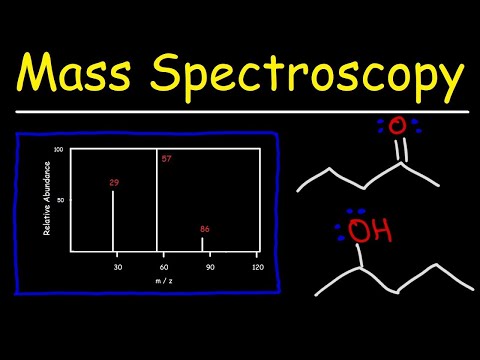
So, what does mass spectrometry do? Well, it breaks down molecules into smaller pieces and measures their mass. This helps chemists get a clear picture of the composition and structure of compounds. Basically, when a sample is analyzed, it gets turned into ions (charged particles), which then get sorted based on their mass-to-charge ratio. And guess what? The results appear as a graph that shows how much of each ion is present.
You may be wondering why this is so crucial for organic chemistry. I mean, organic compounds are everywhere! Think about it: they make up drugs, plastics, food additives—basically everything around us has them in one way or another. Here’s where mass spectrometry shines; it’s super precise at identifying these compounds.
Let’s break down some key points about why mass spectrometry matters:
- Identifying Unknown Compounds: Imagine you find an unknown substance at a crime scene or in nature. Mass spectrometry helps scientists identify what it is by comparing the data to known compounds.
- Determining Molecular Weight: By measuring the mass of different ions, researchers can determine the molecular weight of complex organic molecules.
- Studying Complex Mixtures: Organic samples are often mixtures (like your morning smoothie!). Mass spectrometry allows scientists to analyze these mixtures without needing to separate them first.
- Tracking Reactions: In organic chemistry experiments, reactions can be complicated—mass spectrometry can help track how chemical processes change materials over time.
One cool story comes from drug development. Scientists working on new medications often face challenges when trying to figure out the exact structure of their compounds or how they break down in the body. Using mass spectrometry allows them to find impurities or metabolites pretty quickly and accurately. It’s like having a superhero sidekick that whispers hints about what’s going right or wrong during research!
Over recent years, advancements have been made in desorption electrospray ionization (DESI) and matrix-assisted laser desorption/ionization (MALDI). These techniques let scientists analyze things in their natural state without heavy preparation—pretty neat for studying delicate biological samples.
Another aspect worth mentioning is sensitivity. Modern devices can detect even tiny amounts of substances! This means that researchers aren’t limited to just large samples; they can study trace levels that might have big implications—like finding markers for diseases early on.
In simple words, mass spectrometry is like putting on stylish glasses for chemists—it sharpens focus on what’s important! With its ability to reveal intricate details about organic compounds, it plays an essential role in both research and practical applications.
So next time you hear someone talking about molecular insights using mass spectrometry, just remember: it’s all about untangling those complex molecules so we can better understand everything from medicine to environmental science!
Mass spectrometry, or MS as the cool kids say, has made quite a name for itself in the world of organic chemistry. It’s like that one friend who always knows what’s going on with everyone in the group—it can tell you everything about the molecules you’re working with!
I remember this time during my undergrad when we had to analyze some complex mixtures in our lab. We were all scratching our heads, trying to figure out how to identify different compounds. Then came the magic moment when we cranked up the mass spectrometer. It was like opening a treasure chest filled with goodies! Suddenly, we got a clear read on what we were dealing with—the masses of each component shone bright on the display like twinkling stars in a night sky.
So, what’s really changed in mass spectrometry recently? Well, one big deal is that instruments have become way more sensitive and faster. It’s kind of mind-blowing how they can detect even trace amounts of substances. This means researchers can pick up on tiny changes in samples that would’ve gone unnoticed before.
Then there’s the whole realm of imaging and spatial analysis. Imagine being able to see where specific molecules are located within a sample—that’s pretty amazing! These advancements are helping scientists not just in chemistry but also fields like biology and medicine. Like, think about how crucial it is for drug discovery—understanding how compounds behave at a molecular level can lead to breakthroughs that save lives.
But it’s not all sunshine and rainbows; there are challenges too. Some people worry about data interpretation since more information means more complexity. You’ve got to know your stuff; otherwise, it could be overwhelming.
In any case, these advances are helping push organic chemistry forward like never before. Each new technique opens doors for better understanding and innovation. And who knows? Maybe someday someone will use mass spectrometry to hunt down new materials or unravel those mysterious biochemical pathways we’re still trying to figure out.
Anyway, I find it all super exciting! The way science evolves feels like watching an epic adventure unfold—full of discoveries and unexpected twists along the way!