Have you ever tried to find a needle in a haystack? Imagine if that needle is actually like a super tiny drop of water in the ocean. That’s kinda what scientists face when they’re trying to identify molecules in complex mixtures.
Now, enter mass spectrometry, a fancy tool that helps them with this crazy challenge. It’s like giving them superhero vision to spot those elusive molecules! And guess what? There’s been some seriously cool advancements in this tech called QToF (Quadrupole Time-of-Flight) mass spectrometry lately.
Picture this: you’re at a party, and the music is blasting. You want to hear your friend talking about their latest pet project, but it’s tough, right? Well, that’s how scientists feel without QToF! Thanks to its precision and speed, they’re finally tuning out the noise and honing in on what really matters in their research.
So let’s chat about how these advancements are shaking things up in the science world. It’s honestly exciting stuff!
Recent Innovations in QTOF Mass Spectrometry: Enhancing Scientific Research and Applications
So, let’s chat about QTOF mass spectrometry. I know, I know, it sounds super technical, but hang in there! This method has been making waves in scientific research lately. Basically, it’s a fancy way of measuring the mass-to-charge ratio of ions. Why does that matter? Well, it helps scientists analyze and identify all sorts of stuff—like proteins and small molecules—in complex mixtures.
First off, what’s cool about recent innovations is the resolution. Now, resolution is just a measure of how well you can separate different ions. Newer QTOF instruments have really cranked this up a notch. So you’re getting cleaner data that allows more precise identifications. It’s kind of like having a super high-definition TV instead of an old tube one. You see every detail clearly.
Another big deal is the speed at which these instruments can work. Advanced QTOF mass spectrometers can acquire data in real-time! Imagine being able to monitor chemical reactions as they happen—yeah, that’s pretty mind-blowing! This speed opens doors for researchers to get answers faster and make adjustments during experiments on-the-fly.
Now let’s talk about sensitivity. Recent models are seriously more sensitive than older ones. They can detect lower concentrations of substances without breaking a sweat. That means if you are studying something in tiny amounts—let’s say a rare biomarker linked to a disease—you’re going to have much better luck picking it up with these new tools.
Data analysis has also gotten a major upgrade thanks to advanced software tools paired with QTOF systems. These programs use machine learning algorithms to sift through enormous amounts of data. It’s like having an extra brain on your research team! This means researchers can find patterns and relationships they might’ve missed otherwise.
Oh, and let’s not forget about the versatility these systems offer now too! They can analyze everything from metabolites in drug development to environmental samples looking for pollutants. The applications seem endless; each breakthrough adds layers of possibilities for scientific inquiry.
You remember those science fairs back in school? Sometimes you’d see projects using simple chemical tests… Well, think about how far we’ve come since then! Now we have sophisticated techniques like QTOF mass spectrometry helping researchers win big by advancing our understanding in fields such as proteomics or metabolomics.
In short, keep your eyes peeled for what’s happening with QTOF mass spectrometry because the field isn’t slowing down anytime soon! With advancements constantly rolling out, who knows what kind of groundbreaking discoveries could be right around the corner? Science just keeps getting cooler and more complex—and isn’t that exciting?
Understanding the Principles of Q-TOF Mass Spectrometry in Scientific Research
Q-TOF mass spectrometry, or Quadrupole Time-of-Flight mass spectrometry, is one of those tools in scientific research that packs a punch. It’s like the Swiss Army knife of analytical chemistry. It can identify and quantify compounds in a sample with amazing precision. Let’s break it down so you can really get what’s going on here.
First off, what does Q-TOF even mean? Well, the “Q” stands for quadrupole, which is a type of device used to filter ions based on their mass-to-charge ratios. Think of it like a gatekeeper that helps scientists sort through all the noisy data in a sample. The “TOF” part refers to time-of-flight, which measures how long ions take to travel through a vacuum towards a detector. This measurement is crucial because it helps determine the exact mass of those ions.
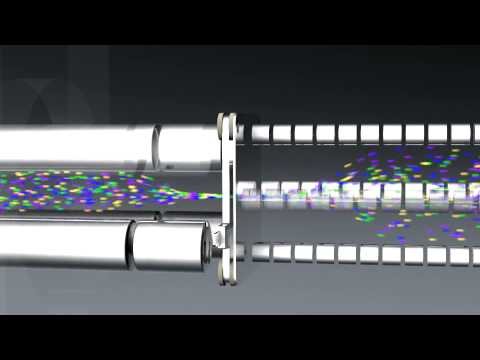
The way this all works together is pretty slick. When you inject a sample into the Q-TOF system, it gets ionized—basically turned into charged particles. These ions are then sent through the quadrupole filter that only lets certain ions pass based on their characteristics. Once they’re out of the quadrupole, they fly down an evacuated tube towards the detector.
Here’s where the time-of-flight comes into play: different ions travel at different speeds depending on their mass and charge. Lighter ions zip through faster than heavy ones. By measuring how long each ion takes to reach the detector, researchers can figure out its mass with great accuracy.
Another cool aspect is the ability to do tandem mass spectrometry (MS/MS). In this setup, you can select specific ions from the first stage and then fragment them further for more detailed analysis. It’s like peeling back layers from an onion to understand what’s really happening at the molecular level.
Now let’s talk about some applications! Q-TOF is widely used in fields such as proteomics, which studies proteins and their functions; metabolomics, focused on metabolic profiles; and even in drug discovery! If researchers want to identify new drugs or track how existing ones behave in biological systems, Q-TOF gives them pretty solid insights.
But here’s something important: **the accuracy** and sensitivity of Q-TOF are what make it stand out compared to other types of mass spectrometry techniques. You know how sometimes your phone camera struggles in low light? Well, Q-TOF doesn’t struggle as much with detecting low-abundance compounds in complex mixtures—it does this well!
So you might be wondering about limitations too—nothing’s perfect! One issue can be **cost**; maintaining these machines isn’t cheap. And yeah, there’s also a bit of a learning curve when it comes to data analysis since you’re dealing with huge datasets.
In summary, Q-TOF mass spectrometry is an essential tool in modern scientific research that combines precision measurement with advanced capabilities for analyzing complex samples. With applications ranging from medicine to environmental science and beyond, it’s reshaping our understanding of chemical processes at an unprecedented level! Isn’t science just mind-blowing?
Comparative Analysis of QTOF and Triple Quadrupole Mass Spectrometry: Applications and Advantages in Scientific Research
Mass spectrometry is one of those science tools that feels like magic. You take a sample, vaporize it, and suddenly, you can see what it’s made of down to the tiniest particles. Two major players in the mass spectrometry realm are QTOF (Quadrupole Time-of-Flight) and Triple Quadrupole mass spectrometers. Both have their unique strengths and applications in research.
First off, let’s talk about QTOF. This device combines a quadrupole for ion selection with a time-of-flight analyzer that measures how long ions take to travel. It’s particularly adept at getting high-resolution data. You know when you’re listening to a song and can pick out each instrument? That’s kind of what QTOF does with chemical compounds. It provides detailed molecular information, enabling scientists to identify compounds even in complex mixtures.
On the flip side is the Triple Quadrupole mass spectrometer. This one’s like the precision sniper of mass spectrometry. It uses three quadrupoles in tandem to filter ions based on their mass-to-charge ratios multiple times. This means it excels at quantifying specific compounds very accurately, even when they are present in tiny amounts—think finding a needle in a haystack but doing it without breaking a sweat.
Now let’s get into some applications and advantages of each type:
Applications of QTOF:
- Proteomics: In studies where researchers analyze proteins or peptides, QTOFs are invaluable for identifying structures.
- Metabolomics: You can investigate metabolic processes and biomarker discovery using this technology.
- Aerospace research: Analyzing samples from space missions can be more efficient with high-resolution capabilities of QTOF.
Advantages of QTOF:
- High resolution: Offers great accuracy in identifying unknown compounds.
- Molecular weight determination: It’s super reliable for determining molecular weights.
- Diverse applications: Versatile enough to be used across various fields from pharmaceuticals to environmental monitoring.
Applications of Triple Quadrupole:
- Toxicology studies: It’s often used for quantifying drug levels in biological samples—like figuring out how much caffeine is actually in your favorite energy drink.
- Pesticide analysis: In food safety testing, triple quadrupoles shine by detecting trace levels of pesticides.
- Cancer research: They help quantify important biomarkers that might indicate early signs of cancer.
Advantages of Triple Quadrupole:
- Sensitivity: Can detect compounds at extremely low concentrations—like looking for rare gems among pebbles!
- Simplicity in quantitation: The way it operates allows easy quantification across samples without complex calibrations.
- The stability over time: It’s reliable for consistent results during lengthy experiments or routine analyses.
So which one should you pick? Well, honestly, it depends on what you’re looking to achieve! If you need detailed structural information or want to analyze complex mixtures, go for QTOF. But if you’re focused on quantifying specific chemicals accurately—even in trace amounts—Triple Quadrupole is your best bet.
Thinking back on my first encounter with these machines… I remember standing next to an expensive piece of equipment feeling pretty intimidated while trying to figure out its controls! But once I got the hang of it, I realized just how powerful they both were for unraveling nature’s mysteries.
In conclusion, both techniques have unique benefits depending on the scientific questions you’re tackling. So whether you’re pushing boundaries in proteomics or ensuring food safety with pesticides, there’s likely a mass spectrometer ready to help out!
Mass spectrometry is one of those cool techy things that sounds way more complicated than it actually is. It’s like a super precise scale for molecules, letting you see what they’re made of and how much of them you have. Recently, advancements in QToF mass spectrometry have really taken off, making it even more powerful for scientific research.
Let me tell you this story that happened a while back when I was visiting a lab. There was this researcher who had been trying to identify an elusive compound in some plant extracts. She was frustrated because traditional methods just weren’t cutting it. But then she got her hands on a new QToF mass spectrometer, and she was practically bouncing off the walls with excitement. Within moments, she was able to see the composition clearly—like watching a light bulb go on! It just goes to show how these advancements can turn challenges into breakthroughs.
So, what’s the big deal about QToF? Well, it’s all about high resolution and sensitivity. A QToF—short for quadrupole time-of-flight—mass spectrometer can measure really tiny differences in mass. This means researchers can separate similar molecules that would’ve previously been indistinguishable. Think about it: imagine trying to tell identical twins apart from just their voices—tough right? But now, scientists are getting better at distinguishing complex mixtures of compounds.
Plus, there’s this whole thing about speed and efficiency. Traditional methods could take ages just to give scientists a glimpse of what they’re dealing with. With newer tech, like QToF instruments, you can get results in real time! That’s like having instant noodles instead of waiting hours for homemade pasta—both are great but one is definitely faster when you’re hungry for answers!
What also blows my mind is the role these advancements play across various fields. From understanding proteins in biology to analyzing environmental samples or even metabolomic studies in medicine—these machines are becoming the Swiss Army knives of research tools.
In summary, as we embrace these futuristic techniques like QToF mass spectrometry, we open doorways to previously unexplored avenues in science and discovery! Sure, there are still obstacles ahead and questions yet unanswered—but hey, every little step forward counts, right? Just like that researcher I met; with every analysis she got closer to solving her puzzle—and that spark of discovery makes all the difference!