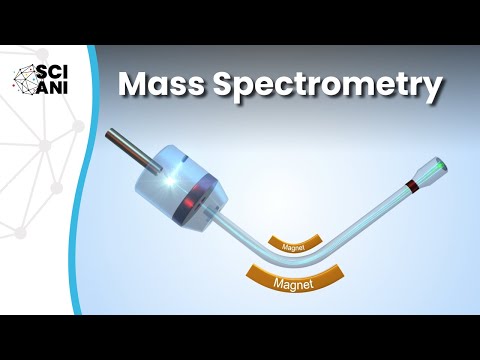
You know that moment when you’re at a party, and someone drops a super weird fact that totally changes the vibe? Like, “Did you know scientists can identify molecules with the shake of a fancy machine?” Yeah, that’s mass spectrometry for you!
Picture this: a super cool lab where scientists are like modern-day detectives. They use mass spectrometry to figure out what stuff is made of. It’s like having a magnifying glass for tiny things—you know, the kind you can’t see with your naked eye.
So, why should we care about these spectra? Well, they tell stories! Each little peak in those graphs is like a clue revealing secrets about molecules. They’re crucial in everything from drug discovery to understanding the universe.
Come on, let’s geek out on this!
Understanding Spectra in Mass Spectrometry: A Comprehensive Guide for Scientific Analysis
Mass spectrometry is like having a really smart detective in your science toolkit. When you’re using it, you get to understand the makeup of substances at a molecular level. So, let’s break down how this works with something called spectrum, which is essential in analyzing compounds.
Basically, when we run a sample through mass spectrometry, the first step is ionization. This is where molecules are zapped with energy and turned into ions. Imagine giving a group of kids on a playground some energy drinks—they start running around wildly! The same thing happens to those molecules; they become charged particles and are propelled into the next steps.
Once you have those ions zooming about, they enter an analyzer that sorts them based on their mass-to-charge ratio. This part is crucial because different ions travel at different speeds, kind of like how faster runners finish before others in a race. This sorting generates what’s known as a mass spectrum.
The result? A graph that displays peaks! Each peak corresponds to a distinct ion, and its height indicates how many of those particular ions are present in your sample. If you’ve ever stalked your friend’s social media after seeing their new fancy meal—the way you can tell what ingredients were used by looking at photos—this is similar! You get to identify which molecules are there based on their ‘peaks’ in the spectrum.
Now, let’s look into some key points about spectra:
- Mass Resolution: This refers to how well the mass spectrometer can distinguish between two different ions. High-resolution means better accuracy—like reading fine print without squinting.
- Molecular Weight Determination: By analyzing the peak positions on the spectrum, scientists can determine exact molecular weights—imagine figuring out ages by counting rings on trees!
- Fragmentation Patterns: Sometimes molecules break apart during analysis, creating fragments that show up as additional peaks. It’s like piecing together a puzzle where some pieces got lost.
Anecdote time! A friend of mine was involved in research trying to track down sources of pollution in rivers using mass spectrometry. They looked at water samples and found specific compounds associated with plastics just by analyzing the spectrum data! The ability to identify harmful substances was crucial for their work.
So when we talk about scientific significance here, it’s clear: spectra from mass spectrometry provide valuable information for everything from environmental science to medicine. They help us understand complex mixtures and contribute massively to fields like proteomics or metabolomics.
In short, masses reveal secrets when interpreted correctly through spectra. That’s why understanding these tools is not just crucial; it’s downright exciting for anyone diving into scientific analysis!
Understanding the Difference Between Mass Spectrometry and Mass Spectra in Scientific Research
Alright, let’s dive into the world of mass spectrometry and mass spectra. They’re like best buddies in the lab, but they play different roles in the science game. So, buckle up!
Mass Spectrometry is a method used to measure the mass of particles. It’s basically a tool that helps us identify what something is made of by breaking it down into charged particles called ions. The way this works is by first vaporizing your sample and then ionizing it, which means giving it a charge.
Then comes the fun part: these ions are accelerated through an electric field and sent into a mass analyzer. This analyzers separates them based on their mass-to-charge ratio. Sounds complicated? Well, think of it like sorting your candy by type! You’ve got some small chocolates and big gummies; you want to figure out which is which, right? That’s what this process does for molecules.
Now, mass spectra are basically the output or result from that process. When you finish running your sample through mass spectrometry, you get a graph—this is your mass spectrum. On this graph, you’ll see peaks representing different ions and their abundance levels.
- X-Axis: Represents the mass-to-charge ratio (m/z).
- Y-Axis: Shows how much of each ion was detected.
Each peak corresponds to a specific ion detected in your sample. So if one peak shows up high on the graph, it means there were a lot of those specific ions present in your original sample.
Now imagine you’re looking at a recipe for cookies; each ingredient has its own signal! If you see butter’s peak loud and proud on your spectrum but not as much flour’s peak—well, maybe it’s time to adjust your cookie game!
To make things even clearer: **mass spectrometry** is like an *action*—the method we use to analyze substances; while **mass spectra** is more like *results*—the songs that play after we hit ‘play’ on our method.
In research, understanding both makes all the difference. Mass spectrometry allows scientists to identify compounds with precision *and* sensitivity. Mass spectra provide crucial information for qualitative (what’s there?) and quantitative (how much is there?) analysis.
So remember: Mass spectrometry gets things moving while mass spectra shows us what we’ve got post-party! It’s pretty cool how these two work together to unravel complex mixtures in everything from environmental monitoring to drug testing.
In sum, grasping these concepts can seriously up your scientific game!
Exploring the Four Essential Features of Mass Spectrometers in Scientific Research
Mass spectrometers are pretty fascinating tools in the world of scientific research. They’re like detectives for molecules, helping us figure out what substances are made of and how much of each is present. When scientists want to analyze chemical compounds, mass spectrometry is often their go-to method. Let’s take a closer look at the four essential features that make mass spectrometers so important in research.
1. Ionization Source:
This is where it all starts. The ionization source converts the sample into ions, which are charged particles. There are different types of ionization techniques, like Electron Impact (EI) or Electrospray Ionization (ESI). Each has its own vibe and works better with specific types of compounds. For instance, ESI is great for large biological molecules such as proteins because it can generate ions in solution without breaking them apart.
2. Mass Analyzer:
After the ions are created, they need to be sorted out by their mass-to-charge ratio (m/z). This is where the mass analyzer comes into play. There are several types of analyzers—like Time-of-Flight (TOF) or Quadrupole—that determine how these ions behave in an electric field or magnetic field. Imagine a racetrack where only certain cars can make it through based on their size and speed; that’s basically what happens here! A TOF analyzer can help scientists get incredibly precise measurements, revealing which intricate details lie within complex mixtures.
3. Detector:
Now that we have our sorted ions, they need to be counted and measured. That’s where the detector comes in! It records how many ions come through and at what m/z values. Think of a detector as a scoreboard at a game—it shows who scored and when! Common detectors include electron multipliers and Faraday cups; they all have different sensitivities which help researchers pick up even tiny amounts of an analyte.
4. Data Analysis Software:
Once data from the detector is collected, scientists need software to make sense of it all., right? This software interprets spectra—those graphs that show peaks corresponding to different ions—helping researchers identify compounds and their concentrations quickly and accurately. It’s kind of like going through a treasure map: without the right tools to interpret it, you might miss out on some hidden gems!
In essence, each feature plays a critical role in making mass spectrometry effective for various applications—from drug discovery to environmental analysis or even studying ancient artifacts! These tools not only make science exciting but also significantly contribute to advancements across multiple fields.
So next time you hear about mass spectrometry being used in research, you’ll know there’s a lot more happening behind the scenes than just measuring stuff! Each component works together smoothly like a well-oiled machine—the ultimate team player in scientific exploration!
Mass spectrometry, huh? It’s one of those things that sounds super techy and complicated, but it’s actually a pretty cool tool we use to understand the world around us. Imagine being able to identify the different ingredients in a mystery cookie recipe just by analyzing the cookie itself. That’s kind of what mass spectrometry does, but for molecules.
So here’s the deal: when we run a substance through a mass spectrometer, it breaks down into its individual components and shows us basically how much of each component there is. The result is a mass spectrum, which looks like an odd graph with peaks and valleys. Each peak corresponds to a different molecule or fragment, revealing its mass and abundance in the sample. It’s like peeking at all the hidden flavors in that cookie!
I remember this one time I was at a science fair and watched this grad student analyze some dirt samples from an archaeological site. He pulled up the mass spectra he’d generated and explained how they could identify ancient plant residues or even remnants of what people used to eat thousands of years ago! Can you imagine that? A simple piece of dirt telling stories from centuries ago! It felt like connecting past lives with modern science.
The significance of these spectra goes beyond just identifying ingredients. They help scientists unravel complex biological processes in medicine, track pollutants in our environment, or even discover new materials for tech advancements. Think about how crucial that is for understanding diseases or finding ways to combat climate change! Each peak on that spectrum is like a miniature revelation about our universe.
So next time you hear about mass spectrometry or see those funky graphs, remember it’s not just numbers on paper—it’s like having conversations with molecules about what they are and where they’ve been. Pretty mind-blowing when you think about it!