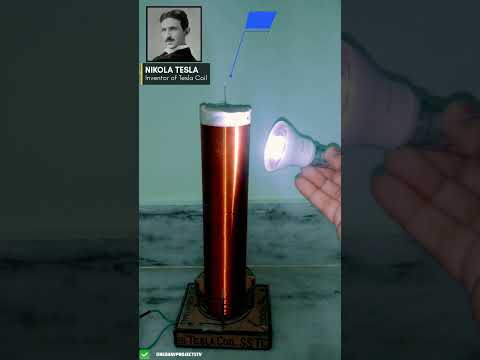
You know that moment when you’re sitting in class, and the teacher starts talking about physics? And half the time, you’re like, “What even is this stuff?” Well, I used to feel that way too. But then everything changed when I stepped into my own lab.
I remember the first time I mixed baking soda and vinegar for an experiment. It was supposed to be a simple demonstration, but suddenly, there was a mini volcano erupting right in front of me! All my classmates were howling with laughter while I was just standing there in awe. That’s when it hit me: science can be seriously fun.
Now, let me take you on a little journey through my physics lab adventures. It’s not all explosions and chaos—though those are definitely highlights! I promise there’s plenty of cool stuff to discover along the way. Ready? Let’s go!
Innovative Science Projects: Exploring Cutting-Edge Ideas for Young Scientists
So, you’ve got this spark for science, huh? That’s awesome! Young scientists are the future, and exploring innovative projects can really fire up that passion. Let’s jump into some cool cutting-edge ideas that might just blow your mind.
First off, let’s talk about **renewable energy experiments**. You know how we’re all trying to save the planet? Well, you could create a small solar oven using a pizza box! Just line it with aluminum foil and make a little window for sunlight to enter. You can bake cookies while learning about solar energy at the same time. How cool is that?
Another great project is building your own **water filtration system**. Grab some pebbles, sand, activated charcoal, and a plastic bottle. Layer them in the bottle and pour dirty water through it! You’ll see how each layer cleans up the water bit by bit. Plus, it’s a great way to learn about how clean water access works around the world.
Now let’s not forget about **motion experiments**! You could create a simple roller coaster using pool noodles and marbles. It’s super fun to design different tracks and see which one makes the marble go fastest or slowest. This is physics in action—gravity, speed, friction! Seriously exciting stuff.
Also, why not dive into **biomimicry**? Look at nature to solve human problems. For example, you can study how birds fly and then design your own paper airplanes based on their wing shapes. This helps you understand aerodynamics; pretty neat if you’re into flying things!
And for something more techy—how about coding a simple program with Scratch or Python? You can even create an interactive story or game! Plus, programming is becoming such an important skill nowadays.
Lastly, let’s not overlook **chemical reactions** like making slime or volcanoes erupt using baking soda and vinegar! Seeing those fizzing eruptions feels like magic but it’s seriously scientific too!
To wrap it up:
- Renewable energy: Solar ovens from pizza boxes.
- Water purification: DIY filter using pebbles and sand.
- Motion studies: Roller coasters with marbles.
- Biomimicry: Paper airplanes based on bird designs.
- Coding: Create stories or games!
- Chemical reactions: Slime or volcanoes with baking soda.
So yeah, these projects aren’t just fun—they’re gateways into understanding our world better while flexing your creativity as a young scientist! What’s holding you back? Go experiment—you’ll be amazed at what you discover!
Top Physics Project Ideas: Exploring the Best Topics for Scientific Inquiry
When you dive into physics, it’s like stepping into a vast ocean of ideas and experiments. There’s so much you can explore! Let’s look at some cool project ideas that can help spark your curiosity and get those gears running.
1. Simple Harmonic Motion
You could build a pendulum or a spring system to study the principles of oscillation. By changing lengths or weights, you can see how it affects the period of motion. It’s pretty neat to watch how everything swings back and forth!
2. The Physics of Sound
Sound waves are fascinating. You might experiment with different materials to see how sound travels through solids, liquids, and gases. Bonus points if you create your own musical instrument and analyze its sound frequency!
3. Solar Energy Efficiency
With renewable energy being such a hot topic, why not explore solar panels? You could measure how different angles or surfaces affect energy absorption from sunlight. It’s eye-opening to see how nature powers our gadgets.
4. Investigating Newton’s Laws
You can set up mini experiments to demonstrate each of Newton’s three laws of motion. Like launching a toy rocket for the third law—action-reaction is always fun! Seeing these laws in action gives you that “aha!” moment.
5. Magnetism and Electromagnetism
Try building an electromagnet with just a battery and some wire! You’ll be amazed at how magnetism works on a practical level when you can lift paper clips with your creation.
6. Fluid Dynamics
This one’s super fun if you’re into water… or any fluid really! Experiment with different shapes of objects (like boats) to see which designs reduce drag the best as they move through water.
7. Thermodynamics in Action
Explore heat transfer by comparing different materials and their thermal conductivity. For example, put ice cubes on metal versus wood surfaces and observe which melts faster—spoiler alert: metal usually wins!
Each of these projects not only enhances your understanding of physics but also lets you think critically about what you’re observing. They encourage hands-on learning, which is like giving physics legs so it can walk around the room with you!
So grab some supplies and get started on your journey through the world of physics experiments! It’s amazing what little projects can teach us about the universe around us.
The Most Famous Physics Experiments: Exploring Landmark Discoveries in Science
Alright, so let’s take a stroll through some of the most famous physics experiments that totally changed the game in science. These experiments aren’t just cool—though they are super cool—they shaped our understanding of the universe and how things work.
The double-slit experiment is a classic, right? It was first done by Thomas Young back in 1801. Here’s the deal: he shot light through two closely spaced slits onto a screen. What he saw wasn’t just two bright spots, but a whole pattern of light and dark bands. Seriously! This showed us that light behaves like a wave, not just like particles. It’s kind of mind-boggling because it suggests that light can be in more than one state at once. It even got weirder when they did it with electrons, showing that particles can also behave like waves!
Now let’s talk about Galileo’s inclined plane experiment. This guy was super smart; he rolled balls down an inclined plane to study acceleration—and seriously laid the groundwork for classical mechanics. By measuring how fast balls rolled down at different angles, he figured out that objects accelerate at the same rate regardless of their mass. You know what I think? That helped kickstart all those equations you see in physics classes today!
Then there’s Cavendish’s experiment from 1798, which is famous for determining the density of Earth! Cavendish used a torsion balance to measure how much lead balls attracted each other due to gravity. That was groundbreaking because it let people calculate gravitational force—something we use every day without even thinking about it!
Oh! And have you heard about the Michelson-Morley experiment? Conducted in 1887, this one tried to measure ether—a substance thought to carry light waves through space. They set up an apparatus with mirrors to compare light speed going in different directions. But guess what? They found no difference at all! This shocking result pretty much led Einstein to develop his theory of relativity later on.
The photoelectric effect is another standout achievement! Albert Einstein explored this phenomenon where shining light on certain materials kicks out electrons from them. The surprising part? It turns out that not all light does this equally—only certain frequencies cause these electrons to pop out. This breakthrough gave us clues about quantum theory and helped Einstein snag a Nobel Prize.
Finally, let me hit you with something modern: The Large Hadron Collider (LHC). I mean, if you want to talk landmark experiments today, this is where it’s at. Physicists collide particles near the speed of light to explore fundamental questions about the universe’s structure and even hunt for things like dark matter!
So yeah, these experiments are landmarks not just because they had fancy setups but because they made us rethink everything we thought we knew—about motion, gravity, energy, and even our existence itself! Each one opened new doors for discovery and understanding—pretty incredible stuff if you ask me!
So, I’ve been thinking about my time in the physics lab. You know how it is; you enter with all this excitement and curiosity, ready to tinker with gadgets and uncover the mysteries of the universe, right? Well, that was definitely my vibe!
I remember this one experiment where we tried to create a simple pendulum. It seemed straightforward; just a weight on a string swinging back and forth. But let me tell you, getting it just right took way more trial and error than I expected. One day, out of nowhere, I decided to switch up the weight we were using. Instead of using the usual metal ball we always used, I grabbed an orange from my lunch bag. Seriously! It was funny watching it swing, but what was even cooler was how much different its motion looked compared to the metal ball.
That little change made me realize something important: innovation often comes from these unplanned moments. You don’t always have to follow the script in experiments. Sometimes you need to step outside that box—or fruit bowl, if you will—and just see what happens.
There were also those times when things didn’t work out as planned… like when our laser experiments turned into a chaotic light show instead of producing those pristine beams we aimed for. We laughed it off, but deeper down, it reminded me how physics isn’t just about perfection; it’s about learning from mistakes and adjusting on-the-fly.
Honestly, every experiment sparked some unexpected questions in my mind. Each failure or success pushed me further down this winding path of curiosity. It’s like each flicker of light in the lab opened a door to even more questions: Why did this happen? How can I apply this next time? And you start seeing everything around you through that science lens.
So yeah, my physics lab experiences taught me that innovation isn’t just about cool gadgets or fancy calculations—it’s really about creativity and playfulness mixed with a whole lotta persistence! And every mishap along the way contributed to making this journey unique and unforgettable. So here’s to future experiments—may they always be just as wild and wonderful!