Okay, so picture this: you’re sitting at home, scrolling through your social media feed, and suddenly you see a picture of a weird-looking planet. You pause and think, “What the heck is that?!” That’s basically how I felt when I first heard about NASA’s latest missions to study our solar system.
I mean, we’ve got some seriously funky neighbors out there! From the swirling storms of Jupiter to the icy plains of Pluto, each planet has its own wild story. It’s like a cosmic reality show — with no commercial breaks!
NASA’s not just staring at the stars while munching on popcorn; they’re exploring these worlds up close and personal. The goal? To understand how our solar neighborhood ticks and maybe even answer some big questions about life beyond Earth.
So buckle up! We’re about to take a ride through the solar system that’s way cooler than any road trip you’ve ever imagined.
Exploring the Outer Solar System: NASA’s Pioneering Missions to Study the Gas Giants
Exploring the gas giants of our solar system is like opening a treasure chest filled with mysteries. You see, these massive planets—Jupiter, Saturn, Uranus, and Neptune—are not just big balls of gas; they hold vital clues about how our solar system formed and evolved.
NASA has led some incredible missions to these distant worlds. The Pioneer missions in the late 1970s were the first to provide close-up images of Jupiter and Saturn. Can you imagine? Those early spacecraft traveled billions of miles just to snap a few photos! They revealed stunning details about planetary rings and moons that nobody knew existed.
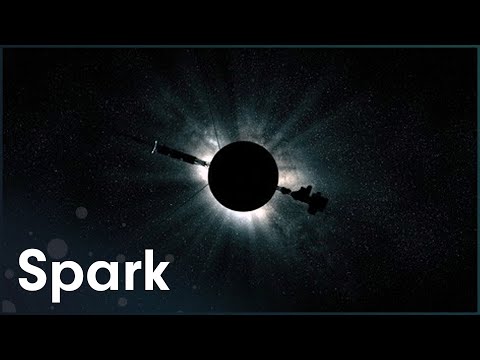
Then came Voyager 1 and Voyager 2. These spacecraft were like the stars of the show in the early ’80s. Voyager 1 took an epic journey past Jupiter and Saturn, while Voyager 2 went further to visit Uranus and Neptune. For many of us, seeing those vibrant colors and intricate patterns on their surfaces was jaw-dropping. Each planet had its own unique personality—from Jupiter’s swirling storms to Saturn’s magnificent rings.
And let’s not forget about Galileo. Launched in 1989, this mission spent several years studying Jupiter’s atmosphere and its moons. It sent back data that changed everything we thought we knew about all those little frosty worlds circling around it—Io, Europa, Ganymede… Each one has something special going on! For example, Europa is believed to have a subsurface ocean under its icy crust. Scientists think it might even harbor conditions suitable for life!
After Galileo wrapped up its mission in 2003, NASA didn’t slow down. They launched the Juno spacecraft in 2011 to delve deeper into Jupiter’s mysteries. Juno arrived at Jupiter in 2016 and began revealing secrets about its deep atmosphere, magnetic field, and even its core! It’s amazing how much we can learn from these crafty machines zooming through space.
Of course, the gas giants aren’t alone in their cosmic neighborhood; they have fascinating moons too! Some ones like Saturn’s moon Titan are especially intriguing because they possess dense atmospheres and lakes made of liquid methane. Just think about that: a whole world with lakes similar to Earth’s but made from something so different!
In short, NASA’s pioneering missions have unraveled many secrets about our gas giant neighbors. We’ve learned tons—from their atmospheric colors to their magnetic fields—all thanks to those brave little spacecraft venturing far beyond what we can see with naked eyes. And who knows? Future missions might uncover even more incredible discoveries that could make us rethink what we know about our solar system as a whole!
Nasa’s 2025 Solar Storm Confirmation: Insights and Implications for Space Science
So, let’s chat about NASA and that big solar storm news for 2025. You might be wondering what exactly this confirmation means and why it’s a big deal for space science. Well, let me break it down for you.
NASA has been keeping an eye on our sun for a long time now. Why? Because the sun isn’t just this giant ball of fire; it can throw out some pretty harsh stuff, like solar storms. These storms can mess with satellites, cause power outages on Earth, and even freak out astronauts in space. So, knowing when one might happen is super important.
Now, back to that 2025 confirmation. This isn’t just some random prediction. It’s based on years of research and understanding of solar cycles—basically the sun’s rhythm over time. The sun goes through these cycles about every eleven years when its activity level rises and falls. Right now, we’re heading toward a peak in activity called Solar Cycle 25.
Here are a few key points about what this means:
- Impact on Technology: Solar storms can disrupt communications satellites—ever tried to make a call during a storm? Yeah, exactly! More storms mean potential blackouts.
- Astronaut Safety: For those brave folks living aboard the International Space Station (ISS), high levels of radiation from strong solar storms could mean more risk.
- Boosting Research: Knowing when to expect these solar events allows scientists to prepare instruments for better data collection during the storm.
Imagine you’re in your backyard during a summer storm; you hear thunder rumbling in the distance. You’d probably want to get inside and safe! That’s kind of how scientists prepare for solar storms—by getting their instruments ready and alerting everyone involved.
There’s also an emotional side to this science story: think about those early astronomers who looked up at the stars without knowing what they were seeing. They might not have realized that those twinkling lights held so many secrets about our own planet’s safety! It’s like an ongoing mystery unfolding right above us.
So basically, as we gear up towards that 2025 date, it’s all hands on deck in the scientific community. Each piece of information collected helps build a clearer picture of how we interact with our sun—a giant partner in our cosmic dance! And guess what? By understanding these solar phenomena better, we help protect not just satellites but also our power grids and way of life down here on Earth.
In summary, NASA’s confirmation isn’t just news; it’s a rallying call for scientists everywhere to dive deeper into understanding our sun’s behavior while preparing us all for what might come next. That’s pretty cool if you ask me!
Exploring the NASA Solar Mission: Unveiling the Secrets of Our Sun and Its Impact on Space Science
NASA’s solar mission is all about getting to know our closest star a whole lot better—the Sun! You might think, “Okay, it’s just a big ball of fire,” but there’s way more going on up there than meets the eye. Basically, the Sun influences everything in our solar system, from climate patterns on Earth to the conditions in space that astronauts face.
So, why does NASA care so much about studying the Sun? Well, we need to understand its behavior and impacts on space weather. You see, sometimes the Sun sends out bursts of energy called solar flares. These can mess with satellites and even disrupt power grids back on Earth. Not cool, right?
Let’s break down some key aspects of this mission:
- Understanding Solar Activity: The Sun has an 11-year cycle where its activity fluctuates—from calm periods to times when it’s really active. Knowing more about this cycle helps us predict space weather.
- The Parker Solar Probe: This is one of NASA’s coolest tools for studying the Sun—it flies closer than any spacecraft has ever been! Imagine getting up close and personal with a giant campfire; that’s kind of what it’s like for Parker.
- Studying Solar Wind: The constant flow of charged particles emitted by the Sun affects everything in its path. Understanding solar wind can help protect satellites and astronauts from harmful radiation.
- Solar Spectroscopy: Scientists use special instruments to analyze light from the Sun. This helps them determine what materials are present and how they interact.
The mission is not only about observing but also figuring out how those observations impact technology and daily life on Earth. For example, during a solar storm in 1989, parts of Canada experienced a blackout because of intense magnetic activity triggered by solar winds.
When they launched these new missions to study our star, it was exciting for scientists everywhere—like opening a treasure chest full of secrets waiting to be unveiled! Each discovery has big implications not only for our understanding of astrophysics but also for practical applications right here at home.
And hey, it doesn’t stop with just understanding solar dynamics; it also helps us compare our sun with other stars. This could lead us closer to figuring out how other planetary systems operate!
In short, NASA’s exploration of the Sun isn’t just scientific curiosity—it’s essential for safeguarding technology that we rely on every day while unraveling the mysteries that govern our solar system. Who knew that studying a big ball of gas could have such a massive impact? Pretty wild stuff if you ask me!
You know, when you think about NASA’s mission to study planets in our solar system, it’s pretty mind-blowing. Just imagine staring up at the night sky and knowing that there’s so much out there, just waiting for us to explore it! It kind of gives you chills, right?
One time, I was camping under a blanket of stars with friends. We were trying to spot shooting stars and chat about constellations when someone pointed out Mars glimmering like a tiny red jewel. It hit me—there’s a whole world up there we can barely understand! Planets like Jupiter and Saturn have these majestic rings and moons that could host life! Just think about that for a sec.
NASA has been sending missions after missions to peek into the secrets of these distant worlds. Like the Voyager probes, which are literally zooming out of our solar system as we speak! They’ve been sending back images and data since the 1970s. Isn’t that wild? Those little machines have traveled farther than anyone thought possible, giving us glimpses into what lies beyond Earth.
Then there’s Mars—our friendly neighborhood planet where rovers like Curiosity and Perseverance are rolling around searching for signs of past life. Can you believe this? Robots driving on another planet! Sometimes I picture them having little conversations with each other as they navigate dusty terrain.
And let’s not forget about the gas giants! You’ve got Jupiter with its Great Red Spot—this massive storm bigger than Earth itself—and Saturn showing off those stunning rings made of ice and rock particles. They look so beautiful in pictures but imagining standing on one of their moons is something else entirely.
It’s amazing how everything ties together—the search for life, understanding our place in the universe, even looking for potential resources for humans in the future. This exploration isn’t just about science; it’s also about dreams and possibilities. When we think about expanding humanity’s reach to other planets, it makes you wonder what kind of adventures await us beyond our blue planet.
So yeah, NASA’s mission isn’t just a job or some far-fetched goal; it’s like a giant invitation to understand more about ourselves through exploring others. There’s really something magical about that idea—you know?