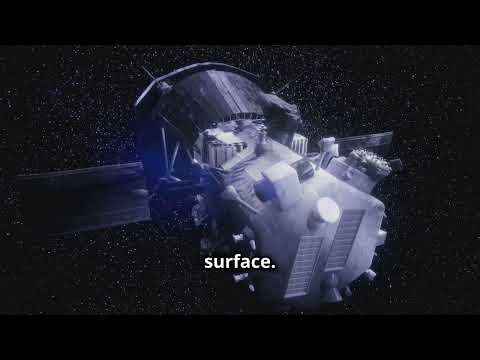
You know what’s wild? The sun is like a giant nuclear reactor hanging out in space, and it could bake you in seconds if you got too close. Seriously! Ever thought about how much we rely on that fiery ball of gas?
Well, NASA’s been on a mission—or should I say missions—to figure out what’s going on up there. And guess what? It’s not just about getting a nice tan. We’re talking solar flares, magnetic fields, and cosmic mysteries that affect everything from our Earth to the farthest reaches of space.
So grab your shades, because we’re diving into some seriously cool stuff about our closest star!
Unraveling the Cosmos: Exploring the Biggest Mysteries of Our Solar System
So, you’re curious about the cosmos and all those mind-boggling mysteries swirling around in our solar system? Well, let’s talk about that! The solar system is like a vast playground, with planets, moons, and all sorts of celestial bodies dancing around our beloved sun. And speaking of the sun, NASA’s solar missions have been crucial for shedding light on these mysteries. Seriously, no pun intended.
First off, let’s chat about the **sun** itself. It might seem pretty simple – just a giant ball of fire in the sky – but it’s actually quite complex. For instance, did you know that the sun is mostly made up of hydrogen and helium? Crazy, right? But even more intriguing are its mysterious outer layers. The corona, which is the outermost layer of the sun’s atmosphere, is way hotter than its surface! Scientists are still scratching their heads over this one; how can it be so hot? This mystery keeps astrophysicists busy.
Another big deal in our solar system are those **solar flares**. These are massive bursts of energy that shoot out from the sun’s surface. They can mess with satellites and even disrupt power grids here on Earth! You’d think something like that would be easy to predict or understand, but nope! There’s still a lot we don’t know about what triggers these flares or how they behave as they leave the sun’s atmosphere.
Have you ever heard of **solar wind**? It’s like a continuous stream of charged particles flowing from the sun into space. This wind travels at mind-blowing speeds—up to a million miles per hour! Can you imagine something zipping through space that fast? It can create beautiful auroras when it interacts with Earth’s magnetic field but also brings up questions about how it affects planets throughout our solar system.
Now let’s shift gears and talk about some other cool places in our neighborhood—like **Mars**! There have been numerous missions to explore Mars over the years. One exciting thing they found is evidence that liquid water once flowed there. Imagine ancient rivers running across its surface! But why did Mars lose its water? That’s still an open question.
And then there are those icy worlds beyond Mars—the **outer planets** like Jupiter and Saturn. They’re not just huge gas giants; they also have these incredible moons. Take Europa for example; it has an ocean beneath its icy crust. Could there be life lurking in there? Oh man, now that’s tantalizing!
Next up is **comets**, those icy visitors zooming through our solar system with spectacular tails behind them. Every time one shows up, it feels like an event—a chance to see ancient material from the dawn of time whiz by us! Studying comets helps us understand more about how our solar system formed billions of years ago.
In summary:
- The sun has mysterious layers—like the hotter corona.
- Solar flares are huge bursts that scientists can’t fully predict.
- Solar wind zips charged particles through space affecting everything.
- Mars once had water; why did it disappear?
- Jupiter’s moon Europa may harbor life under its icy shell.
- Comets provide clues about our cosmic beginnings.
So yeah, exploring these cosmic enigmas isn’t just cool; it’s essential for understanding where we come from and possibly where we’re going next in this vast universe full of wonders waiting to be uncovered! Makes you feel small yet excited at the same time, doesn’t it?
Current Location and Mission Status of the Parker Solar Probe: Insights into Solar Research
The Parker Solar Probe is like a tiny spacecraft on a mission that’s pretty out there—literally! Launched by NASA in August 2018, it’s zipping around the Sun to uncover its secrets. You might be thinking, “Why not just use telescopes from Earth?” Well, because the Sun is super mysterious and we need to get up close and personal to figure it all out, you know?
Right now, the Parker Solar Probe is soaring through the Sun’s atmosphere, also known as the corona. It dives into this wild region every few months on its journey. The mission has an impressive goal: to fly within 4 million miles of the Sun’s surface. That might sound like a lot, but in space terms? It’s ridiculously close!
Current Location: As of now, it’s doing just fine in its orbit. The probe completes several orbits around the Sun during its mission life of nearly seven years. Each closest approach gives scientists invaluable data about solar winds and magnetic fields. Basically, it’s like taking a roller coaster ride—each loop provides new insights!
Here are some key points about what it does:
- Measuring Solar Winds: It watches how fast and how hot these solar winds are as they blow off the Sun’s surface.
- Studying Coronal Mass Ejections (CMEs): These giant bursts can send tons of solar material towards Earth—and knowing more about them helps predict space weather!
- Understanding Solar Magnetic Fields: The probe studies how these fields change over time and distance from the Sun.
Now, let me share something cool: when I was a kid, I used to look up at the stars thinking about all that space stuff out there. I remember my science teacher showing us pictures of galaxies far away and telling stories about missions like this one! It felt like magic then, and honestly? It’s still kind of magical how far we’ve come in understanding our own star.
The data collected from Parker will help scientists develop better models for predicting space weather effects on satellites and even power grids here on Earth. So you see? This tiny spacecraft isn’t just wandering aimlessly; it’s paving the way for future discoveries!
So when you think of the Parker Solar Probe, picture that adventurous little ship racing through fiery plasma—like a cosmic detective trying to crack some serious solar codes! Its work is crucial not only for understanding our closest star but also for protecting technology here on our planet. Pretty neat stuff if you ask me!
Exploring NASA’s Solar Missions: Unraveling the Sun’s Mysteries on YouTube
Exploring NASA’s solar missions on YouTube is like jumping into a cosmic adventure without even leaving your couch. Seriously, it’s a portal to understanding our closest star, the Sun. Without it, life on Earth just wouldn’t exist. But there’s so much more to it than just warmth and light!
NASA has launched several missions specifically designed to study the Sun. Each one is like a new detective in the quest to uncover the many mysteries of our fiery neighbor. The exciting part? You can watch them all unfold on platforms like YouTube.
Some key missions include:
What’s super cool is how these missions share their findings with everyone through YouTube channels dedicated to showcasing their discoveries. Imagine scrolling through your feed and seeing breathtaking footage of solar flares or real-time data about solar winds! It makes all that science feel so accessible.
And here’s where it gets even more interesting: watching these videos can spark your curiosity! Some people might see a time-lapse of sunspots or hear about space weather impacting Earth and wonder how all these cosmic events affect us daily.
My buddy once watched a live stream of a solar eclipse that SDO was tracking. He was blown away when he realized how aligned we were with this massive celestial body! It was one of those moments when you just feel small but also part of something huge—kind of humbling, right?
So next time you find yourself wandering through YouTube looking for something new, consider exploring NASA’s solar missions. They’re not just videos; they are windows into understanding our universe better. Plus, who doesn’t want to impress their friends with facts about solar activity over coffee?
You know, whenever I think about the sun, it just blows my mind how it’s this huge ball of energy way up there, like a gigantic fireball in the sky. NASA’s solar missions have really been doing some serious detective work to understand our closest star.
I remember sitting outside on a hot summer day, watching the sun dip below the horizon. The sky turned all these amazing colors—pink, orange, and deep purple. It got me thinking: what’s really going on up there? Like, we see the sun every day, but there’s so much we don’t know about it.
NASA has launched all these incredible missions to uncover its secrets. With spacecraft like Parker Solar Probe and Solar Orbiter, scientists are peeling back layers of information about solar winds and magnetic fields. It’s not just for fun; understanding the sun helps us figure out space weather that can affect satellites and even our power grids here on Earth. Wild stuff!
You might think you can just grab a telescope and see what’s cooking on the sun’s surface—but that’s not how it works at all! The sun’s atmosphere is super hot and chaotic. It makes you wonder how astronauts trained for those spacewalks with that blazing heat right above them. So NASA sends robots instead to take measurements from afar or skim right through its outer layers.
What really hits home is that these missions aren’t just about gathering data; they’re also about sparking curiosity in all of us. You might find yourself staring at the sky more often or thinking deeply about your place in the universe after learning what’s out there. And who knows? Those kids looking up tonight could end up being tomorrow’s scientists or engineers because of this kind of exploration.
In essence, NASA’s solar missions are like having an ever-curious friend who keeps bringing intriguing stories from outer space to share with us—as if each solar flare has its own little tale waiting to be told!