You know that feeling when you’re trying to solve a puzzle, and you just can’t find that one missing piece? It’s super frustrating! Well, that’s kind of what scientists face every day—except their puzzles can be way more complicated than a jigsaw.
Imagine literally thousands of equations and tons of data swirling around. Now, here comes the kicker: Neural operators are like these super-smart little helpers that step in to make sense of it all. They’re not just for fancy techies or programmers; they’re changing the game in scientific research in ways we could barely dream of a few years ago.
You might be wondering, “What’s a neural operator anyway?” Good question! Basically, they’re like these brainy shortcuts for solving complex problems quickly. They take all that messy science stuff and turn it into something we can actually understand.
So, grab a comfy seat and let’s chat about how these clever tools are shaping discoveries across all sorts of fields, from climate science to quantum physics. Trust me, you’ll want to stick around for this ride!
Exploring the Applications of Neural Operators in Advanced Scientific Research and Computational Models
Neural operators, huh? Sounds fancy, right? Well, the truth is, they’re becoming pretty useful in the world of science and computation. So, let’s break it down a bit.
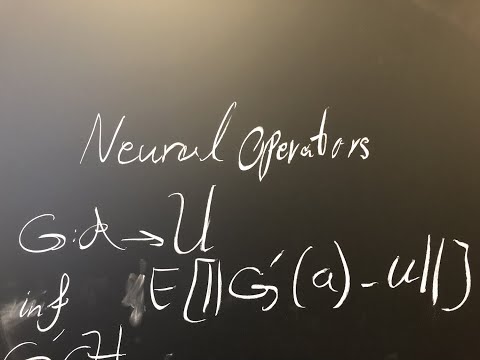
Neural operators are like smart helpers that can learn how to approximate mathematical operators. You know, those equations and functions that show how one thing relates to another? Basically, they help us make sense of complex systems by using data and a bit of machine learning magic.
One of the coolest things about neural operators is how they can deal with high-dimensional data. Imagine trying to analyze data from climate models or fluid dynamics. That stuff gets complicated fast! Here’s where neural operators shine because they can learn patterns in this high-dimensional space without needing to run vast simulations over and over again.
Let’s look at a couple of applications:
- Climate Modeling: Neural operators are used to predict weather patterns more efficiently. Instead of simulating every single interaction in the atmosphere—which could take forever—these models can provide approximations much faster.
- Material Science: When it comes to discovering new materials with specific properties, neural operators help speed up calculations related to atomic arrangements or stress-strain behaviors.
Picture this—think back to when you were struggling with math homework. You might’ve had a friend who could just “get” the answers without doing all those tedious calculations. That’s kind of what neural operators do! They skip some steps by learning from previous data instead of starting from scratch every time.
The magic lies in their flexibility. They can adapt their approach depending on the problem at hand. Whether you’re trying to understand fluid motion or chemical reactions, these tools adjust accordingly.
Now, I remember once talking with a friend who works on engineering projects that involve simulating physical processes. They were saying how frustrating it was to wait for results from traditional models; sometimes it felt like watching paint dry! But since they’ve started exploring neural operator methods, things got much quicker for them—and honestly way more interesting.
Ultimately, while there’s still a lot we’re figuring out about these techniques—their potential is huge! From speeding up research cycles to allowing scientists to tackle questions that seemed too intricate before, neural operators are changing the game. Isn’t that just wild?
To wrap this up (not too tightly though), these tools hold promise not only for efficient computations but also for pushing boundaries in scientific discovery and innovation. Who knows what else we’ll uncover as we keep using—and improving—neural operators?
Exploring Practical Applications of Neural Networks in Scientific Research and Innovation
Neural networks are like magic wands in the world of science and innovation. They can help us solve complex problems and make sense of massive amounts of data. You know how sometimes, when you’re trying to figure out what to wear based on the weather, you look at a bunch of different factors like temperature, humidity, or even how breezy it is? Neural networks do something similar but on a way larger scale with data.
Practical Applications
One big area where neural networks shine is in predictive modeling. Scientists can use these models to predict outcomes in various fields. For instance, if you’re studying climate change, a neural network could take historical data about temperatures, ice melts, and carbon emissions to forecast future climate trends. Pretty cool, right?
Then there’s the field of medical research. Imagine you’re trying to diagnose an illness just by looking at medical images. Neural networks can analyze thousands of X-rays or MRIs much quicker than a human ever could. They learn what healthy tissue looks like vs. unhealthy ones by being shown lots and lots of examples until they’re basically experts themselves.
Neural Operators
Now let’s talk about something called neural operators. These are specialized types of neural networks designed specifically for scientific research tasks. Think about it; they can tackle things like fluid dynamics or material science problems that usually require super intricate mathematical models. They’re basically trained to understand the “rules” that govern these processes without needing every detail laid out.
For instance, when simulating airflow around an airplane wing or predicting how materials will behave under stress, using neural operators can speed up those computations significantly. This means researchers are not stuck waiting around for simulations to finish—they can focus on actually pushing their work forward instead.
Another exciting application is in drug discovery. The process usually takes years because scientists need to test countless compounds for potential efficacy against diseases. With neural networks analyzing chemical structures and how they interact with biological systems, researchers can quickly identify promising candidates much faster than traditional methods.
So yeah, whether we’re talking about predicting climate change effects, diagnosing illnesses through imaging techniques, or speeding up drug discoveries with smart algorithms—neural networks are making waves everywhere! And as they continue evolving and getting smarter over time, who knows what other breakthroughs they’ll help us achieve? It’s pretty thrilling if you think about it!
Exploring Future Applications of Neural Networks in Scientific Research and Innovation
Neural networks are, like, super cool tools that computers use to learn from data. They mimic how our brains work, which is why they’re called “neural.” When we talk about their future applications in scientific research and innovation, you might just start to see a whole new world opening up!
Predictive Modeling is where neural networks truly shine. Researchers can train these models on vast datasets. For example, think about climate change. By feeding a neural network historical climate data, it can predict future trends or extreme weather events. This could help communities prepare better for natural disasters.
Then, there’s Material Discovery. Scientists are constantly on the hunt for new materials with unique properties. Neural networks can analyze chemical structures and predict how they’ll behave in real-world applications. Picture a scientist trying to create stronger batteries or lighter materials for airplanes—neural networks can help speed up that process.
In Genomics, the possibilities are also exciting. Analyzing DNA sequences is no small task; it’s kind of like trying to find a needle in a haystack! But with neural networks, researchers can identify patterns in genetic data much faster than traditional methods. This could lead to breakthroughs in personalized medicine or gene therapy!
Now let’s chat about Synthetic Biology. Here, we could engineer microorganisms to produce fuels or drugs efficiently. By using neural operators, scientists could simulate the behavior of different designs before actually creating them in the lab, saving time and resources.
Another really fascinating application is within Drug Discovery. The pharmaceutical industry spends ages developing new drugs because it involves massive amounts of data analysis and testing. Neural networks can streamline this process by predicting which compounds might be effective against specific diseases.
Also worth mentioning is Robotics. Imagine robots that learn from their environments just like humans do! Neural networks can give these machines the ability to adapt and innovate on their own—like teaching them to navigate complex spaces without hitting walls.
Neural operators specifically have created some buzz lately too! They enhance the efficiency of neural networks by representing functions directly instead of relying purely on traditional methods. It’s like giving researchers a magic wand—they don’t have to reinvent everything when facing new problems; they just apply what has been learned from previous challenges.
And yeah, while all this sounds amazing—and it truly is—we need to be responsible when implementing these technologies in fields like healthcare or environmental science. Balancing innovation with ethical considerations and ensuring transparency will be crucial as we move forward.
So basically, neural networks hold immense potential for transforming scientific research and innovation across various fields—from climate predictions to personalized medicine—even revolutionizing how we discover new materials or develop drugs! And who knows what other surprising applications we’ll come up with next? It’s like being at the forefront of something epic!
You know, when it comes to neural operators, it feels like we’re stepping into some pretty cool territory in science. These mathematical tools help us tackle complex problems by simplifying them in a way that machines can understand. And what’s even more exciting? They can actually learn and adapt over time, just like us humans do. Makes you think about the power of collaboration between man and machine, doesn’t it?
I remember reading an article where a scientist described using neural operators for predicting weather patterns. Like, we all know how unpredictable nature can be, right? But these operators take tons of data—temperature changes, humidity levels, wind speeds—and they crunch the numbers to make educated forecasts that are surprisingly accurate. It’s kind of like having a weather buddy who’s really good at math but probably doesn’t care about your weekend BBQ plans.
So anyway, these operators aren’t just great for weather predictions; they find their way into areas like fluid dynamics or even material science. Imagine you’re trying to figure out how to create a super strong material without having the budget for years of trial and error. Neural operators can model these materials quickly and efficiently—saving time and resources! It’s amazing what we can achieve when we leverage technology with scientific inquiry.
But here’s my question: as we continue melding our brains with algorithms and machines, are we losing that human intuition? There’s something special about curiosity and creativity that drives scientific discovery; I hope we don’t forget the importance of that spark while relying on neural networks.
In any case, it feels like neural operators are just beginning to show us what they can do! They promise to unlock new doors in research and applications that could help solve today’s biggest challenges. So yeah, let’s keep our eyes on this evolving field because it could lead us somewhere really fascinating!