You know those times when you’re staring up at the stars, trying to find Orion, but all you see is a bunch of twinkling dots? Yeah, I’ve been there too. It’s kind of like trying to find Waldo in a sea of red and white stripes—super frustrating!
But what if I told you there’s a telescope that can help us spot not just Orion, but entire galaxies? Seriously! The Newton Telescope is one of those cool inventions that’s taken our stargazing game to a whole new level.
This thing isn’t just big and shiny; it’s packed with some seriously smart tech. So, grab your imaginary space suit and let’s check out how this beauty is changing the way we look at the universe!
The Transformative Impact of the Telescope on Astronomy and Scientific Discovery
The telescope is one of those inventions that really changed the game for science, especially in astronomy. You know, it’s hard to wrap your mind around how much our understanding of the universe has shifted since we first pointed a lens at the stars. Imagine being a person in the 1600s, looking up and wondering what those twinkling dots were. Then, bam! You get a telescope, and suddenly, you’re seeing things no one ever dreamed of.
The Birth of Astronomy
Before telescopes, astronomers were pretty much flying blind. They used naked-eye observations to chart the movements of celestial bodies. But when Galileo Galilei crafted his first telescope in 1609, everything changed. With that single invention, he didn’t just see craters on the Moon; he spotted Jupiter’s moons too! That was groundbreaking because it challenged the long-held belief that everything revolved around Earth.
The Newton Telescope
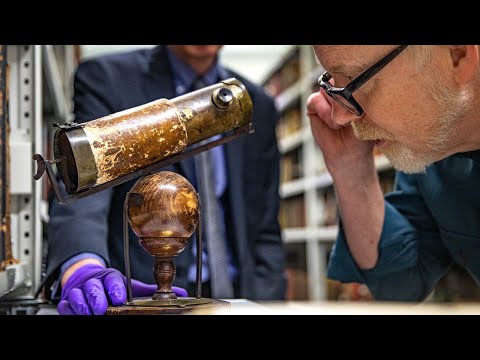
Then came Isaac Newton. He improved upon Galileo’s design with his own reflecting telescope in 1668. Instead of using lenses to gather light (which often caused blurry images), Newton used mirrors to reflect light. This was a huge step forward because it made telescopes smaller and more powerful. Can you imagine being able to see farther into space without carrying around this massive setup?
With Newton’s innovation, astronomers could look deeper into space than ever before. Look at how quickly discoveries piled up after that! Stars started getting cataloged in ways they’d never been before.
Transformative Discoveries
Thanks to telescopes like Newton’s, we’ve learned so much about our universe:
But it doesn’t stop there! Each new telescope built since then has brought us closer to understanding cosmic phenomena like black holes or dark matter.
Telescope Evolution
Fast forward through centuries and now you’ve got space-based telescopes like Hubble—far above atmospheric interference—giving us images of galaxies billions of light-years away! The technology just gets crazier by each decade as we develop bigger and better instruments.
Every time you hear about some jaw-dropping discovery—like planets outside our solar system or gravitational waves—it’s all thanks to these amazing tools called telescopes. They opened up an entire realm for scientific inquiry where questions lead us deeper into mysteries rather than keeping us stuck on Earth.
So next time you gaze up at a starry sky, just think about how far we’ve come from simply looking at those pinpricks of light and what’s still out there waiting for us to discover!
Exploring Newton’s Revolutionary Impact on Astronomy and Scientific Understanding
Newton, huh? This guy really shook things up in the world of science. So let’s take a stroll through how he impacted astronomy and our overall understanding of science. Just think back to the 17th century—people were still figuring out the universe, like, who was where and what was what.
Firstly, Newton introduced the law of universal gravitation. This wasn’t just some fancy idea; it explained how everything in the universe pulls on each other. You know that feeling when you drop something? Well, it’s not just gravity at work here on Earth. Newton said this force applies to the moon and planets too! So, when you look up at night, you’re seeing an intricate dance where every celestial body is tugging on each other.
Now let’s chat about telescopes. Before Newton rolled onto the scene with his ideas, telescopes were okay but could be better, right? He invented the reflecting telescope, which used mirrors instead of lenses. This meant clearer images without all that blurriness that came with glass lenses—like looking at a beautiful sunset through dirty glasses versus clean ones!
- Clarity: With his telescope design, astronomers could see stars and planets more clearly than ever before.
- Astrophysics: It allowed for new observations that contributed significantly to fields like astrophysics.
- Exploration: Folks could now explore further into space than they’d dreamed!
I remember reading about how people were fascinated by Jupiter’s moons after telescopes got better. It was like opening a window to another world! When Galileo pointed his telescope at Jupiter and saw its moons moving around it—a major wow moment—then Newton said “hold my beer” with his reflecting design! That made things so much clearer!
You know what’s wild? Before Newton came along, astronomy heavily relied on Ptolemy’s geocentric model, which placed Earth at the center of everything. But then here comes Newton explaining stuff using math—a big deal for scientists! With his laws of motion combined with gravity, he showed how planets orbit around the sun not just because they’re stuck there but due to gravitational forces. Talk about shifting perspectives!
This groundwork laid by Newton also helped later scientists refine astronomical methodologies. You’ve heard of Kepler and Einstein? Yeah—they totally riffed off Newton’s work! Each revolution in thinking built upon what he’d established.
The thing is, without Newton’s contributions to both physics and astronomy, we might still be stuck staring up at the stars with way less understanding. Today we send probes into space that are based on principles he set down over three hundred years ago! How crazy is that?
To wrap this up: Sir Isaac Newton wasn’t just a genius; he essentially transformed astronomy from early guesswork into a scientific discipline grounded in mathematics and observation. His impact ripples through time even today as we keep pushing our knowledge further into space.
You know, when you think about telescopes, it’s like stepping into a time machine. Just imagine the first time someone looked up at the stars and thought, “What’s going on up there?” That curiosity, wow! It’s been a driving force in humanity ever since. But fast forward to today, and we have some seriously amazing technology pushing the boundaries of what we see in the cosmos.
So, let’s talk about the Newton Telescope innovation. This telescope is not just a big piece of glass and metal sitting on a mount; it’s revolutionary. Sir Isaac Newton was all about figuring things out in the universe, right? His design took light and turned it into something we could actually see—like capturing shadows and turning them into detailed pictures of celestial objects. How cool is that?
When I was younger, my dad took me to a local observatory one summer night. I remember peering through one of those big telescopes and being completely blown away by how many stars I could actually see! It felt like opening a door to another world. And that was just through a basic telescope! With innovations like the Newtonian design, we’ve made incredible leaps forward.
The thing is, these advancements mean we can collect more light from distant galaxies and nebulae. It’s like having super eyes that help us see beyond our own backyard—past all those familiar constellations into realms we’ve only imagined before. This means better data for astronomers to study black holes, exoplanets that might host life, or even unraveling mysteries like dark matter.
But it doesn’t stop there. The beauty of this innovation is also in how it encourages collaboration around the globe. Astronomers from different countries can share their findings almost instantly; it’s kind of poetic when you think about it—people from all over are coming together for one common goal: understanding our place in this vast universe.
So yeah, advancing astronomy with the Newton Telescope isn’t just about new designs or technology; it’s about keeping alive that spark of curiosity that drives us all to look up at the night sky and wonder what else is out there waiting for us to discover. As each generation snaps an image of those distant stars or measures cosmic phenomena with greater precision than ever before, we’re stepping further into an expansive adventure across time and space. And who knows? Maybe one day you’ll find yourself peering through a telescope that’s even more advanced than what we have now—supporting new generations of star-gazers in their quest for knowledge!