So, picture this: you’re at a party, right? Everyone’s chatting, laughing, and there’s that one friend who always goes a bit too far with the jokes. You know the one. Anyway, after a few too many laughs, someone decides to figure out who’s the funniest of them all—yep, it turns into a little competition.
Now, before you know it, everyone’s tossing out their best jokes. Someone kills it and has everyone rolling on the floor. Others? Well, let’s just say they’re more like dad jokes that barely land.
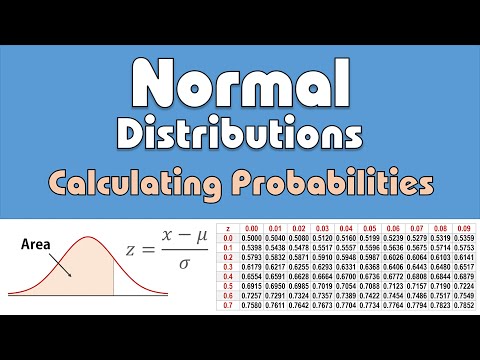
What if I told you there’s a scientific way to make sense of all this chaos? Enter the normal probability distribution—like the backbone of statistics! It encapsulates how things like heights, test scores, or even those joke ratings can be understood in a neat little bell-shaped curve.
And seriously, it helps scientists find patterns in all sorts of data. So come along as we break down what this whole thing is about—it might just change how you look at numbers forever!
Understanding Normal Distribution in Scientific Research: A Comprehensive Guide
So, normal distribution, huh? It’s like one of those foundational concepts in statistics that pops up in so many scientific studies. When people talk about “the bell curve,” they’re often referring to this. Basically, it’s a way to show how data points are spread out. Let’s break it down.
First off, what exactly is this normal distribution? Picture a smooth bell-shaped curve. Most of the data points cluster around the average or mean value, which is right in the middle of the curve. As you move away from the center, you get fewer and fewer data points—it’s like a gradual drop-off.
Key Characteristics:
- Symmetric: The left side of the curve mirrors the right side. If you fold it in half, they’ll line up perfectly.
- Mean = Median = Mode: In a normal distribution, these three measures of central tendency are all equal.
- Tails: The tails extend infinitely but never actually touch the horizontal axis. They give you insight into extreme values but don’t produce any actual observations.
Here’s something cool: even if your original data isn’t “normal,” it can often become normally distributed once you have enough samples or apply certain transformations. This is why researchers love collecting data—more samples usually lead to better insights!
Now let’s talk about why this matters in scientific research. You might be asking yourself why should you even care about normal distribution? Well, most statistical tests assume that the data follows this pattern. If it doesn’t? That could mess up your results big time! You could easily misinterpret findings and make decisions based on faulty conclusions.
For example, if you’re conducting an experiment on plant growth under different light conditions and find that most plants grow between 20 to 30 cm with just a few outliers at 5 cm or even 50 cm—that’s likely a normally distributed result! The averages help scientists understand what conditions work best for growth.
Applications:
- Testing Hypotheses: Many hypothesis tests rely on normal distribution assumptions.
- Quality Control: Industries use it to gauge product consistency and defects.
- Psychometrics: In psychology, traits like intelligence are often measured using tests that assume normal distributions.
On another note, I remember helping my younger cousin with her statistics homework once. She was struggling to understand why those crazy formulas mattered for her science fair project on butterfly populations. We plotted her butterfly count over time and saw that typical numbers formed a nice bell shape! She lit up when she realized it wasn’t just numbers—it was information showing how populations changed!
So really, understanding normal distribution isn’t just about crunching numbers; it’s about pulling insights from data that can change how we view phenomena around us! And while there are other types of distributions out there (like skewed or bimodal), none of them have quite as much charm as our good old friend—the normal distribution.
Hope that clears things up for you!
Understanding the 68-95-99.7 Rule: A Key Concept in Statistics and Its Applications in Science
Okay, so let’s break this down. You might have come across the 68-95-99.7 Rule, often called the empirical rule. It’s a super handy concept in statistics, especially when you’re dealing with something called the normal distribution. This is like a bell-shaped curve you see in graphs where most of the data points cluster around a central value.
So, what’s all this about 68, 95, and 99.7? Here’s the deal:
- 68% of your data falls within one standard deviation from the mean.
- 95% is within two standard deviations.
- 99.7% is within three standard deviations.
This means that if you were to take a bunch of measurements—like the heights of students in a school—you’d find that approximately 68% would fall just above or below the average height by one standard deviation. Sounds simple enough, right?
The idea here is pretty powerful for science and research. Imagine researchers studying a new drug’s effect on blood pressure. They collect data from hundreds of patients. By applying this rule, they can understand how typical or unusual their findings are. So if most results cluster close to an average decrease, researchers can feel more confident that their drug does indeed work.
You know what’s even cooler? This rule also helps scientists spot outliers—those funky data points far from the norm that could skew results or indicate something interesting happening! For instance, if one patient has an unusually high blood pressure drop that lies outside three standard deviations, it could point to an interesting anomaly worth exploring further.
If you think about it this way, it just paints a clearer picture of how data behaves in large groups. Like when you use averages to make sense of things: Sure, one person may have way above-average height, but what matters more is what most people look like.
The normal distribution, which supports this rule, shows up everywhere—from biology and psychology to environmental science and economics! Scientists love it because many natural phenomena tend to follow this pattern without us even realizing it.
A little emotional anecdote for you—one time I attended a workshop where they explained how this rule helped identify cases in health studies that had previously gone unnoticed due to small sample sizes. It was like uncovering hidden gems! Suddenly, those unusual cases didn’t seem so random anymore; they held stories waiting to unfold!
So yeah! The 68-95-99.7 Rule isn’t just some dry mathematical concept floating around; it’s crucial for making sense of all sorts of scientific data! Knowing how much data typically falls within certain distances from an average gives researchers confidence in their findings and helps them communicate results clearly.
This knowledge becomes immensely useful when presenting findings or making decisions based on statistics—you get clarity on whether your study supports a theory or if those quirky outliers deserve another look!
In short: whether you’re crunching numbers at work or diving into research papers for fun, keeping an eye on the 68-95-99.7 Rule will totally amp up your stats game!
The Significance of Normal Distribution in Scientific Research: Understanding Its Impact on Data Analysis and Interpretation
When it comes to science and research, the normal distribution plays a big role in how we analyze and interpret data. You know, imagine you’re throwing darts at a board. Most of your darts land near the center, with fewer landing further out towards the edges. That’s basically what a normal distribution looks like—it’s that classic bell curve!
The significance of normal distribution in scientific research cannot be overstated. So, here are some key points to consider:
- Foundation for Statistical Methods: Many statistical tests assume that the data follows a normal distribution. This includes t-tests and ANOVA, which are widely used to compare groups.
- Error Prediction: In experiments, understanding the normal distribution helps predict errors and variability. If your measurements cluster around the mean, you can get a better sense of what’s “normal.”
- Simplifying Complex Data: It helps to simplify complex data sets by providing a way to summarize them with just two parameters: mean and standard deviation.
- Guiding Decision Making: The insights provided by normal distribution can guide researchers when making decisions about hypotheses or future studies.
You probably didn’t realize how often we encounter this concept! For instance, in psychology, researchers often use it when measuring human traits like intelligence or height. These traits typically follow a bell curve pattern—most people cluster around an average height or IQ score, while very tall individuals or geniuses appear less frequently.
Another cool example is in quality control for manufacturing companies. They might want their product sizes to fit within certain limits—let’s say bottles filled with soda should be 12 ounces on average. By understanding the normal distribution of those bottle sizes, companies can ensure most bottles are close to that number while identifying any outliers (the rogue bottles that might be too small or too large).
Anecdotally speaking, I once did an experiment measuring plant growth under different light conditions. I noticed that most plants grew about 10–15 cm tall, but a few were way taller or shorter than that range. This difference made me realize just how useful normal distribution could be for interpreting my results. It wasn’t just about knowing the average—but understanding the spread was critical!
The impact of normal distribution on data analysis is profound because it influences not only how scientists gather data but also how they interpret it. If we didn’t have this framework, our analysis would be much more challenging and less reliable.
You see? Normal distribution isn’t just some dry math concept tucked away in textbooks; it’s all around us and essential for making sense of scientific data! So next time you’re reading research findings or even conducting your own study, think about that bell curve—it might just save you from some head-scratching moments down the line!
You know, the normal probability distribution is kind of one of those concepts in science that seems intimidating at first. I mean, you hear “probability” and “distribution,” and it feels like you’re stepping into a math class instead of exploring something cool. But seriously, it’s really just a way to understand how things tend to group together.
Picture this: imagine you’re at a birthday party. Everyone’s playing games and having fun, but there’s always that one game where people have to throw darts at a board. Most folks will throw their darts around the center—like they’re aiming for the bullseye—but some might hit way off to the side, right? That’s kind of what the normal distribution looks like; most results bunch up around an average point.
When scientists are doing research, they often gather data on things like test scores or measurements. If they plot this data on a graph, they usually find that it forms this bell-shaped curve—the hallmark of normal distribution. What’s super interesting is that many natural phenomena follow this pattern: heights of people, errors in measurements, even IQ scores! It seems like nature loves symmetry, huh?
Now here’s where it gets real: this distribution helps scientists make sense of uncertainty. You can use it to check how likely something is. For instance, if you know the average height of a group is 5’7”, with most people falling between 5’5” and 5’9”, then if someone shows up at 6’2”, well… that just might catch your attention!
But let me tell you about a time when I really felt the weight of this concept—sitting in on a lab presentation during my undergrad days. The researcher was discussing how they analyzed plant growth rates over time using statistical methods grounded in the normal distribution. As he explained how deviations from expected growth were as meaningful as the average itself, I realized just how crucial understanding these concepts are for making real-world decisions in scientific research.
And even if all these terms feel heavy sometimes, don’t forget—it’s about looking for patterns and drawing conclusions from them. So next time you think about probability distributions or statistics in science, remember it’s really all about trying to make sense of our natural world—one dart at a time!