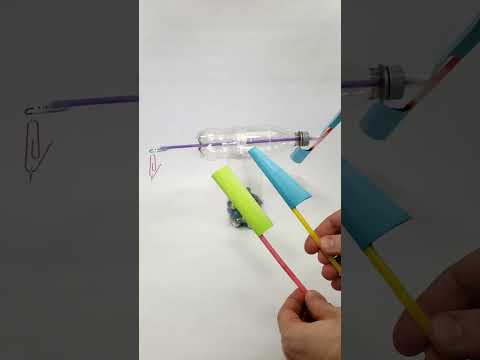
Okay, so picture this: you’re at a science fair, surrounded by volcanoes going boom and potato batteries lighting up the room. Then there’s you—nervously clutching your project that, let’s be real, was a last-minute scramble.
Funny thing is, that chaotic rush can lead to some of the most creative ideas. Physics doesn’t just live in textbooks; it’s everywhere. Seriously! Ever noticed how your phone seems to defy gravity when you drop it? That’s physics working its magic!
Now, if you’re aiming for science fair success, it’s all about picking projects that not only impress but also spark your curiosity. You want something that makes people go “Whoa!” or at least stirs up a good conversation.
So grab your lab coat—or whatever you wear when pretending to be a scientist—and let’s get into some cool physics projects that’ll make you the star of the show!
Top 10 Engaging Physics Project Ideas for Aspiring Scientists
Oh man, physics can look pretty intimidating at first glance, but once you start to play around with it, it’s actually super fun! If you’re an aspiring scientist or just someone who’s curious, here are some cool project ideas that could really get your creative juices flowing. You’re gonna love these!
1. Homemade Volcano
Alright, I know it sounds a bit cliché, but hear me out. It’s not just about the explosion of baking soda and vinegar. It’s a classic for a reason! You can explore concepts like chemical reactions and pressure. Plus, you can tweak it—like changing the shape or size of your volcano to see how it affects the eruption.
2. Build Your Own Electromagnet
Want to see physics in action? Make an electromagnet using just a battery, wire, and a nail. Wrap the wire around the nail and connect the ends to the battery—voila! You’ve got yourself an electromagnet. It’s awesome to pick up paper clips with something that looks so simple.
3. Egg Drop Challenge
So here’s a fun challenge: design something that will prevent an egg from breaking when dropped from a height. This is all about understanding force and impact. It gets your brain working on concepts like gravity and acceleration—and you get to test your skills in kind of a dramatic fashion!
4. Investigating Friction
Grab some different materials—think wood, rubber, metal—and test how far they slide on various surfaces. This project can show you how friction plays a role in everyday life! You’ll probably be surprised at how different surfaces affect movement.
5. Build a Mini Catapult
Like those medieval siege machines? Yeah! Build one using popsicle sticks and rubber bands and study angles and distance of launch. It feels pretty cool launching marshmallows across the room!
6. Create a Simple Circuit
This is pure magic when you get it right! Using batteries, wires, bulbs—make your own circuit that lights up or even powers a small fan. You’ll grasp ohm’s law quickly this way without even realizing it!
7. Investigating Sound Waves
Use different materials like strings or tubes to explore sound waves by creating musical instruments! Ever tried making a pan flute with straws? You’ll discover pitch differences based on length—the science behind music is fascinating!
8. Water Rockets
Grab an empty plastic bottle and fill it partially with water before sealing it with air pressure! When you release the pressure by removing some air through the nozzle—BOOM! Physics in action as it launches into the sky!
9. Color Mixing with Light
Get some colored flashlights or filters to see color mixing firsthand by shining them on a white surface combining red, green, and blue light! It dives deep into concepts of color theory while looking super cool.
10. Magnetic Slime
Okay, this one is just plain awesome—you mix glue with liquid starch and add iron filings for some magnetic magic! Not only do you have slime (which everybody loves), but you also get hands-on experience with magnetism.
These projects aren’t just for science fairs—they’re ways to play around while learning real-life concepts in physics that affect everything around us every day! So don’t be afraid to try them out; who knows what kind of experiments you’ll stumble upon while having fun?
Top Engaging Physics Projects for Science Fair Success: Downloadable PDF Guide
Well, let’s talk about physics projects for science fairs. Seriously, they can be a blast! So if you’re looking to make your project stand out, focusing on engaging experiments can make all the difference. Here are some cool ideas that might spark your interest:
1. DIY Catapult
Building a catapult is not only fun but also teaches the principles of kinematics and potential energy. You can use simple materials like popsicle sticks and rubber bands. Test how far different projectiles fly based on their mass or launch angle.
2. Balloon Rockets
Using balloons to demonstrate Newton’s third law of motion is pretty neat. Just inflate a balloon, tape it to a straw threaded through string, and watch it zoom when you let go! You can even experiment with different shapes of balloons or track the distance traveled.
3. Electromagnet Experiment
This one gets you into electricity and magnetism. If you wrap copper wire around a nail and connect it to a battery, you’ll create a magnet! You can check how many paperclips it picks up based on winding turns or voltage levels.
4. Water Rocket Launch
You can construct rockets using plastic bottles filled with water and pressurized air. The physics behind this project shows action-reaction forces in real time! By varying the amount of water or air pressure, you can measure its effect on flight distance.
5. Simple Harmonic Motion with Pendulums
Ever heard of pendulums? They’re perfect for showing concepts like wavelength, frequency, and energy conservation. Make your own pendulum out of string and weights, then experiment with length variations to see how it changes the swing period.
Now, aside from the coolness factor of these experiments, there’s something quite rewarding about seeing science in action—like witnessing that moment when you launch your homemade rocket into the sky! It brings back memories when I made my first catapult in school; watching my friend’s jaw drop as his marshmallow flew across the yard was priceless!
When working on any project, keep track of your results and findings. It’ll help when you’re presenting your work later on—it shows you did some serious thinking! And if there’s anything tricky about any concept, don’t hesitate to ask for help or look things up together with friends.
So yeah, tackling any one of these engaging projects could lead to some serious science fair success while having loads of fun in the process! Just remember to explain each step clearly in your presentation so everyone gets to appreciate all that hard work you’ve put in. Happy experimenting!
Top Engaging Physics Projects for Science Fair Success at Home
So, you’re on the hunt for some cool physics projects that can help you shine at your science fair? Great! Physics has this incredible way of tying into everyday life, and some engaging projects can really spark curiosity. Here are a few ideas that are fun and educational. Plus, they don’t require too much fancy equipment!
1. Build a Balloon Rocket
This one’s a classic. All you need is a balloon, some string, a straw, and tape. Here’s the deal:
– **String:** Tie the string tightly between two points, like chairs or trees.
– **Straw:** Thread the string through the straw.
– **Balloon:** Inflate it (but don’t tie it!) and tape it to the straw.
When you let go of the balloon, it zooms along the string. It’s all about Newton’s Third Law: for every action, there’s an equal and opposite reaction. You’ll be amazed at how fast this little rocket can go!
2. Create a Magnetic Marshmallow Launcher
This project combines magnets with marshmallows (yum!). It shows how magnetic forces can work.
– Get some small magnets and a piece of cardboard.
– Cut out a circle that fits into a cup to hold your marshmallow.
– Place magnets at either end of the launcher.
When you pull one magnet away from its partner underneath the cardboard while holding onto a marshmallow on top, *bam*! The marshmallow flies off! This not only showcases magnetic forces but is also super fun to do!
3. Explore Gravity with Homemade Slingshots
You know those rubber bands? Let’s see what happens when we use them in creative ways!
– Grab some sticks or chopsticks for structure.
– Use rubber bands to make slingshots.
Once you build this contraption, try launching different items like small balls or paper airplanes. Measure how far each one goes! This gives insight into forces like gravity and drag.
4. Make Oobleck: A Non-Newtonian Fluid
Oobleck is such an interesting substance because it behaves differently under stress—it can be both solid and liquid!
Mix 2 parts cornstarch with 1 part water in a bowl. When you punch or squeeze it, it feels solid; but when you let go, it flows like liquid. Explain to others how this relates to physics terms like viscosity and states of matter!
5. Construct a Simple Electric Motor
Ever wanted to see physics in action? Building an electric motor is thrilling!
Here’s what you need:
- Battery
- A copper wire
- A magnet
Wrap your wire around something cylindrical (like a pencil) to form coils—just keep some ends free! Connect one end to the battery while positioning the magnet underneath. Watch as your motor spins! It’s an awesome demonstration of electromagnetism!
Remember, these projects take basic materials from around your house or school supplies store—no need for anything fancy here.
When you’re picking your project, think about what interests you most—do you want something hands-on? Or maybe something that looks really cool? Whatever path you choose will speak volumes about your passion for science.
Good luck at your science fair! Just remember: Have fun while learning because that curiosity drives great projects forward!.
So, you know how science fairs can be a big deal for students? I mean, they’re not just about showing off some cool experiments or hoping for a shiny trophy. It’s more like a stage where you can really connect with physics and make it come alive! I remember back in school, my friend Sarah created this awesome roller coaster model for her project. She spent hours calculating the speed and angles, and she was just so excited to make it work. Watching her explain the physics behind it was better than any textbook.
Now, when you think about engaging physics projects for a science fair, the trick is to pick something that sparks your interest—something you actually want to dive into. It could be as simple as building a catapult or exploring energy by creating a solar oven. The key is finding that blend of fun and learning. You want your project to not just look cool but also show how physics affects our everyday lives—you know?
Also, don’t be afraid to experiment with your ideas! When my buddy Alex tried to demonstrate Newton’s laws using his pet dog (yeah, seriously!), he learned so much about motion and force—even if his dog wasn’t exactly cooperative! It turned into this hilarious story he shared while presenting his project. That kind of engagement? People remember that!
And really, it’s all about communicating what you learn. Like when you explain why your project works or what problems you faced—people connect with those stories. So whatever project you choose, just let your passion shine through! You’ll not only impress the judges but also bring others along for the ride on this fascinating journey through physics.