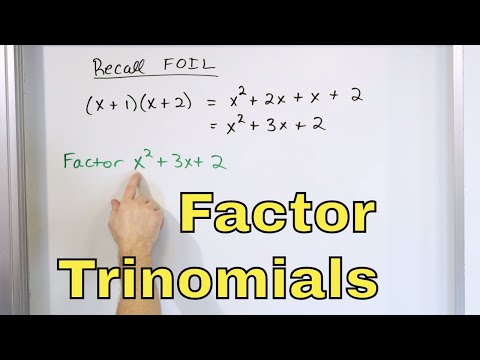
Okay, picture this: you’re at a party, and someone casually mentions polynomials. Suddenly, it feels like a math class reunion, right? Yikes! But wait. What if I told you that polynomial factorization isn’t as scary as it sounds?
Honestly, it’s kind of like finding the secret passage in your favorite video game. You know, that moment when you realize how to unlock a whole new level of understanding? That’s what polynomial factorization does for math!
So why should you care about these pesky little equations? Well, they pop up everywhere—like in physics or even economics. Yeah, seriously! It’s like they’re hiding in plain sight.
Let’s break it down together. You’ll see that getting into polynomials can actually be pretty fun and super insightful! Ready to unravel the mystery?
Unlocking Mathematical Insight: Exploring Polynomial Factorization through Real-World Examples in Science
Polynomials are basically expressions that involve numbers and letters, like x and y, combined with operations such as addition, subtraction, multiplication, and sometimes division. You might have seen one before: they can look something like this: 3x² + 2x – 5. Now, when we talk about **polynomial factorization**, we’re figuring out how to break these down into simpler pieces—or factors—that multiply together to get back to the original polynomial.
You might be wondering why this matters in the real world. Well, there are some pretty cool applications of polynomial factorization in science! Take physics, for instance. When you’re studying motion or forces, polynomials pop up everywhere—like when calculating the trajectory of a projectile. The equation representing that path can often be factored to make calculations easier or to identify key points like maximum height or range.
Let me share a quick anecdote here! I remember this one time during my physics class when we were studying projectile motion. We had this problem involving a basketball shot—yeah, it was all about angles and velocities! The teacher showed us how by factoring the polynomial representing the shot’s trajectory, we could quickly find where the ball would hit the ground without getting buried in complicated calculations. It was like solving a puzzle!
Now, let’s get more specific about what happens with polynomial factorization in different fields:
- Chemistry: When modeling reaction rates using rate laws that include polynomial equations, understanding their factors helps predict how changing one reactant affects others.
- Biology: In genetics, polynomials can represent population growth models. By factoring these polynomials, scientists can determine stable population sizes or predict changes over time.
- Economics: Polynomial equations often represent cost functions or profit maximization problems. When these are factored correctly, they provide insight into optimal production levels.
So how do you actually **factor** these polynomials? There are several methods—like grouping terms or using special formulas (think of things like factoring quadratics). One common technique is looking for common factors first.
For example:
– Take a polynomial: 6x² + 9x.
– You notice both terms share a common factor of 3x.
– So you can rewrite it as 3x(2x + 3), making it way simpler to work with!
And guess what? This method isn’t just an abstract exercise; it lays down fundamental concepts used in real-world applications.
Another important thing to highlight is that understanding factors can help you find roots. Roots are super important because they tell you where the polynomial equals zero—these points often have significant meanings in science too! For that basketball shot example earlier, those roots would tell us when the ball lands back on the ground.
But why stop there? By getting comfy with polynomial factorization and its concepts more generally—you’re not just solving math problems. You’re unlocking pathways to addressing real-world challenges across various scientific disciplines. It’s all interconnected!
So next time you’re faced with a polynomial equation—don’t sweat it too much! Think of it as an opportunity not just to solve for x but also to open new doors in your understanding of science and mathematics alike.
Exploring Wildberger Polynomials: Advances and Applications in Modern Mathematics
Exploring Wildberger Polynomials is pretty fascinating stuff, you know? These polynomials aren’t just numbers and letters thrown together. They’re pathways into deeper mathematical concepts. So, let’s break it down.
Wildberger polynomials are named after Norman Wildberger, a mathematician who proposed a unique way of looking at polynomials through the lens of geometry; his perspective opens a door to some pretty cool applications. Basically, he used an approach that reflects real-world structures more accurately than traditional polynomial methods.
One huge thing about Wildberger’s work is how it ties into polynomial factorization. This isn’t just a fancy term; it’s like figuring out the ingredients of your favorite recipe based on the final dish. When you understand how to factor polynomials correctly, you’re getting insights into their underlying structure. It’s like peeling back the layers of an onion!
You might be wondering: “What’s the big deal with all of this?” Well, using these polynomials can help us solve equations that seem impossible at first glance. They serve as a bridge to finding roots—those special values where a polynomial equals zero. In practical terms, this can lead to advancements in areas like coding theory and cryptography.
Think about it like this: when we factor a polynomial efficiently, we can compress information better than ever before. That’s kind of what we want when sending data over the internet securely and quickly!
- Applications in Modern Mathematics: These polynomials have implications in various fields. For instance, researchers use them in algorithm design to make systems faster and more efficient.
- Visual Geometry: The geometric insight Wildberger offers helps visualize equations better. This can make learning math less abstract and more intuitive.
- Teaching Tool: Because they simplify complex concepts, educators often find these polynomials useful in classrooms.
Speaking of teaching, I remember sitting through math class feeling lost sometimes—like I was staring at hieroglyphics instead of numbers! But once I stumbled upon geometric interpretations, everything clicked for me—it’s literally like turning on a light bulb.
So yeah, if you’re curious about diving deeper into the world of mathematics or want to explore polynomial factorization further, check out Wildberger’s work! It might just change how you see math forever. These ideas are not just academic; they’re real tools for innovation and problem-solving today!
Exploring Real-Life Applications of Polynomials in Science: Insights for Class 10 Students
So, polynomials, huh? You might think they’re just some dry math stuff you slog through in school. But let me tell you, they actually pop up all over the place in science. Seriously! Understanding polynomials can help you make sense of all kinds of real-life problems.
First off, let’s break down what a polynomial is. Basically, it’s a fancy way of saying a mathematical expression made up of variables and coefficients. They look something like this: (2x^3 + 3x^2 – 5x + 4). You can do all sorts of things with them—like add, subtract, multiply, or even factor them! That last part is super important because factoring polynomials can reveal some amazing insights.
Now, let’s get into those real-life applications. Here are some key areas where polynomials are totally essential:
- Physics: Ever heard of projectile motion? When you throw a ball or shoot a rocket, the path it takes can be modeled using polynomials. The equations help predict where it’ll land! Isn’t that cool?
- Biology: In biology, population models often use polynomial equations. For example, if you’re studying how bacteria reproduce in a lab setting, the growth pattern can sometimes be explained with these mathematical functions.
- Economics: Polynomials pop up in economic models too! They can represent cost functions or revenue projections over time. If you want to know how much profit your lemonade stand could make with varying prices and sales rates—polynomials have got your back!
- Chemistry: When mixing different substances together or when studying reaction rates, chemists often rely on polynomial equations to predict outcomes based on various conditions.
So why does polynomial factorization matter in all this? Well, when you factor them (you know—breaking them down into simpler pieces), you can find solutions more easily and understand how one variable impacts another. This is super handy for predicting outcomes.
Let me share a quick story here. I remember helping my little cousin with his homework one night. He was struggling with polynomial equations and kept saying they were “just numbers.” I showed him how we could use these equations to predict stuff in real life—like how high he could throw his basketball based on his angle and speed. His eyes lit up when he realized math wasn’t just numbers on a page—it was the key to understanding cool stuff around us!
In short: if you think about it, polynomials are more than just an exercise. They’re like tiny windows into figuring out the world around us—from throws in sports to predicting market trends in economics! So yeah, next time you’re working on those polynomials for class—remember they lead to bigger insights beyond just solving for (x). Pretty nifty right?
Polynomial factorization might sound like a mouthful, but it’s really just the process of breaking down a polynomial into simpler pieces called factors. It’s kind of like taking apart a puzzle to see how all the pieces fit together. But let me tell you, there’s so much more to it than meets the eye.
You know that feeling when you finally understand something that’s been bogging you down? I remember sitting in math class, totally lost in a sea of terms and equations. Then came that moment when everything clicked. Polynomial factorization was like finding the key to unlock a door I didn’t even know existed! It helps you see the underlying structure of equations, and honestly, it makes math feel more like a game than a chore.
But why does this matter? Well, this whole process isn’t just for getting through homework. It’s about gaining insights into the world around us. When you factor polynomials, you’re essentially simplifying complex relationships — kinda like figuring out how different ingredients come together in cooking! Each factor represents some property or relationship that’s crucial.
Take quadratics, for instance. When you break them down into two linear factors, you’re getting not just numbers but actual solutions to problems. Let’s say you’re trying to find where a ball thrown in the air will land; understanding its trajectory is all about those factors!
And here’s another thing: Polynomials are everywhere — physics, finance, biology; they weave themselves into so many aspects of life without us even realizing it!
So next time you’re faced with polynomial factorization, try to see it not just as an academic task but as an opportunity to peek behind the curtain of mathematics. You get insights that can turn mundane problems into interesting challenges. Just like unlocking an ancient treasure chest; each factor can reveal something new and exciting about what lies within polynomials.
It feels rewarding when you look at an equation and think: “I got this.” And honestly? That feeling can spill over into other areas of your life too — tackling challenges head-on rather than getting overwhelmed by them!