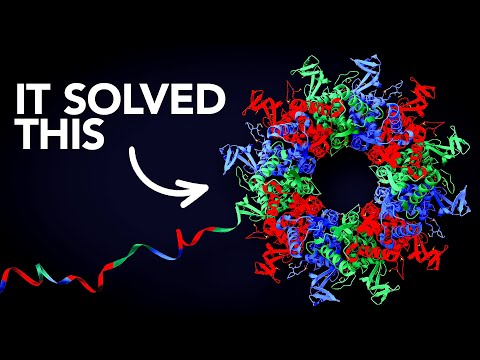
You know when you’re trying to remember where you put your keys? Like, seriously, you check all the usual spots and then think, wait, did I leave them in the fridge?
Well, proteins have a similar dilemma. They’re these amazing chains made up of amino acids, right? But how they fold is like their own little secret. And if they don’t fold correctly? Total chaos! Diseases can pop up like unwanted guests at a party.
But here’s where it gets really wild: scientists have been getting pretty creative with figuring out just how these proteins fold. It’s not just guesswork anymore. We’ve got new techniques that are changing the game big time!
So let’s chat about this whole protein folding thing and what these shiny new methods mean for science and health. Trust me, it’s way cooler than it sounds!
Advancements in Machine Learning: Unraveling the Protein Folding Problem in Modern Science
So, protein folding, huh? It’s one of those things that sounds a bit like science fiction but is super important in the world of biology. Basically, when proteins are made, they go through this intricate process where they fold into specific shapes. These shapes are crucial because they determine how the protein will function in our bodies.
You know how when you’re trying to fit a piece of a puzzle in the wrong spot, it just doesn’t work? Well, if a protein folds incorrectly, it can lead to all sorts of issues, including diseases like Alzheimer’s or cystic fibrosis. That’s why figuring out how proteins fold is essential for scientists and researchers.
In comes **machine learning**! This technology has exploded over the past few years and is really shaking things up in many fields. When it comes to protein folding, machine learning helps us recognize patterns and predict how proteins will fold based on their sequences. Sounds cool, right?
- Deep Learning Models: One of the recent breakthroughs uses deep learning models. These are kind of like superadvanced algorithms that mimic how our brains work. They can analyze huge amounts of data about protein structures and flexibly learn from it.
- AlphaFold: You might have heard about AlphaFold by DeepMind, which made headlines for its accuracy in predicting protein structures. It uses neural networks trained on known protein shapes to predict new ones effectively.
- Dataset Expansion: Another thing that’s been going on is the expansion of datasets available for training these models. More data leads to better predictions! Scientists have been gathering vast databases of known protein structures to feed into machine learning algorithms.
- Speed: Traditionally, predicting protein structure could take months or even years with experimental methods like X-ray crystallography. Machine learning speeds this up tremendously – sometimes taking just a few hours!
And here’s where it gets interesting – you might remember from school that proteins are made up of amino acids arranged in a sequence. Imagine trying to guess what a scrambled egg will look like once cooked just by knowing its ingredients but not how they’ll mix together when you fry them! That’s kind of what scientists face with proteins.
But with advances in these techniques – seriously mind-blowing stuff – researchers can now tackle questions they couldn’t before. For instance, let’s say they’re working on designing drugs for diseases linked to misfolded proteins; using machine learning allows them to identify potential treatment paths much faster.
You know what else is exciting? As machine learning continues evolving, it’s expected that our understanding of not just individual proteins but entire systems will improve too! This could lead us down some pretty promising paths regarding drug discovery and even synthetic biology.
So yeah, advancements in machine learning paired with these new techniques for recognizing and predicting protein folds have thrown open doors we didn’t even know existed before. It’s an incredible time for biology and medicine! The whole field feels like a giant jigsaw puzzle where every piece gained helps scientists fit together the bigger picture a little more clearly each day.
Exploring the Four Types of Protein Folding: Insights into Molecular Biology
Protein folding is one of those topics that can sound super complex but, believe me, it’s really cool once you get into it. So when we talk about protein folding, we’re diving into how proteins take their unique shapes. This is essential because the shape of a protein determines what it does in your body. Like, think of proteins as tiny workers, each with a specific job that they can only do when they fold just right.
Basically, there are four main types of protein folding, and each plays a role in how proteins function. Let’s break them down!
1. Primary Structure: This is the simplest form of protein structure. It’s just a long chain of amino acids linked together like beads on a thread. Imagine stringing together different colors of beads; the order matters! If you mess up the order even slightly, you could create something entirely different and possibly dysfunctional.
2. Secondary Structure: Here’s where things start to get a bit more twisty! In this stage, parts of the chain start folding into shapes like alpha-helices and beta-sheets. These shapes are stabilized by hydrogen bonds—think of them as little velcro strips holding everything together. The cool part? These shapes are often pretty similar across many different proteins!
3. Tertiary Structure: Now we’re getting serious! The entire molecule folds up into its final 3D shape here, which is super important for its function. Different interactions between various parts of the protein (like ionic bonds or disulfide bridges) cause this complex folding to occur. If you think about crumpling up paper into a ball; that chaotic shape is actually critical for that paper’s functionality!
4. Quaternary Structure: This stage involves multiple polypeptide chains coming together to form a larger structure—a bit like assembling several Lego sets into one massive creation! Not all proteins go through this step; some work perfectly fine on their own. But those that do often have combined functions that allow them to perform more complex tasks.
Understanding these four stages isn’t just academic—it has real implications in fields like medicine and biotechnology! For example, misfolded proteins can lead to diseases such as Alzheimer’s or cystic fibrosis because they don’t perform their intended roles well.
Now let’s chat about techniques for recognizing these folds… Big advancements are happening in this area! Machine learning has really changed the game here; algorithms can now predict protein structures based on their amino acid sequences much faster than ever before.
Feeling interested yet? Well, knowing how these fold types interact with advancements in technology gives us deeper insight not only into basic biology but also opens doors for medical breakthroughs!
In short, exploring protein folding isn’t just like digging through science books; it connects us to health problems we face today—whether it’s understanding genetic diseases or developing new therapies.
So next time someone mentions protein folding at a party (okay maybe not), you’ll know there’s so much more than meets the eye!
Understanding Protein Structure: An In-Depth Guide to Fold Recognition Methods in Structural Biology
Understanding protein structure is like piecing together a complex puzzle. Proteins are essential for almost everything in our bodies, and their function heavily relies on their shape, or structure. You see, a protein’s function is directly tied to how it folds. But that’s not always straightforward because proteins can fold in numerous ways. So how do scientists figure out these shapes? That’s where **fold recognition methods** come into play.
What Are Fold Recognition Methods?
Okay, so let’s break it down. Fold recognition methods are techniques used to determine the three-dimensional structures of proteins based on their amino acid sequences. Imagine you’ve got a long string of beads (that’s your amino acids) that can twist and turn into different shapes—figuring out the right shape is where it gets tricky!
Types of Techniques
There are several methods used to identify how proteins fold:
The Role of Computational Tools
Now, these days technology is super important in figuring this all out. Computers help analyze huge amounts of data and run complex simulations—stuff you definitely wouldn’t want to do by hand! Algorithms can crunch numbers quickly and efficiently, making predictions faster than traditional lab work.
An Exciting Anecdote
Let me share something cool: I once met a researcher who had spent years trying to understand an enzyme that breaks down plastic. This enzyme could change the game for recycling! After countless attempts with different fold recognition techniques, they finally found clues about its structure using computational tools and some luck—little did they know those puzzles would one day lead them closer to saving the planet!
The Future of Protein Structure Research
So what does all this mean moving forward? As technology advances, we’re seeing improvements in accuracy and efficiency for these methods. Machine learning is stepping in big time! Algorithms learn from vast data sets of known protein structures and can make predictions about unknown ones more accurately than ever before.
In summary, understanding protein folding isn’t just some nerdy science talk; it has real-world implications—from advancing medicine to developing sustainable materials. The more we grasp how proteins fold, the better equipped we’ll be to tackle problems in human health and environmental science!
So yeah, next time you hear about proteins or enzymes doing their thing in nature or labs, remember all those clever techniques working behind the scenes trying to decode their mysterious shapes!
Protein folding is one of those things that sounds super technical but is essential to understanding how life works at a molecular level. I mean, think about it: proteins are like the workhorses in our cells, doing all sorts of jobs—everything from building structures to speeding up chemical reactions. But here’s the kicker: a protein’s function is determined by its shape, which is where folding comes into play.
To illustrate this, let me share a quick story. A while back, I was at a science fair and stumbled upon a project that showed how simple paper cranes can transform with just a few folds. It hit me then—if you think about proteins as those cranes, then the way they fold determines whether they end up as beautiful art or little crumpled pieces of paper. If they don’t fold correctly, well, there can be some serious consequences for the organism.
Now, recognizing how proteins fold has come a long way in recent years. Remember when scientists used to spend ages trying to figure out protein structures by hand? It was like trying to solve a Rubik’s Cube blindfolded! Today, with advancements in technology—like machine learning and powerful algorithms—things have become way more efficient and accurate.
Machine learning models are now trained on huge datasets of known protein structures to predict how new ones might fold. Instead of relying solely on slow experimental methods like X-ray crystallography or NMR spectroscopy—which can take ages—they can make highly educated guesses much faster. It’s like having an incredibly smart buddy who can finish your sentences before you even say them!
But it’s not just about speed; it’s also about precision. These protein folding recognition techniques are really giving scientists insights into diseases related to misfolded proteins—like Alzheimer’s or cystic fibrosis. When you think about the potential therapeutic implications? It’s pretty staggering! Insights gained from predicting protein structures could lead to new drugs that target specific misfolded proteins.
Still, there’s so much more we don’t know. Protein folding remains an intricate puzzle; even with advancements in recognition techniques, we’re far from having all the answers neatly packaged up with a bow on top. It feels like we’re on the edge of something big and exciting here! So when you’re munching on your lunch—a sandwich or whatever—just remember: those proteins are out there doing their thing and keeping life rolling along while scientists scramble to unlock their secrets!