So, the other day, I was having coffee with a buddy, and somehow, we ended up talking about quantum physics. Yeah, you know, the stuff that sounds like it’s straight out of a sci-fi movie?
Anyway, he said something that blew my mind. He was like, “Can you believe that particles can be in two places at once?” I mean, seriously? That’s like your cat deciding if it wants to nap on your lap or the sunny window sill at the exact same time!
Then we started joking about how all these quantum quirks seem a bit… spiritual. Kind of makes you think about the universe and our place in it, right? I mean, here we are trying to understand this wild science while also pondering life’s biggest questions.
So yeah, let’s explore how quantum physics is dancing with ideas of spirituality. It’s not just nerdy science talk; there’s some depth to this! You ready?
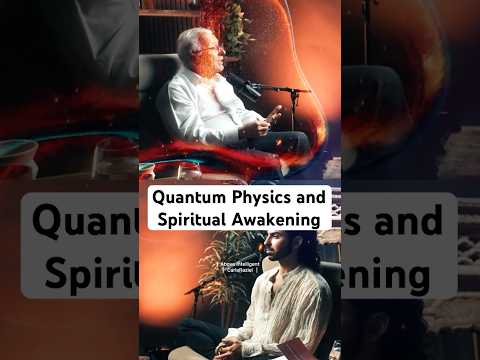
Exploring Joe Dispenza’s Insights on Quantum Physics and Its Implications for Science
One of the coolest things happening nowadays is the intersection of quantum physics and spirituality, and Joe Dispenza has kinda become a key figure in this discussion. You know, he talks a lot about how our thoughts can influence reality, which sounds super intriguing but also a bit out there if you think about it too hard.
So, first off, what is quantum physics? Well, it’s the branch of science that deals with the tiniest particles in the universe. Think atoms and their subatomic components—like electrons and quarks. In this microscopic world, stuff behaves really differently from what we see in our everyday lives. For example, particles can exist in multiple states at once or be connected over distances in ways that seem to defy common sense. Pretty mind-blowing stuff!
Now, Dispenza proposes that our consciousness plays a key role in shaping these quantum realities. He dives into concepts like intention and mindfulness as tools for transformation. The idea is that if you can change your thoughts and emotions, you might be able to influence your life on a fundamental level. Sounds like magic but let’s break it down a bit.
He often mentions the idea of the “quantum field,” which refers to this underlying energy connecting everything. According to him—and some others—you can tap into this field through meditation or focused intention. Like, if you’re aiming for positive change in your life, visualizing it could help manifest those desires by aligning your energy with what you want.
But here’s where things get tricky: not everyone agrees with Dispenza’s interpretations. Some scientists raise eyebrows at his claims because they feel he oversimplifies complex theories or takes them out of context. And honestly? It’s totally fair to question how much our minds can actually shape physical reality.
Then there’s the concept of entanglement, which is when two particles become linked despite being far apart—what happens to one affects the other instantly. Dispenza uses this analogy to explain human connections and relationships, suggesting we might share energy like those entangled particles do. Pretty poetic!
Let’s talk about implications for science here too! If we start considering consciousness as something that influences matter—wow—that could shake up many fields! It could lead researchers to explore how mental states affect physical health or even social dynamics.
In my opinion, there’s something beautiful about merging science with spirituality—even if we have doubts about specifics. Just think for a second: what if positive thoughts could genuinely enhance well-being? We might still be miles away from fully understanding these connections scientifically, but exploring them seems worth it.
So yeah, Joe Dispenza brings an interesting lens through which to look at quantum physics and spirituality together! There are so many ideas out there just waiting for deeper investigation—it keeps things exciting! Whether folks buy into his theories completely or not doesn’t really matter; after all, questioning makes us smarter—and isn’t that what science is all about?
Exploring Stephen Hawking’s Insights on Quantum Physics: Key Contributions to Modern Science
Stephen Hawking was a brilliant physicist who made some pretty astonishing contributions to our understanding of the universe. He had this unique way of explaining things that made you think, “Whoa, I never looked at it that way!” His insights into quantum physics are particularly fascinating because they touch on some really big ideas about reality itself.
Black Holes and Information Paradox
One of Hawking’s most famous concepts is the idea of black holes. They’re these incredibly dense regions in space where gravity is so strong that not even light can escape. Hawking introduced the notion that black holes aren’t completely black! They can actually emit radiation, which he called Hawking radiation. This was groundbreaking because it suggested that black holes could lose mass over time and might eventually evaporate. It raised a question: if something falls into a black hole, what happens to the information about it? This became known as the information paradox, and it’s still being debated today.
Quantum Mechanics and Gravity
Now, let’s talk about how Hawking linked quantum mechanics with gravity. Quantum mechanics deals with the behavior of tiny particles at a subatomic level, while general relativity explains gravity on a large scale. Merging these theories has always been tricky because they operate under different rules. Hawking believed that understanding black holes could help bridge this gap, opening up more discussions about what lies beyond our normal perception of reality.
The Role of Consciousness
Interestingly, as you tap into discussions around quantum physics and spirituality, Hawking’s ideas sometimes intersect with concepts like consciousness. Sure, he was primarily focused on physics, but there’s this notion floating around that consciousness itself could be linked to quantum processes in some way—though he didn’t dive deeply into it himself. This idea inspires loads of conversations in modern science dialogues where scientists from different disciplines explore connections between hard science and philosophical questions.
Anecdote: A Moment of Clarity
I remember chatting with my friend who was really struggling to grasp quantum physics. We were sitting outside one day when I said something like, “Think about how you can’t see air but you know it’s there.” Suddenly, their eyes lit up! It clicked for them in a way textbooks never could—kind of like how we understand black holes exist even if we can’t see them directly. It reminded me how essential it is to communicate complex ideas simply!
The Legacy Continues
In short, Stephen Hawking has left an indelible mark on modern science through his exploration of black holes, his quest to merge quantum physics with general relativity, and his thought-provoking insights regarding life and consciousness—even if he didn’t set out to connect those dots directly. The conversations sparked by his work continue today as scientists grapple with fundamental questions about existence, reality, and everything in between.
This ongoing dialogue between science and spirituality lets us reflect not just on what we know but also on what we wonder about—where déjà vu meets particles zipping around at extraordinary speeds! So yeah—Hawking’s insights have opened doors for all sorts of explorations in both the scientific community and beyond.
Exploring the Intersection of Quantum Physics and Biblical Teachings: Insights and Interpretations
The mix of quantum physics and biblical teachings makes for some thought-provoking conversations. You know, when you start digging into the tiny particles that make up everything, it’s like opening a door to a universe where the rules are entirely different from what we see every day.
Quantum Physics is all about the really small stuff: atoms and particles. And it turns out that these little guys don’t always behave how we expect them to. For instance, particles can exist in multiple states at once, and they can be connected across vast distances, which is called quantum entanglement. This idea questions our basic understanding of space and time. It can leave you scratching your head!
Now, Biblical teachings often focus on broader themes like creation, morality, and existence. Many people find parallels between these ancient texts and modern science. Isn’t that interesting? For example, the concept of creation in Genesis talks about God’s word bringing things into being—like how quantum mechanics shows us that observation can influence outcomes.
Here’s where it gets really intriguing: some scholars suggest that both realms might be pointing towards a deeper truth about reality—a kind of fundamental unity behind everything. They argue that just as quantum physics reveals underlying connections between seemingly separate entities, biblical stories often illustrate interconnectedness among people and God.
There’s also discussion around free will. Quantum mechanics leaves room for randomness in events at a microscopic level. Some might interpret this as aligning with religious beliefs about human freedom—the idea that we aren’t just robots following predetermined paths.
You might think these two worlds—science and spirituality—are miles apart. But some discussions show they could actually complement each other! Who knew? Scientists like physicist David Bohm have even proposed theories suggesting there’s an implicit order behind our reality; an echo of spiritual philosophies.
But let’s not forget the skeptics! Some folks argue that trying to mesh quantum physics with biblical narratives might not work out so smoothly. They point out risks of oversimplification or misinterpretation when we force connections where they may not naturally exist. Good point!
In short, exploring this blend isn’t just for scientists or theologians; anyone can join in the dialogue! Whether you lean towards science or spirituality—or a bit of both—you’ll find something fascinating in how these fields engage with questions about existence and understanding our place in the universe.
So yeah, diving into this intersection could lead to some enlightening conversations—and maybe even spark personal reflections on faith and science!
You know, it’s pretty wild how quantum physics and spirituality are starting to chat with each other more these days. I mean, who would’ve thought that super tiny particles buzzing around could connect with something as ethereal as spiritual beliefs? It’s like they’re shaking hands, you know?
The other night, I was sitting with some friends around a fire. We had our usual mix of deep conversations and silly jokes. Then someone brought up quantum entanglement. Just to give you the gist—it’s when two particles become linked in such a way that the state of one immediately influences the other, no matter the distance between them. It sounded so much like a metaphor for connection in our lives—like how we feel close to someone even when they’re far away, you dig?
And then there’s this idea in spirituality about interconnectedness—everything is one big web of existence. So here we were, throwing around concepts from physics while also pondering life’s bigger questions about purpose and connection. You could feel the energy shifting; everyone was nodding along and sharing personal stories about moments they felt that deep connection to others or even to the universe.
But then it hit me: while science loves its data and facts, spirituality often dances in those mystical spaces where proof can be a little fuzzy. It’s tricky! Some folks see science as cold hard logic while spiritual ideas can seem fluffy and abstract. Yet combining them can spark really exciting discussions.
Think about it—quantum physics challenges our understanding of reality. Particles behaving in ways that make us question what we think we know could parallel spiritual experiences that defy logic: moments of intuition or synchronicity when everything just clicks together perfectly.
This blend of thought opens up new ways to approach life. Maybe understanding reality doesn’t have to be restricted to just one viewpoint? If we allow ourselves to sit at this intersection of science and spirituality, maybe we’ll find insights not only into the universe but also into ourselves.
It all just feels like such an adventure! And who knows? Maybe next time you’re out with friends chatting under the stars, you’ll find yourself discussing how quantum particles might just hold secrets about love or destiny. Isn’t that a trip?