You know what’s wild? In the quantum world, particles can literally be in two places at once. Like, one moment it’s here, and the next it’s over there! Mind-blowing, right?
Well, that’s just a tiny sneak peek into the bizarre reality of quantum mechanics. And smack in the middle of all that craziness is something called the magnetic quantum number. Sounds fancy, huh?
But don’t let that name scare you off. It’s not as complicated as it sounds! Think of it as a little piece of the puzzle helping us understand everything from electrons to how atoms dance around each other.
So, if you’re curious about how this seemingly tiny concept plays a big role in our universe, stick around! There’s some seriously cool stuff ahead.
The Role of the Magnetic Quantum Number in Quantum Mechanics and Atomic Structure
Alright, let’s chat about the **magnetic quantum number**, shall we? It sounds all technical, but don’t worry. I promise to keep it simple. This little number is key in the world of quantum mechanics and atomic structure. Let’s break it down.
First off, the magnetic quantum number is one of the set of numbers that help describe where an electron hangs out in an atom. It’s like having a secret code that tells you the location of an electron in its “cloud” around the nucleus. The thing is, electrons don’t just sit there like planets around the sun; they occupy areas called *orbitals*.
So, what does this magnetic quantum number actually do? Well, it specifically helps define the **orientation** of these orbitals in space. Orbitals can point in different directions—a bit like how you can turn your head left or right to see where your friend is waving from.
Here are some key points about this number:
Got it? Cool! Now let’s put this into perspective a bit more.
Imagine you’re at a concert with your friends. You’ve got your spot near the stage (that represents your principal quantum number), and now you need to decide which way to face—the left side or right side of your buddies (that’s where m kicks in). Depending on whether there’s more action on one side or another, you’d want to orient yourself accordingly!
In terms of atomic structure, understanding where electrons are likely hanging out helps chemists figure out how atoms bond or interact with each other. For example, if two elements are bonding and both have their electrons oriented favorably due to their magnetic quantum numbers, that bond might be super strong!
One more thing that really makes this magical: when an atom gets exposed to a magnetic field—like when you’re getting ready for some epic science experiments—it can influence how these orbitals align based on their magnetic quantum numbers. This leads straight into how certain materials respond differently under such fields.
In summary? The magnetic quantum number acts kinda like a backstage pass for understanding how and where electrons exist around an atom while also interacting with outside factors like magnetism. It’s part of what makes chemistry go ‘round—literally!
Understanding the Magnetic Quantum Number: A Simple Guide for Beginners in Quantum Mechanics
Alright, let’s talk about the magnetic quantum number—sounds fancy, huh? But don’t sweat it! Once you get a hang of it, it’s like having a cheat sheet for understanding how particles behave in quantum mechanics.
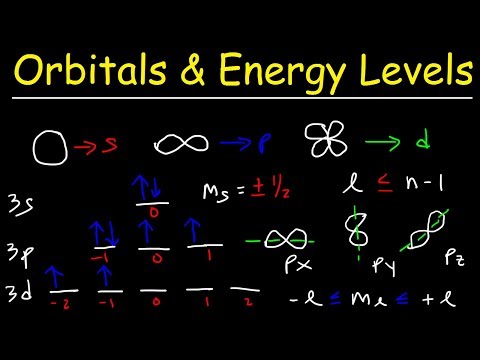
First off, the magnetic quantum number is usually denoted by the letter **m**. This number plays a crucial role in describing the orientation of an electron’s orbital in an atom. You know how when you throw darts at a board, they can land in different spots? The magnetic quantum number tells us where an electron might ‘land’ in three-dimensional space.
So, here’s how it works: every electron in an atom has four quantum numbers that describe its state. These are:
- Principal Quantum Number (n): This tells you the energy level and size of the orbital.
- Azimuthal Quantum Number (l): This describes the shape of the orbital.
- Magnetic Quantum Number (m): And this one tells you about the orientation!
- Spin Quantum Number (s): Finally, this indicates the spin direction of the electron—like if it’s spinning clockwise or counterclockwise.
The value of **m** can range from **-l to +l**, including zero. So if you have l = 2 (which corresponds to a d-orbital), m can take on values like -2, -1, 0, 1, and 2. Each of these corresponds to different orientations in space.
Imagine you’re holding a globe. If l = 1 (just for example), m could give you directions like north-south or east-west depending on how you’re looking at it. It gives us those important angles that help visualize where electrons are hanging out.
Now, here’s something cool: different values of **m** correspond to different orbitals! So when we say an electron is in a certain orbital—think p or d—we’re not just talking about size and shape; we’re also suggesting its probable position around the nucleus based on these magnetic quantum numbers.
You might be thinking: “Why should I care?” Well! That’s because understanding these numbers helps scientists explain everything from chemical bonding to why some elements behave strangely compared to others! It’s like reading between the lines of a mystery novel where electrons are characters with distinct personalities!
In summary:
- The magnetic quantum number (**m**) reveals how electrons orient themselves.
- This is part of four total quantum numbers which define an electron’s full behavior.
- The values for **m** help categorize orbitals and their spatial arrangements around an atomic nucleus.
So next time someone mentions “magnetic quantum number,” just remember—it might sound tricky, but it’s all about figuring out where those little guys are hanging out and getting their groove on!
Understanding the Significance of ml = 0 in Quantum Mechanics and Its Impact on Scientific Research
Alright, let’s break down the concept of ml = 0 in quantum mechanics and why it matters. It’s kinda like a puzzle that helps us understand how tiny particles behave in really strange ways.
So, first off, what is ml? This nifty little symbol stands for the magnetic quantum number. When we talk about quantum mechanics, we’re diving into the world of atoms and subatomic particles, where things can get pretty weird. Quantum numbers help us describe where an electron might be hanging out around a nucleus.
Now here’s the thing: each electron is associated with a set of four quantum numbers. These tell us about its energy level, shape, orientation, and spin. The magnetic quantum number (ml), specifically, tells us how many orbitals are present in a given subshell and their orientation in space.
When ml = 0, we’re looking at a specific case that usually refers to spherical symmetry in an atom. Picture this like having a perfectly round ball that you can spin any way you want, but no matter how you do it, it looks the same from every angle—that’s what ml = 0 describes! This mostly happens with the s orbitals.
So why is this important? Well, it has some big implications for scientific research.
- Electron Configuration: Understanding ml values helps scientists figure out how electrons are arranged within an atom. This arrangement affects chemical properties and reactions.
- Spectroscopy: When scientists analyze light from atoms (spectroscopy), knowing whether ml = 0 allows them to predict specific spectral lines and understand how atoms interact with light.
- Molecular Shapes: In chemistry, knowing that certain orbitals have ml = 0 helps predict shapes of molecules—a crucial part of how they behave.
Think about when you were in school learning about shapes in math class. The whole idea of symmetry pops up everywhere! That’s what ml = 0 brings to the table—understanding symmetries can help unlock more complex behavior.
Here’s something cool: imagine two electrons occupying an orbital with ml = 0. They actually create what scientists call “spin pairing,” which leads to increased stability for certain elements. So yeah, without understanding these quantum numbers well—even just focusing on ml = 0—you’d be missing out on some key principles in chemistry and physics.
In short, grasping the significance of ml = 0 and its role as part of magnetic quantum number digs deep into understanding atomic structure. And let me tell ya, every time researchers unravel mysteries like this one—new doors open up for technology breakthroughs or deeper insights into materials science.
It’s all connected!
Alright, so let’s talk about the magnetic quantum number. Sounds kind of fancy, right? But don’t worry, it’s not as complicated as it seems. At its core, this concept is part of the whole quantum mechanics game, which is all about understanding how really tiny particles behave—like electrons.
Imagine you’re at a dance party. The magnetic quantum number is like the DJ deciding where to position each dancer on the floor based on their specific moves. In the quantum world, these “dancers” are electrons moving around an atomic nucleus, and the magnetic quantum number helps us figure out their orientation. Crazy, huh?
So here’s how it works: this magnetic quantum number can take on different values that correspond to specific orbitals—those regions around an atom where you might find an electron hanging out. It helps define how these orbitals are oriented in space relative to a magnetic field. Basically, depending on its value—which can range from -l to +l—you get different shapes and orientations for those electron clouds.
I remember my first chemistry class when we started discussing electron orbitals. It was like opening a door to a secret world that ran parallel to our everyday experiences but followed its own unique set of rules. You know when you’re learning something new and your brain feels like it’s doing acrobatics? That was me! Absorbing all that information felt exhilarating.
Now back to our magnetic quantum number—it’s like a crucial piece of a bigger puzzle in quantum mechanics. Without it, we wouldn’t be able to fully describe how electrons interact with each other and with external fields. This is super important since it lays the foundation for things like chemical bonding and even why certain materials are magnetic.
And while digging into this topic might feel overwhelming at times (like trying to read ancient hieroglyphs!), remember that each piece—whether it’s the principal quantum number or this magnetic one—adds depth to our understanding of the universe at its tiniest scale.
So next time you think about atoms or maybe even glance at some magnets on your fridge, take a moment and appreciate that there’s this incredible world governed by quirky rules, where numbers dictate everything from structure to behavior in ways we’re only beginning to grasp! Pretty cool stuff, right?