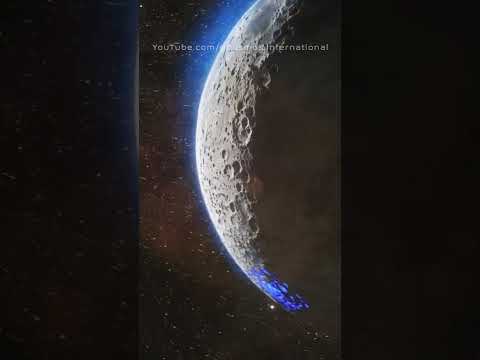
You know that moment when you’re lying outside, staring up at the night sky, and it hits you—those stars are like little balls of fire in some crazy distance? It’s wild! But what if I told you that all that twinkling is actually a story about radiation?
Yup! Those little dots are more than just pretty lights; they’re beaming out radiation, helping us unravel the mysteries of the cosmos. I mean, think about it. How cool is it that we can gather info from gazillion miles away?
So let’s chat about how radiation isn’t just some abstract science stuff. It’s a major player in shaping our understanding of the universe! Buckle up; we’re going to explore how this invisible force connects us to everything up there. Sound fun?
Exploring the Cosmos: The Role of Radiation in Unveiling the Mysteries of the Universe
So, let’s chat about radiation and how it plays a huge role in piecing together the cosmic puzzle we call the universe. Seriously, without radiation, our understanding of space would be like trying to read a book with the lights off. You follow me?
First off, when we talk about radiation, we’re not just thinking about that scary stuff from sci-fi movies. It’s all around us and comes in various forms, like electromagnetic radiation. This cute little term covers everything from radio waves to gamma rays. Each type carries different amounts of energy and information, and that’s what makes them super useful.
- Visible light: This is what our eyes can see. It helps us observe planets and stars directly! Ever looked up at the night sky? Those twinkling stars are emitting visible light.
- X-rays: These are like the superhero version of light. They can penetrate clouds of gas and dust that surround many cosmic objects, helping us see stuff that’s hard to detect otherwise.
- Gamma rays: The most energetic kind! They come from extreme events like supernovae or black holes. When these bad boys burst forth, they help scientists gather clues about high-energy processes happening in space.
Your phone uses radio waves to send texts and calls; similarly, astronomers use radio waves to study distant galaxies! Crazy right? This technique is called radio astronomy, which lets us glean insights into star formation, cosmic background radiation, and even the structure of galaxies.
Oh man! Let me tell you a quick story here. There was this amazing discovery back in 1965 when two scientists accidentally stumbled upon cosmic microwave background radiation while working on satellite technology. They ended up finding this faint glow left over from the Big Bang! Talk about a cosmic accident changing everything!
This glow is super important because it gives us a snapshot of the early universe—just a few hundred thousand years old! By analyzing this radiation using tools like telescopes designed for microwave detection, we can learn about how matter clustered together after the Big Bang.
- The Universe’s Expansion: By studying how light shifts as it travels through space (known as redshift), scientists figured out that our universe is expanding!
- The Age of Stars: Radiation gives away secrets about stellar life cycles—how stars are born, live out their lives, and ultimately die.
- The Elements We See Today: Radiation processes in stars create different elements through fusion reactions—everything from hydrogen to iron!
But wait! There’s more! Beyond just observing stuff far away, radiation helps us understand black holes. You might think they’re just these mysterious dark pits in space (and yes, they are!), but when matter falls into them and gets heated up to insane temperatures, they emit X-rays before disappearing into nothingness!
The thing is while exploring this vast cosmos with all its mysteries through radiation can feel overwhelming at times—it’s also profoundly exciting. Who knows what new findings are lurking out there just waiting for us? So next time you look at the night sky or read an article about some new discovery in astrophysics: Remember it’s all thanks to good ol’ radiation helping shed light on those unfathomable mysteries.
Sooo there you have it! Radiation isn’t just important—it’s essential for understanding our universe. It’s like having your very own magnifying glass but way cooler!
Exploring the Impact of Radiation on the Formation and Evolution of the Early Universe
Ever wonder how our universe got its start? It’s a wild journey filled with radiation and energy galore! In the very early moments after the Big Bang, the universe was a hot, dense soup of particles. This is where radiation comes into play. Radiation, in this context, isn’t just about sunny days and sunscreen; we’re talking about light, gamma rays, and even cosmic microwave background radiation.
To understand this better, let’s break it down a bit. When the universe began to expand, it cooled down dramatically. You can imagine it like a balloon being blown up – at first, it’s really tight and hot, but as more air gets in (or in this case, as space expands), it cools off.
- Cosmic Microwave Background (CMB): One of the most fascinating things is that as the universe cooled and expanded, it eventually allowed for light to shine freely. This light became what we call the CMB, which is basically a snapshot of the universe when it was just about 380,000 years old!
- Radiation Pressure: Before that moment of clarity with CMB, radiation pressure played a key role in shaping structures. It affected how matter clumped together to form stars and galaxies.
You might think of it like baking bread. If you let it rise too quickly or too slowly, you end up with some funny-shaped loaves! Same applies here: The rate at which energy radiated out influenced how matter came together.
But wait! There’s even more. As galaxies formed over time due to various factors like gravity and dark matter (which is another rabbit hole entirely), radiation kept impacting their evolution.
- Star Formation: When stars ignite nuclear fusion in their cores—turning hydrogen into helium—they emit tons of radiation! This process not only lights up our night sky but also influences nearby clouds of gas and dust to collapse and form new stars.
- Supernovae: Then there are those spectacular explosions called supernovae when massive stars reach their end. These events spew out heavy elements into space while blasting out energy that can trigger new star formation in nearby regions!
The dance between radiation, matter formation, and cosmic evolution creates an ever-shifting landscape of galaxies against an expanding backdrop. It’s kind of poetic if you think about it: everything is interconnected through these energetic processes.
An emotional moment I had was staring up at a starry night sky as a kid – thinking how every pinprick of light represents parts of this colossal history shaped by radiation alone! Isn’t it wild to realize that what you’re seeing now has roots tangled in such ancient processes?
The impact continues today; scientists study this cosmic tapestry using telescopes capturing various kinds of radiation—from radio waves to X-rays—to piece together stories from millions or even billions of years ago.
So there you have it! Radiation isn’t just a topic for science classes; it’s woven into the fabric of our universe’s past!
Understanding Radiation in Cosmology: Key Concepts and Implications in Astrophysics
Radiation is one of those topics that sounds super complicated, but it’s really not rocket science—well, sort of! In cosmology, radiation plays a crucial role in shaping our understanding of the universe. Let’s get into the nitty-gritty of this fascinating subject.
First off, what exactly is radiation? It’s basically energy traveling through space. You can think of it like the warmth you feel from the sun. That warmth? Yeah, that’s solar radiation. There are different types of radiation. The most commonly known types are electromagnetic radiation and particle radiation.
Now here’s where it gets interesting: the universe is filled with background radiation, remnants from events like the Big Bang. This is known as cosmic microwave background (CMB) radiation. Imagine this faint glow as an echo from when the universe was super hot and dense, about 13.8 billion years ago! It tells us a lot about the early conditions in the cosmos.
When scientists observe CMB, they notice tiny fluctuations in temperature. These fluctuations hint at how matter was distributed back then and help map out cosmic structures we see today, such as galaxies and clusters of galaxies.
Another key concept to keep in mind is how radiation interacts with matter. When high-energy particles or electromagnetic waves hit atoms or molecules, they can excite them or even kick them out entirely! This interaction shapes star formation and galaxy evolution over billions of years.
For example, think about how stars produce energy: they’re huge balls of gas that fuse hydrogen into helium during nuclear reactions. This process releases enormous amounts of energy in forms of light and heat—essentially putting on a cosmic show for us to see!
But why does this matter? Well, understanding these processes helps astronomers learn more about everything from black holes to dark matter. Yep, those mysterious things we can’t see but know are there because their gravitational effects are so strong!
Also interestingly enough, studying high-energy cosmic rays gives us clues about extreme astrophysical phenomena like supernovae or neutron stars colliding with each other.
In a nutshell, radiation acts as both messenger and medium, conveying vital information while also shaping the very fabric of our cosmos. Every time you gaze up at a starry night sky or catch a glimpse of distant galaxies through powerful telescopes like Hubble or James Webb, remember: you’re witnessing millions—or even billions—of years worth of radiative history play out before your eyes!
So that’s a little peek into how we use radiation in cosmology to understand our universe better. It’s all connected—a beautiful tapestry woven together by threads of light and particles zooming through space!
When you think about radiation, you might picture a dentist’s office or maybe even a superhero movie, right? But seriously, radiation is so much more than that. It’s like this invisible thread weaving through the universe, helping us understand everything from the tiniest particles to the vastness of outer space.
I remember being in school and staring up at the night sky during a camping trip with friends. It felt magical—those twinkling stars seemed so far away yet somehow close at the same time. That wonder led me to learn about how radiation plays a role in our understanding of the cosmos. Although it sounds complicated, trust me, it can be pretty relatable!
So, here’s the deal: radiation comes in different forms—like light from stars or invisible waves that travel across space. This light helps astronomers gather information about galaxies, planets, and even black holes! It’s wild when you think about it—the very light from distant stars reaches us after traveling billions of years through space.
Take cosmic microwave background radiation (CMB) for instance. You know that warm feeling you get when you’re wrapped in a cozy blanket? Well, scientists discovered CMB as this faint glow permeating the universe. It’s like evidence of the Big Bang itself! Just imagine figuring out how everything started from that little bit of energy.
The more we study these radiation processes, the clearer our picture of cosmic evolution becomes. We learn about elements forming inside stars or how they explode into supernovae spreading life-essential materials throughout galaxies. Isn’t that something?
It’s kinda humbling too—realizing we are all made up of stardust! When I gaze at those stars now, I can’t help but feel a connection to the universe. Radiation isn’t just some scientific jargon; it’s part of our story too! By understanding these processes better, we’re not just expanding our knowledge but also finding our place in this grand cosmic tapestry.
So yeah, next time you look up at the sky and see those glittering dots above you—or even catch a glimpse of some cool photos from telescopes—remember: you’re looking at pieces of history illuminated by radiation that continues to shape our understanding of everything around us. It’s pretty epic when you think about it!