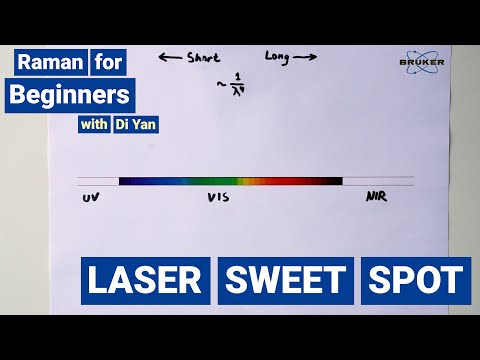
So, picture this: you’re in a lab, and someone tells you that lasers can actually help identify what a rock is made of. Like, seriously? I mean, who knew rocks had such secrets!
That’s where Raman spectroscopy comes in. Think of it as a fancy tool that uses lasers to peek inside stuff. It’s not just for rocks, though. You can use it for everything from checking out artworks to analyzing your favorite skincare products.
Crazy, right? Lasers and science sound all high-tech and serious, but there’s something super cool about how they bring the tiniest details into view. Let’s chat about how these nifty gadgets are making waves in modern science!
Exploring the Role of Raman Spectroscopy Lasers in Modern Scientific Research: A Comprehensive Overview
Raman spectroscopy is this really neat technique that helps scientists analyze materials by using lasers. It’s all about understanding how light interacts with molecules. Basically, when you shine a laser on a sample, it scatters light in ways that reveal the molecular composition of that material. This technique is super helpful across various fields.
So, what’s the deal with Raman lasers? Well, these lasers generate a specific wavelength of light that’s crucial for exciting the molecules in the sample. When this happens, some of the light gets scattered at different energies, which is what we measure. Those energy shifts give clues about molecular vibrations and structures.
You know how when you pluck a string on a guitar, it vibrates at different frequencies? It’s kind of like that! Each type of molecule has its own unique vibrations or “fingerprints.” By analyzing these vibrations with Raman spectroscopy, researchers can identify substances without needing to destroy them.
Here are some key points about why Raman spectroscopy lasers are essential:
- Non-destructive analysis: Since it doesn’t damage samples, you can study delicate materials like biological tissues or art pieces!
- High specificity: It provides detailed information about chemical bonds and molecular structures.
- In-situ measurement: You can analyze samples in their natural environment—like monitoring reactions as they happen.
Let’s take chemistry as an example. Imagine a lab where chemists are trying to identify unknown compounds in a mixture. Instead of spending hours guessing, they can use Raman spectroscopy to quickly pinpoint substances based on their spectral fingerprint. It saves time and ensures accuracy!
Another cool application is in medicine. Researchers use it to study cells and tissues for detecting diseases like cancer early on. In fact, it’s been shown to differentiate between healthy and tumorous tissues by examining their molecular signatures.
And it doesn’t end there! The tech is also making waves in environmental science—think pollution detection or studying climate change impacts through soil and air samples.
So yeah, Raman spectroscopy lasers are redefining how we analyze materials across various scientific fields. With this non-invasive approach and high specificity, researchers have more powerful tools than ever before to unlock nature’s secrets!
Advancements in Raman Spectroscopy Lasers: Transforming Modern Scientific Research
Raman spectroscopy is one of those cool techniques that can tell us a lot about materials by just shining a laser on them. Basically, it’s like asking a sample to sing its own song, and the laser listens to the notes that come back. This method is used in fields like chemistry, biology, and even medicine to identify substances without needing to mess with them too much.
So, what’s the deal with **Raman spectroscopy lasers**? Well, they’ve come a long way over the years. There are several advancements that really stand out and are changing how we do research today.
- Increased Sensitivity: Newer lasers have higher power and better design, making it easier to detect minute quantities of substances. This means researchers can analyze samples that were previously too small or dilute.
- Portable Devices: The development of compact Raman systems allows scientists to take this technology outside of labs. Imagine being able to analyze soil or plants right in the field! That opens up tons of possibilities for environmental science.
- Multimodal Capabilities: Some new devices combine Raman with other techniques—like fluorescence or infrared spectroscopy. This combination gives scientists more comprehensive data from a single sample, which is super handy in complex studies.
- Real-Time Analysis: Advancements now allow for real-time monitoring during chemical reactions or processes. You can basically see how things change as they happen. It’s like having a front-row seat to nature’s chemistry show!
- User-Friendly Software: Improved software for data analysis has made it easier for researchers to interpret what they see in the Raman spectra. This is key because sometimes even tiny differences can tell you a lot about what’s going on at the molecular level.
One emotional anecdote that comes to mind is when scientists were able to use portable Raman spectrometers in remote areas following natural disasters. They analyzed contamination in water supplies quickly and efficiently—saving lives by ensuring communities had access to safe drinking water again.
And don’t forget about healthcare! **Raman spectroscopy** is making waves in medical diagnostics too. Researchers are looking into how it could help detect diseases like cancer by examining tissue samples with pinpoint accuracy.
The thing is, advancements in these lasers not only push scientific boundaries but also improve safety and efficiency across various sectors. Whether it’s identifying counterfeit drugs or analyzing art pieces without damaging them—you name it!
In summary, this technique continues evolving rapidly thanks to cutting-edge laser technology, offering incredible benefits across many fields of study—making scientific research not just smarter but also more humane!
Exploring Raman Spectroscopy Lasers: Key Innovations and Applications in Modern Science
Raman spectroscopy, huh? It sounds complex, but it’s really fascinating once you break it down. Basically, it’s a technique used to analyze materials by scattering light. The Raman Effect, which this method relies on, occurs when light interacts with molecular vibrations. This interaction leads to shifts in the light’s wavelength, giving us a unique fingerprint of the material being studied.
Now let’s talk about the lasers used in Raman spectroscopy. These lasers are crucial because they provide the specific wavelengths needed for effective analysis. The key innovations in this field have made Raman spectroscopy more accessible and versatile than ever before.
One of the big advancements is the development of laser sources that are not only more powerful but also more stable. Stability is a game-changer because it allows for consistent results across experiments. Imagine trying to analyze a delicate sample but your laser keeps fluctuating in intensity—that would throw off your whole study!
Then there’s the use of portable Raman spectrometers. These compact devices now let scientists take the lab into the field. Think about forensic investigations where samples need to be quickly assessed on site or in remote locations. With these portable units, immediate results can change how investigations operate.
Another exciting application is in medical diagnostics. Researchers are exploring how Raman spectroscopy can help detect diseases at earlier stages than traditional methods allow. For instance, it can identify cancerous tissues by analyzing their molecular composition without needing invasive procedures.
To break it down further, here are some key applications of Raman spectroscopy:
- Chemical analysis: Identifying substances in complex mixtures.
- Material science: Studying materials’ properties like stress and strain.
- Pharmaceuticals: Ensuring quality control during drug production.
- Agriculture: Monitoring plant health and detecting pathogens.
While these advancements have opened new doors, challenges still remain. The high cost of some sophisticated systems can be a barrier for smaller labs or researchers with limited budgets.
But despite these hurdles, it’s clear that Raman spectroscopy and its innovative lasers are transforming modern science in amazing ways! Whether it’s quickly assessing environmental samples or providing insights into medical conditions—this technology continues to push boundaries.
So next time you hear about Raman spectroscopy, remember: behind that complex term lies a world of creativity and discovery shaping our understanding of everything around us!
You know, Raman spectroscopy is one of those fascinating areas in science that can seem a bit complicated at first. I mean, it sounds a bit intimidating, right? But once you get into it, it’s like peeling back layers of an onion. The thing is, this technique uses lasers to help us study materials at the molecular level. And honestly, that’s kind of mind-blowing when you think about it!
So picture this: you’re at a science fair as a kid and you get mesmerized by those cool laser pointers—like, who doesn’t love making little dots dance around? Now imagine if those lasers could do way more than just point out where your friends are. That’s essentially what Raman spectroscopy does! It takes laser light and sends it into materials, and when that light interacts with the molecules in these materials, it gets scattered in unique ways. From this scattering, scientists can figure out what those materials are made of.
But wait—let’s bring this back to reality for a second. Just last week, I stumbled upon an article about how researchers used Raman spectroscopy to detect contaminants in food. Can you believe that? This technique can sniff out even tiny amounts of something unwanted lurking in your favorite snack! It’s like having super senses—who wouldn’t want that?
What really gets me is how powerful these lasers are for modern science. They’re used everywhere—from chemistry labs working on new drugs to forensic investigations unraveling mysteries behind crimes. You see someone shining a laser pen across the room; meanwhile, scientists shine their lasers and reveal the secrets locked within molecules. Both scenarios have their thrills but one definitely makes me appreciate what goes on behind the scenes.
And hey, that’s not even scratching the surface! In fields such as biology and material science, Raman spectroscopy helps researchers explore cells or even understand ancient artifacts without destroying them—how cool is that respect for history? Imagine being able to peer into the past while preserving it for future generations.
In a nutshell—even if we’re not all laser physicists here—understanding how things work at such an intricate level reminds us of the beauty in everything around us. It’s kind of poetic if you ask me: simple light revealing complex stories hidden within matter. Each experiment breathes life into our understanding of this crazy world we live in!