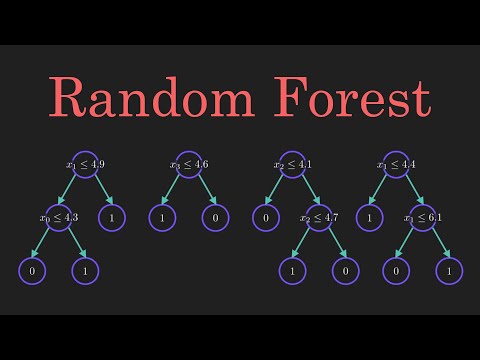
You know what’s wild? The fact that when trees in a forest all work together, they can actually help save lives. Yeah, no kidding! Random forests—sounds like something from a fairy tale, right? But in reality, it’s a cool technique that scientists use to make sense of data.
Imagine standing in the middle of a giant forest with branches everywhere. Each branch represents different data points. Random forests help researchers figure out which branches—or data—are the most important. It’s like being part of a huge team where every member has something unique to offer.
Trust me, this isn’t just another boring tech thing. It’s seriously changing how we do science! By combining lots of little bits of information, random forests uncover patterns we’d miss otherwise. So let’s wander through this forest and see what’s hiding beneath the leaves!
Exploring the Random Forest Technique: An In-Depth Analysis in Scientific Research and Data Science
Random Forest is one of those cool techniques you stumble upon in data science that makes you go, “Wow, that’s clever!”. It’s like having a group of friends who each have their own opinion on what a movie was like. Some loved it, others thought it was just okay. You take all those opinions and see what they collectively suggest, right? That’s pretty much how Random Forest works.
This method is actually based on something called decision trees. Imagine these as simple yes or no questions that lead you down paths. But instead of just relying on one tree (which could be easily swayed), you use a whole forest! Each tree gives its own verdict. Then, when it comes time to decide, you let the majority rule. Pretty neat!
In scientific research, this technique is super useful because it can handle a lot of variables at once without getting all mixed up. Like if you’re studying how different factors affect plant growth – soil type, sunlight, water levels – all those can get complicated fast. A Random Forest model helps untangle that mess by telling you which factors really matter.
Now let’s talk about data science. It’s like the Swiss army knife for number crunchers because it’s robust and versatile. Whether you’re dealing with health data to predict patient outcomes or analyzing customer behavior for a business, Random Forest shines bright! It’s especially great when you’re not quite sure which variables are important.
So why does this method work so well? It combats something called overfitting. Basically, overfitting happens when your model learns too much from its training data and performs poorly on new data. Imagine cramming for an exam by memorizing every question in textbook but then facing unexpected ones! Random Forest prevents that by averaging the results from many trees—so it generalizes better.
Let’s consider a real-world example: Suppose researchers want to figure out which lifestyle choices affect heart health. They collect loads of data – diet habits, exercise routines, sleep patterns…you get the idea! Using a Random Forest approach helps them identify which choices are most significant without getting lost in the details.
In outreach programs focused on scientific literacy, this technique can also be incredibly impactful. By providing clear visuals of how different variables interact and influence outcomes through Random Forest models, educators can connect with audiences in ways that resonate deeply. Show them what matters most with engaging graphics — it’s about making science accessible!
So yeah; there’s clearly a lot to love about Random Forest in both scientific research and outreach efforts! It takes complex information and presents it in an understandable way while still keeping accuracy intact—like serving up your favorite dish but without the burnt edges! And as we continue exploring big datasets across various fields, this technique will surely stick around as one of our go-to tools!
Exploring Real-World Applications of Random Forests in Scientific Research
Random forests might sound like a fancy term pulled straight from a sci-fi flick, but they’re actually a super cool tool used in scientific research. So, what exactly is it? Basically, random forests are a type of machine learning technique that helps researchers make sense of complex data by creating a “forest” of decision trees. Each tree offers its own predictions, and then they all vote on the best one.
Why bother with this approach? Well, it’s powerful! Here are some real-world applications where random forests have made a splash:
- Biodiversity Conservation: Scientists use random forests to identify which areas are most important for preserving endangered species. By analyzing factors like habitat type and climate conditions, they can prioritize conservation efforts effectively.
- Medical Diagnosis: In healthcare, random forests help in diagnosing diseases from patient data. For instance, they can analyze symptoms and lab results to predict whether someone has conditions like diabetes or heart disease.
- Genomics: When it comes to genetics, researchers use random forests to predict gene expression levels based on various features of the genome. This helps in understanding how genes interact with each other and their environment.
- Environmental Monitoring: Random forests can assess air or water quality by predicting pollution levels based on collected data from different sources. It’s super useful for creating models that inform policy decisions about environmental protection.
- Agriculture: Farmers use these techniques to optimize crop yields by analyzing factors like soil quality and weather patterns. This helps them make better decisions about planting and harvesting.
There’s this neat story I came across about a team working in rainforest conservation in South America. They used random forests to figure out which areas were most at risk due to deforestation. By evaluating parameters like land use changes, rainfall patterns, and local biodiversity, their model identified regions needing immediate attention. The result? More effective conservation efforts and potentially saving countless species!
One of the coolest things about random forests is their ability to handle large datasets without overfitting — which is just a fancy way of saying they don’t get too attached to small quirks in the data that might not really matter. This makes them perfect for messy real-world scenarios where you often don’t have all the answers.
So yeah, whether it’s saving endangered species or revolutionizing medical diagnosis, random forests bring some serious power to scientific research! They’re not just trees in a forest; they’re tools powering essential insights into our world!
Exploring the Applications of Random Forest in Scientific Research: Key Use Cases and Benefits
Random Forest is a really cool tool in the world of data analysis, and it’s making waves in scientific research. Basically, it’s a type of machine learning algorithm that helps scientists make sense of complex data sets. You might be wondering what makes it stand out, huh? Well, let me break it down for you.
So, Random Forest creates a “forest” of decision trees. Each tree looks at random subsets of the data to make predictions or classify information. Then, they all vote on the best outcome! This method not only increases accuracy but also reduces the risk of overfitting. Overfitting is when a model learns too much from the training data and struggles with new data—like an exam student who memorizes answers but can’t apply them in real life.
Now, let’s talk about some practical applications. Here are a few key use cases:
- Ecology and Conservation: Scientists use Random Forest to predict species distributions. For example, by analyzing environmental variables like temperature or rainfall patterns, they can identify suitable habitats for endangered species. This info is crucial for conservation efforts!
- Medical Research: In healthcare, researchers apply Random Forest for diagnosing diseases based on patient data. Imagine using this method to analyze symptoms and lab results—it helps doctors make better decisions by predicting which illnesses are more likely based on various factors.
- Agriculture: Farmers utilize this technique to enhance crop yields. By examining soil properties and weather conditions through Random Forest models, they can optimize planting strategies and manage resources more effectively.
- Chemoinformatics: This field benefits too! Scientists often use Random Forest to predict molecular properties or biological activity based on chemical structures. It’s like having a crystal ball for chemical compounds!
The benefits? Oh man, let me tell you! For starters, it handles large datasets extremely well—think big! Plus, it provides insights into variable importance; you can see what factors matter most in your predictions without getting lost in the numbers.
You know what else? It’s quite robust against noise in your data. So if you have some unreliable measurements mixed in there (we all do sometimes), Random Forest can still deliver valuable results without breaking a sweat!
Bringing all this back home: Random Forest isn’t just about crunching numbers; it’s revolutionizing how we approach scientific problems across various fields. The flexibility and effectiveness of this tool help researchers tackle real-world issues with more confidence than ever before.
If you find yourself deep into research or just curious about how analytics plays into science today, Random Forest is definitely worth knowing about! It’s like having an extra pair of hands when you’re swimming through heaps of data.
Random Forest techniques, huh? They’re not some kind of woodland creatures! Instead, they’re all about making sense of data, like how we sift through memories to find that one perfect moment. I remember a time when I tried to sort through a mountain of photos from a summer trip. It felt overwhelming. But using some tech to help categorize and make sense of it all would have been a lifesaver!
So, what’s the deal with Random Forests? Well, they’re sort of like a team of decision-makers working together to make the best guess about something. Imagine asking a bunch of friends for advice on what movie to watch. Each friend has their own opinion based on different experiences, right? You gather all those opinions and then pick based on what seems most popular or sensible. That’s basically how this method works but with data!
In scientific research, especially when dealing with tons of variables—like studying climate change or analyzing social trends—Random Forests can step in as the superhero you didn’t know you needed. They take multiple decision trees (which are like flowcharts) and combine them to improve accuracy and reduce errors. This means scientists can make better predictions without getting lost in complexity.
I mean, who hasn’t felt overwhelmed by data? It’s like trying to decode alien language sometimes! By using these techniques, researchers can really clarify their findings and communicate more effectively with folks outside their field. You know that feeling when someone explains something complex in such a simple way that you think, “Wow! I get it now!” That’s the kind of clarity Random Forests can offer.
But there’s also an outreach angle here that’s pretty cool. When scientists use these methods and share clear insights with communities or policymakers, it bridges gaps between academia and everyday life. Picture community leaders looking at climate models made comprehensible through these techniques—they can then make informed decisions that resonate with real people! And that’s powerful stuff.
Of course, nothing’s perfect. Relying too heavily on any technique can lead us into tricky waters if we’re not careful about interpreting the results correctly or considering ethical implications alongside the data.
So yeah, Random Forest techniques might sound technical at first glance, but they’re actually about teamwork—both in gathering insights from data and sharing knowledge with wider audiences. Just like my photo sorting experience taught me how crucial organization is for remembering those special moments!