You know that feeling when you open the fridge and it’s just packed with leftovers? Like, what do you even do with all that? Well, climate change is a bit like our messy fridge. If we don’t clean it up now, things are gonna get pretty funky.
So, RCP8.5 is like the wildest prediction of how our planet could turn out if we keep living like we are—burning fossil fuels and ignoring those little warning signs. Imagine your weather app going haywire and telling you it’s snowing in July!
The implications of this scenario might sound a bit doom-and-gloom, but honestly? It’s super important to get a grip on what could happen. It affects everything from your morning coffee to global food supplies!
Let’s dig into this together and see why taking action now feels more urgent than ever. Grab a drink, and let’s chat!
Understanding the RCP8.5 Emissions Scenario: Implications for Climate Science and Policy
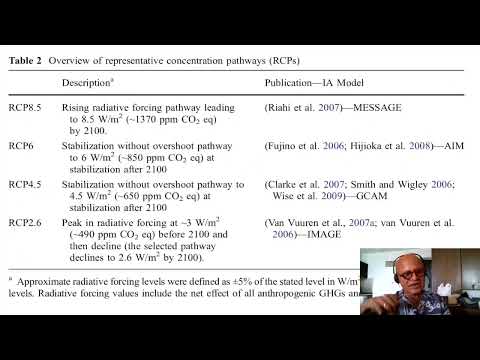
The RCP8.5 scenario is one of those terms that get tossed around a lot in climate science discussions. Basically, it refers to a **Representative Concentration Pathway**. That’s a fancy way of saying it’s a model we use to project how greenhouse gas emissions might impact our planet over time. RCP8.5, in particular, is the most extreme scenario we have.
Picture this: If we stick to our current emissions trajectory without any serious changes, we’re looking at serious challenges ahead—like rising temperatures and severe weather events. It’s like driving towards a cliff with no brakes! By the end of the century, if we don’t change our ways, global temperatures could rise by around 4 degrees Celsius or more compared to pre-industrial levels.
So what exactly does RCP8.5 entail? Well, it assumes that emissions will keep climbing throughout this century due to factors like economic growth and reliance on fossil fuels. Here are some key points:
- High Emissions: This scenario assumes emissions of about 1,000 gigatons of CO2 equivalent in the atmosphere by 2100.
- Temperature Rise: A temperature increase of around 4 degrees Celsius could lead to catastrophic impacts such as extreme heat waves and rising sea levels.
- Feedback Loops: More greenhouse gases may trigger feedback loops, like melting ice caps which release even more carbon dioxide and methane.
Now let’s talk implications for climate science and policy! It sounds super serious because it is! If RCP8.5 plays out as predicted, we’re talking about profound effects on agriculture, water resources, and human health.
For example:
- Agriculture: With higher temperatures and altered precipitation patterns, crops may struggle to grow in many regions. Think about those summer barbeques—if climate change wrecks our food supply chain… not cool!
- Health Risks: More heatwaves could lead to increased heat-related illnesses or even deaths among vulnerable populations.
- Migratory Patterns: Changes in habitats can result in species extinction and drive animals (and humans!) from their homes.
You might be wondering how this all connects with policy-making? Well, if RCP8.5 becomes reality, governments will face greater pressure to act quickly on climate change mitigation strategies.
That’s why the scientific community stresses renewable energy investments and energy efficiency measures now rather than later! Seriously—if we can steer away from the worst outcomes predicted by RCP8.5 through proactive policies today, we’ll be doing ourselves (and future generations) a huge favor.
Think of it this way: The choices you make today can shape tomorrow’s reality. So whether you’re just one person or part of a larger community—or government—little actions can lead up to big changes over time!
So in wrap-up here: Understanding scenarios like RCP8.5 helps us visualize where we’re headed if nothing changes—and that urgency is exactly why having these conversations is so essential right now! There’s still hope for getting a grip on things—but time is ticking!
Top 5 Science-Backed Action Points to Combat Climate Change
Climate change is like that nagging friend who just won’t stop showing up uninvited. You know it’s going to mess things up, but sometimes it feels overwhelming to tackle it. Let’s break down some science-backed action points that actually make a difference, especially when we talk about the RCP8.5 scenarios, which basically outline a future where greenhouse gas emissions keep climbing and we reach some pretty scary levels of warming.
The first point is reducing greenhouse gas emissions. You see, RCP8.5 suggests that if we don’t take significant steps to cut emissions, we could face dire consequences like extreme weather events and habitat loss. So, driving less or opting for electric vehicles can have an immediate impact. Just imagine if more people traded in their gas guzzlers for electric rides—suddenly, fewer emissions floating around!
This leads us right into
Tackling climate change may look like a big mountain to climb, but every small action adds up—like those tiny raindrops eventually forming a river! Let’s face it; RCP8.5 scenarios paint a challenging picture for our future. However, you have the power to make choices today that pave the way for healthier tomorrow.
Exploring RCP Scenarios: Impacts on Climate Science and Future Projections
RCP Scenarios, or Representative Concentration Pathways, are pretty essential when it comes to understanding potential climate futures. They help scientists make projections about how greenhouse gases will impact our planet over time. So, let’s break it down a bit, shall we?
RCPs are like different storylines about how the future could play out based on our actions today. The higher the RCP number, the more greenhouse gases we’re talking about. For instance, RCP8.5 is the “business as usual” scenario. This means if we keep burning fossil fuels at the current rate without any significant efforts to reduce emissions, we could end up here.
Now, picture this: a family sitting around their kitchen table discussing their options for a big family vacation. One option is to splurge on a trip to an exotic location (like sticking with high emissions). Meanwhile, another choice is budget travel and local adventures (akin to reducing emissions). RCP8.5 represents that first splurge where we just go all out without thinking about costs or consequences!
Let’s look at some impacts of RCP8.5:
- Temperature Increases: Under RCP8.5, global temperatures could rise significantly—by up to 4°C by the end of the century.
- Sea Level Rise: Melting ice caps and glaciers contribute to sea level rise that can flood coastal cities and change coastlines entirely.
- Extreme Weather: Expect more intense storms and heatwaves! Like that time when your friend’s party got rained out because of a freak summer storm—imagine that happening way more often.
- Biodiversity Loss: Many species might struggle to adapt or find suitable habitats due to rapid changes in climate.
These impacts aren’t just abstract concepts; they affect real lives. For example, think of small island communities that might literally be washed away with rising seas.
But wait! It’s not all doom and gloom if we talk about climate action. The implications of understanding these scenarios can empower us! By knowing what could happen under scenarios like RCP8.5, policymakers can create strategies for mitigation and adaptation.
In response to such daunting forecasts, many countries have adopted ambitious goals aimed at limiting temperature increases below 2°C—kinda like stepping back from that extravagant vacation decision!
It’s also important for you to know that every bit counts! Even small changes in your daily life—like using public transport or reducing waste—can collectively make a big impact over time.
In summary, exploring RCP scenarios gives us crucial insights into potential futures based on our present actions—or inactions—and highlights the urgency of climate action needed today! It reminds us that while we can’t predict everything with absolute certainty, taking those steps now can shape a much better tomorrow for everyone involved!
Alright, let’s chat about RCP8.5, huh? It’s a pretty technical term that stands for “Representative Concentration Pathway 8.5.” Basically, it’s one of those scenarios used by scientists to paint a picture of our climate’s future if we keep on doing what we’re doing—y’know, burning fossil fuels like there’s no tomorrow.
Imagine sitting around a campfire with friends, telling ghost stories about what could happen if we don’t change our course. RCP8.5 is like the horror movie version of climate predictions. In this scenario, by the year 2100, global temperatures could rise by more than 4 degrees Celsius! That’s not just a little warm up; it’s like turning your planet into an oven where life as we know it faces some major challenges.
You can totally picture the effects: more intense hurricanes, wildfires raging across landscapes like they’re trying to prove a point, and sea levels rising to claim coastal communities—like witnessing your favorite childhood playground slowly disappearing underwater. It kind of hits you in the gut when you think about how many lives would change forever.
But here’s where it gets tricky. Some folks hear “RCP8.5” and think it’s just science-y chatter—a distant concern for scientists in labs far away. But really, it’s deeply personal too! Those predictions impact not only the environment but also people everywhere—like your neighbor who might lose their home or even entire ecosystems that provide food and water.
What makes you wonder is how we can steer away from this path? Climate action isn’t just a buzzword; it’s something that needs our attention now! Whether it’s reducing emissions from cars or investing in renewable energy sources or just being conscious about our consumption habits—it all adds up.
So yeah, while RCP8.5 might sound complex and dry at first glance, underneath that scientific jargon lies a call to action—a reminder that the choices we make today can shape tomorrow’s world for better or worse. It feels good to share this kind of knowledge with friends because every bit helps in understanding how interconnected we all are. And who knows? Maybe one day those campfire stories will be about successful climate victories rather than scary scenarios!