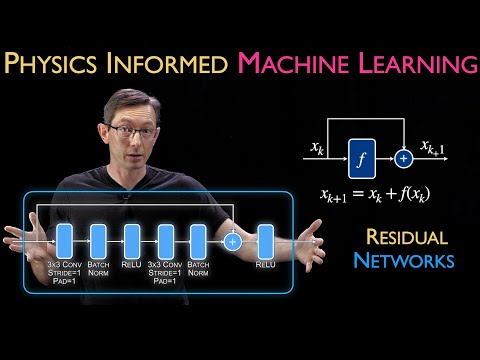
You know, the other day I was scrolling through my feed and stumbled on this mind-bending graphic of a neural network that looked like a tangled mess of spaghetti. Seriously, it made my head spin! But then I remembered how amazing these things really are, especially when we talk about Residual Neural Networks.
So, picture this: you’re trying to climb a steep hill, but every time you take a step up, you keep sliding back down. Frustrating, right? That’s kinda like what happens in traditional neural networks when they get really deep. It’s hard for them to remember everything!
Now, here comes the twist—Residual Networks swoop in like the superheroes of AI. They’ve got this clever trick of skipping layers so that those deep nets don’t lose their way. It’s all about making it easier for them to learn from data without getting lost.
Excited yet? Let’s spill some more tea on how these advancements are reshaping the way we think about AI and machine learning!
Exploring Recent Advancements in Residual Neural Network Architecture Using Python for Enhanced Scientific Research
They say the brain is the most complex thing in the universe. But what if I told you that artificial neural networks, particularly Residual Neural Networks (ResNets), are kind of like brains for computers? In recent years, ResNets have been stepping up their game, and Python has been a key part of that journey.
So what’s the deal with Residual Neural Networks? Well, they were designed to tackle a major problem in deep learning: as you make a network deeper, it often gets worse at performing its task. Crazy, right? But ResNets use something called “skip connections” which basically allow the flow of information to jump over some layers instead of getting stuck. This helps avoid a problem known as vanishing gradients. The result? You can stack more layers without losing performance.
Python makes working with these architectures feel like a breeze. Libraries like TensorFlow and PyTorch give you user-friendly tools to create complex models without getting buried in code. With just a few lines, you can implement a ResNet for tasks like image classification or even more complex scientific research.
Here are some cool advancements related to ResNet architectures that have popped up recently:
- The introduction of DenseNets, which build upon residual connections by connecting every layer to every other layer in a feed-forward fashion, improving efficiency.
- Integrating attention mechanisms with ResNets has shown promise for tasks like image recognition by allowing models to focus on significant features.
- New variations of ResNet are designed specifically for lightweight applications, making them ideal for mobile devices or resource-limited environments.
With projects growing at lightning speed, researchers are utilizing these advanced architectures in scientific fields such as genomics and climate modeling. Seriously! Just last month, I stumbled upon an article where scientists used an enhanced ResNet model to predict protein structures. That’s huge because understanding protein shapes is critical for drug discovery!
You might be wondering about real-world implications here—like how this affects our lives or science at large. Well, better models mean faster and more accurate predictions, which can lead to breakthroughs in medicine or even help predict natural disasters more effectively.
To wrap this up (not that I’m in a hurry)—Residual Neural Networks are shaping up not just as advanced tools but also as essential elements in advancing scientific research using Python. We’re only scratching the surface of what these neural networks can do! Keep your eyes peeled; it’s going to be an exciting ride ahead!
Exploring Recent Advancements in Residual Neural Network Architectures: Innovations and Applications in Scientific Research
So, let’s chat about Residual Neural Networks, or ResNets, for short. These bad boys have been making some serious waves in the AI world over the past few years. The cool thing about ResNets is how they’re designed to tackle a specific problem in deep learning: the dreaded vanishing gradient. You know, that annoying situation where neural networks struggle to learn as the layers get deeper? Yeah, not great.
Basically, ResNets introduce a neat trick called skip connections. What these do is allow certain signals to bypass one or more layers during training. It’s like saying, “Hey, let’s not make this too complicated.” So you get a clearer path for the gradient to flow back through. Pretty slick, right?
Now you might be wondering how this impacts scientific research. Well, let me tell you! One of the most exciting applications is in computer vision. For instance, researchers are using ResNets for image classification tasks that require recognizing complex patterns—think facial recognition or identifying objects in photos. It’s like giving computers eyes but way cleverer!
- Healthcare: There are advancements where ResNets help analyze medical images and detect diseases earlier than ever before. This kind of tech can literally be life-saving.
- Robotics: You’ll find ResNet architectures being implemented in autonomous systems that interact with their environments more intelligently than previous models.
- NLP (Natural Language Processing): Even in language tasks, like understanding sentiment or translating languages, researchers have started experimenting with residual structures to enhance performance.
A while back, I remember reading about how one research team developed a new model using ResNets for real-time breast cancer detection from mammograms. They found that their model could outperform traditional methods by quite a margin! That just goes to show how significant these advancements can be.
The advancements don’t stop there though! New variations of ResNet architectures are popping up all over the place. For example, there’s DenseNet which builds on some ideas from ResNet but adds even more connections between layers. It’s amazing what can happen when you play around with architecture!
The future seems super bright for Residual Networks and their applications in science and research fields are only expected to grow as we keep refining these technologies. It’s exciting stuff! But seriously, imagine all those breakthroughs waiting just around the corner because someone decided to think outside the box with neural networks.
So remember next time you hear about AI making strides: there’s often a clever architecture like Residual Neural Networks powering it behind the scenes! And who knows? Maybe you’ll even come across an application that changes the way we look at technology forever.
Exploring Recent Advancements in Residual Neural Network Architecture: Insights from GeeksforGeeks in the Science of Deep Learning
Alright, let’s talk about **Residual Neural Networks**, often called ResNets. They’ve been a game changer in the world of deep learning. You might be wondering, what makes them so special? Well, grab a seat and let’s break it down together.
First off, a Residual Neural Network is all about tackling the problems that arise when you make neural networks super deep. Imagine stacking layers upon layers like a really tall building. The bigger it gets, the harder it is to train effectively. That’s where ResNets come in handy!
So, what exactly is a residual block? It’s like a shortcut path that lets data skip some layers instead of getting stuck trying to go through every single one. This helps prevent something called “vanishing gradients,” which basically means that during training, updates to some parts of the network get really tiny and stop making an impact. It’s like trying to dig through hard soil only to realize your shovel isn’t cutting it anymore.
Here are some key points about Residual Neural Networks:
- Shortcut Connections: These connections allow gradients to flow more easily during training, helping with faster convergence.
- Deep Architecture: ResNets can have hundreds or even thousands of layers without losing performance.
- Improved Accuracy: They’ve shown remarkable improvement on benchmarks used for image recognition tasks.
You might feel like you need an engineering degree just to understand this stuff—but don’t worry too much! Think of a residual layer as having a “helping hand” that boosts any struggling information along its journey through the network.
Now, if we dig deeper—pun totally intended—you’ll find out that ResNets were designed by some brilliant minds at Microsoft Research back in 2015. They introduced this architecture and made waves in competitions like ImageNet where they smashed previous records with their accuracy scores.
One cool thing about ResNets is how adaptable they are! Researchers have tweaked this architecture for all kinds of applications: from face recognition to improving medical imaging analysis! Can you believe how far we’ve come?
But again, even though these networks sound super fancy with their shortcuts and depth, they’re not without challenges. For example, they require careful tuning and lots of data to perform well—and let’s not forget the computational resources necessary for training these bad boys!
To wrap this up: Residual Neural Networks are not just another fancy term tossed around by tech geeks; they’re an innovative solution addressing real issues in deep learning models today. So every time you use an app or website that uses image classification or complex pattern recognition, there might be bits of ResNet magic happening behind the scenes!
Isn’t it kind of mind-blowing how advanced our technology has become while still keeping things so approachable? Think about all those amazing possibilities we still have yet to uncover!
You know, when we talk about advancements in residual neural networks, or ResNets as they’re often called, it’s like peeking into a world where machines are beginning to think and learn in ways that seem almost magical. A few years ago, I watched a documentary about AI and how it learns to recognize images. It was wild! They showed this one AI that could identify dogs from cats with stunning accuracy. The catch? It was using a neural network architecture—like ResNets—to do all that heavy lifting.
So, let’s break it down a bit. ResNets were introduced by researchers who basically wanted to tackle something pretty tricky: the problem of training very deep neural networks. Think of these networks as layers of ideas stacked on top of each other. The deeper you go, the more complex things can get. But here’s the thing—sometimes going deeper makes it harder for the network to learn effectively because it forgets what it learned earlier. It’s like trying to remember a long grocery list without writing anything down; you might forget those essential items halfway through!
That’s where residual connections come in, acting like little shortcuts that help preserve information as it flows through all those layers. Imagine you’re walking through a maze but every time you hit a dead end, there’s an arrow pointing back to where you just came from. These connections allow the model to basically “skip” layers if needed and focus on what really matters.
I’ve thought about how this impacts everything from self-driving cars recognizing pedestrians better to voice recognition systems understanding us more accurately. Each tiny improvement builds on the last one, and suddenly we’re living in this sci-fi reality. Plus, ResNets allow researchers to build even deeper models without running into massive issues like overfitting or vanishing gradients.
And honestly? Watching this tech evolve makes me hopeful about what’s next. Sure, there are challenges ahead—ethics around AI usage and biases in data—which we can’t ignore! But these advancements keep nudging us closer to innovative solutions we haven’t even dreamed about yet.
So yeah, every time I see a new application powered by these changes in neural network architecture, I feel that spark of excitement! It reminds me that sometimes the hardest puzzles can lead us right back home—to finding smarter ways for machines and humans to communicate and understand each other better. Pretty cool stuff if you ask me!