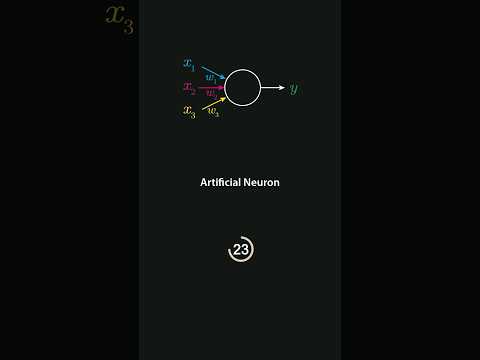
You know what’s wild? I once tried explaining neural networks to my grandma. She thought I was talking about some newfangled coffee machine.
But really, neural networks are a lot cooler than that! They’re like the brainy sidekicks of artificial intelligence. Seriously, they can make predictions, recognize voices, and even generate art.
Imagine a playground where you can tinker with these brainy buddies. Sounds fun, huh? That’s exactly what the Neural Network Playground is all about. It’s this amazing space where you can mess around with AI concepts without needing a PhD.
So grab your thinking cap and let’s jump into the awesome world of AI science together!
Exploring the TensorFlow Playground: A Gateway to Understanding Machine Learning in Science
The TensorFlow Playground is like a friendly little sandbox where you can dip your toes into the world of machine learning—you know? It’s super interactive and lets you play around with different neural network parameters without needing to write a single line of code. But hold on, what’s a neural network anyway?
A neural network is basically a system designed to recognize patterns in data, kind of like how our brains work. You have inputs, which are the data coming in, and outputs, which are the predictions or classifications that come out. Think of it as trying to teach a toddler to recognize fruit. You show them apples and oranges, and after a while, they start recognizing them on their own.
When you get into the TensorFlow Playground, you’re greeted with this cool interface where you can adjust various settings. Here’s where the fun starts!
You can tweak things like hidden layers. More layers might help your model learn more complex patterns but it could also make it slower or even lead to overfitting—where it learns too much from its training data and doesn’t perform well on new stuff. Imagine teaching your toddler only about apples from one tree; they might not recognize apples from any other tree!
Now let’s talk about learning rates. This parameter controls how quickly your model learns. If it’s too fast, it might skip over important details, kind of like rushing through a book without actually understanding what’s happening. If it’s too slow, well, that might take ages!
And then there’s activation functions, which add some spice to how neurons in your network fire off signals based on input data. It’s like deciding when to turn on a light—the activation function determines whether it’s time for that neuron to spark up.
Another exciting feature? You can visualize how training progresses right before your eyes! As the training goes on, you’ll see dots clustering more as they learn and separate different classes better. Watching this process unfold can feel pretty satisfying—like seeing puzzle pieces snap together.
You know what I love about TensorFlow Playground? It makes machine learning concepts accessible for everyone—even if you’re not super techy! A few years back, I was completely lost when my friend started talking about AI at dinner. But with tools like this playground out there now? You don’t have to feel overwhelmed anymore.
So if you want to wrap your head around some concepts in AI science while being all hands-on with it—TensorFlow Playground is definitely your go-to spot! It demystifies things without drowning you in jargon or complex theories; just pure exploration of ideas through engaging visuals and interactive elements.
In short: this platform offers an intuitive way for curious minds (like yours!) to dive into machine learning concepts that are shaping our world today—whether that’s improving healthcare or making smarter devices. So next time someone mentions AI or neural networks at dinner…you just might be able to jump right into the conversation!
Exploring the Three Types of Artificial Neural Networks in Modern Science
Artificial neural networks (ANNs) are like the brains of machines, helping them learn from data and make decisions. They mimic how our own brains work, with layers of interconnected nodes that process information. You can think of them as a web of tiny neurons firing signals back and forth. There are three main types of artificial neural networks that are super important in modern science: feedforward neural networks, convolutional neural networks, and recurrent neural networks. Let’s break each one down.
Feedforward Neural Networks
This is the simplest kind of artificial neural network. The data flows in one direction—from the input layer, through hidden layers, and finally to the output layer. Imagine throwing a ball straight down a hill; it just goes in one direction without bouncing back! This type is often used for basic tasks like classification or regression problems. For instance, if you want to predict house prices based on size and location, a feedforward neural network can help figure out those patterns.
Convolutional Neural Networks (CNNs)
Now things get more exciting! CNNs are designed specifically for processing grid-like data such as images. They have special layers called convolutional layers that scan over the input image to pick up features like edges or textures. Picture this: when you’re looking at a photo, your brain breaks it down into parts—like recognizing shapes or colors—before understanding what you see as a whole.
These networks excel in tasks like image recognition or video analysis. For example, they power facial recognition systems by learning features that distinguish one face from another. It’s kind of mind-blowing how quickly they can identify objects with extraordinary accuracy!
Recurrent Neural Networks (RNNs)
If you think about conversations or stories, they don’t just happen in isolated chunks—they unfold over time with context building on what happened before. That’s where RNNs come in handy! They’re designed to handle sequential data by having feedback loops that allow information from previous inputs to stick around for later use.
RNNs are great for tasks such as language modeling or predicting the next word in a sentence based on what was said earlier—like when you’re texting your friend and your phone suggests words for you! This ability to remember past information makes RNNs useful for applications like speech recognition or even music generation.
All three types of artificial neural networks have their unique strengths and applications. Whether you’re categorizing images with CNNs or predicting trends using RNNs, these models shape how machines learn and interact with us every day. And isn’t it fascinating how these complex systems draw inspiration from our own brain? Just goes to show how science constantly evolves by looking at nature!
Exploring AI Science: Engaging Minds with Neural Network Playground Examples
So, you’ve probably heard about AI and how amazing it is, right? Well, today we’re diving into the world of **neural networks**. They’re a bit like your brain, just made of code. It’s cool to think about how they can learn from data and recognize patterns. Let’s break this down a bit.
Neural networks are designed to mimic how our brain works. Imagine thousands of tiny interconnected neurons working together to solve problems. You got that visual? Great! These networks take inputs (like images or sounds) and try to make sense of them by passing them through layers of “neurons.” Each layer transforms the data a little bit until it spits out an output—like recognizing your friend’s face in a photo.
Now, there’s this nifty tool called the **Neural Network Playground** that lets you play around with these concepts without needing a PhD in computer science. It’s interactive and engaging! Here are some things you can do with it:
Visualize Learning: You can see how the network learns as it trains on data. For instance, if you’re teaching it to recognize cats vs. dogs, you’ll watch as it tweaks its internal connections until it gets better at making decisions.
Experiment with Parameters: The Playground lets you change settings like learning rate or number of hidden layers. It’s like adjusting the knobs on your favorite guitar amp—tweaking them can totally change the sound!
Real-time Feedback: As you adjust parameters and train the network, you get immediate results. If something isn’t working well, you’ll see that too! This instant feedback helps in understanding what each component does.
Let’s say you’re curious about **overfitting**—that’s when a model learns too much detail from its training data and gets confused when seeing new stuff. In the Neural Network Playground, if you make the network too complex for simple data (like recognizing circles), you’ll spot this happening pretty quickly!
Some people find playing around with neural networks super fun because it’s all about experimentation! There are moments where things might seem perplexing; maybe your network thinks every square is a circle or misses clear patterns entirely. But that frustration is part of learning! You figure out what works and what doesn’t.
And here’s something neat: these playful experiences help demystify AI for everyone—even those not in tech fields. They show how powerful AI can be while making sure we understand its limitations too.
So yeah, neural networks are fascinating bits of technology that grow smarter over time, similar to how we humans learn from experiences! Engaging with tools like Neural Network Playground makes complex science feel more accessible and less intimidating. It also sparks curiosity—something we could definitely use more of today!
In short, whether you’re an aspiring coder or simply curious about AI’s role in our lives, getting involved with neural networks through fun platforms opens up endless possibilities for understanding and innovation!
You know, I was thinking the other day about how technology has really transformed the way we learn. Remember when we were kids and had those big, chunky computers with the green screens? Well, here we are now, in an era where even the youngest of learners can dabble in artificial intelligence without any fancy degrees or a super techy background. It’s wild!
Take the Neural Network Playground, for instance. It’s this cool online tool that lets you mess around with neural networks—basically simulating how certain systems in our brains work. If you’ve ever played with a toy that had interchangeable pieces, it feels kind of like that! You can tweak parameters and see how changes affect outcomes in real-time. It’s like being a scientist from the comfort of your couch.
I remember when I first stumbled upon it while trying to explain AI concepts to my younger cousin. He was struggling to grasp why AI could recognize his doodles and not a plain smiley face I drew. But once he started playing around with different settings on the playground, it just clicked for him! Watching that lightbulb moment was priceless—like seeing someone find their way out of a maze without realizing they were lost.
What’s neat is how this interactive experience nurtures curiosity and critical thinking. You’re not just reading textbooks; you’re actually engaging with concepts through gameplay. It reminds me of how learning should feel—exciting and hands-on! But it’s more than just fun and games; it empowers you to ask questions about AI’s limits and potentials too.
The best part? Anyone can access it—you don’t need fancy equipment or loads of prior knowledge. Just dive in, play around, and see what happens! Honestly, if this is where education is heading, I can’t help but feel hopeful for future generations.
So yeah, as we look at tools like the Neural Network Playground shaping our understanding of complex topics like AI in such approachable ways, it makes me think: What else is on the horizon? Learning has never been so engaging—or so accessible!