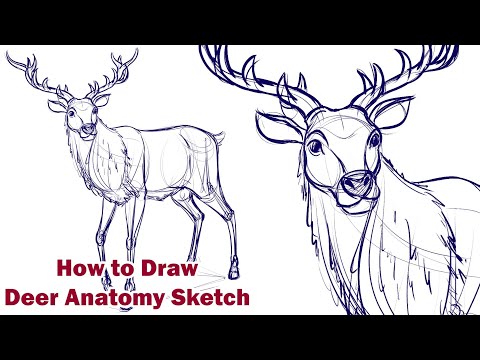
Ever seen a deer up close? I mean, really up close? The first time I did, I was hiking and this majestic creature just stared me down like, “What are you doing in my backyard?” It was wild!
Deer anatomy might not seem super thrilling at first, but trust me—there’s so much more going on under that furry coat than you’d think. Seriously! They’ve got some cool adaptations that help them survive, run fast, and blend into their surroundings.
And here’s the kicker: understanding how these animals tick can actually inspire us to take better care of our forests and fields. So grab your pencil or just your curiosity; we’re diving into the world of deer anatomy together!
Detailed Whitetail Deer Anatomy Illustrations for Scientific Outreach and Educational Purposes
Whitetail deer are fascinating creatures, not just for their graceful movements in the wild, but also for their incredible anatomy. Let’s take a closer look at some key aspects of their bodies that make them such unique animals.
Skeleton and Structure: Their skeleton is quite remarkable. The whitetail deer has about 210 bones. These bones support the entire body and give it that iconic elegance, especially when they leap gracefully over obstacles.
- Spine: Their spine is flexible, which allows for impressive jumps and quick changes in direction.
- Cervical Vertebrae: They have seven cervical vertebrae, just like us humans!
Muscular System: Now, think about all that running they do! Well, whitetail deer have strong muscles for endurance and speed. Their muscles help them to run up to 30 miles per hour if needed, which can happen when they’re startled.
- Leg Muscles: The muscles in their legs are specially adapted for powerful jumps.
- Skeletal Muscles: These allow rapid movements away from danger.
Digestive System: What you might find interesting is how whitetail deer digest food. They’re ruminants, meaning their stomach has four compartments. This is kind of like having multiple stomachs!
- Rumen: Their first stomach holds food and ferments it.
- Reticulum: This helps separate smaller particles from larger ones.
- Omasum and Abomasum: These break down the food further before it’s absorbed into the bloodstream.
The magical part here? They can eat tough plant materials that many other animals can’t digest! Imagine munching on grass without a care in the world while getting nutrients!
Sensory Organs: Whitetail deer have highly developed senses to keep them safe in the wild.
- Sight: They see quite well; however, their color vision isn’t as vibrant as ours—think more muted tones.
- Scent:
This allows them to detect predators a long way off! You know that feeling when you hear someone say your name from afar? Well, imagine having an even sharper sense to detect danger!
Their anatomy supports a life of agility and survival! When you look at those detailed illustrations of whitetail deer anatomy, notice how everything fits together perfectly for movement, digestion, and evasion.
If you’re into scientific outreach or education about these animals, using clear images or diagrams can be super helpful. It makes understanding their biology easier for everyone involved—from kids learning about wildlife in school to researchers studying ecological impacts.
The beauty of whitetail deer lies not only in their physical appearance but also in how each part contributes to their survival. So next time you spot one grazing peacefully under a tree or bounding across a field, just remember all those incredible functions behind the scenes happening every moment!
Comprehensive Deer Anatomy Drawing: Educational PDF for Scientific Outreach and Study
You know, when we look at deer, they might seem like simple animals grazing in the fields or darting through the woods. But there’s a whole lot more going on under their sleek coats! Understanding **deer anatomy** is crucial for many reasons, from wildlife management to conservation efforts.
First off, let’s talk about their **skeletal structure**. A deer has a strong yet lightweight skeleton. Why is that important? Well, it allows them to move quickly and gracefully. Those long legs are designed not just for running away from predators but also for navigating tricky terrains. The bones in their legs are long and slender, which gives them that bounce in their step.
Then there’s the **muscle system**. Deer have powerful muscles that help them leap over obstacles and sprint fast when needed. Think about how you feel when you try to run up a hill; you can feel your muscles working hard, right? That’s exactly what deer experience every time they dash away from danger.
Next up is the **digestive system**. Deer are ruminants—kind of like cows—which means they have a really cool stomach setup that allows them to break down tough plant materials effectively. Their stomach has four compartments! It’s like having a multi-level food processor inside them! This helps them get all the nutrients they need from things like grass and leaves.
Let’s not forget about their **senses** either! Deer are equipped with amazing eyesight and hearing—much better than ours, actually! Their large eyes can pick up movement very well, especially in low light conditions. And those big ears? They can rotate independently to catch sounds coming from different directions—perfect for spotting danger.
Now, if you’re thinking about creating a comprehensive **deer anatomy drawing**, here’s what you’d want to include to make it super informative:
- Skeleton: Show how bones support movement.
- Muscles: Highlight muscle groups that assist in running and jumping.
- Digestive System: Illustrate the four stomach chambers.
- Senses: Capture details about eyesight and hearing capabilities.
- Skin & Fur: Note how these protect against elements and aid camouflage.
Creating an educational PDF with this kind of illustration could be really beneficial for science classes or wildlife studies! It would not only help students visualize anatomy but also foster an appreciation for these beautiful creatures.
I remember once going on a hike with friends and spotting a deer standing still amidst some trees. It was both breathtaking and humbling to see such grace in nature. That moment stuck with me because it reminded me how important it is to understand our environment—and everything living within it.
So yeah, deer anatomy isn’t just some textbook stuff; it connects us with nature deeply!
Understanding Deer Muscle Anatomy: Insights for Butchers in Wildlife Science
So, let’s talk about deer muscle anatomy, shall we? It’s a pretty interesting topic, especially if you’re in the field of wildlife science or butchery. Understanding how a deer’s muscles are structured can make a difference when it comes to processing the meat. You know?
First off, deer muscles are fascinating because they are built for different purposes. Some muscles help them run fast and jump high while others support daily activities like grazing. This variety is important not just for the deer, but also for someone who’s handling the meat.
- Skeletal Muscles: These are the ones most people think of when it comes to meat. They’re attached to bones and help with movement. For deer, muscles like the semimembranosus and longissimus dorsi are significant because they contain flavorful cuts like roasts and steaks.
- Smooth Muscles: These aren’t what you’d typically worry about as a butcher because they control involuntary functions like digestion. Still, they play a role in how well the deer processes food.
- Cardiac Muscle: This muscle is all about keeping that heart pumping and isn’t something you’ll deal with during butchering, but understanding it helps you appreciate how vital it is for overall health.
If you consider those common cuts of meat from a deer—like tenderloins or backstraps—you’ll see where specific muscles come into play. For instance, the longissimus dorsi, which runs along the spine, gives us those delicious backstraps. This piece is super tender because it doesn’t get much exercise compared to other muscles.
I remember this one time I went out hunting with my buddy Mark. He was all about telling me how important muscle structure was when he skinned his first deer. You could see his eyes light up as he explained how certain cuts require different techniques based on where those muscles lie. It just clicked for me then; knowing your anatomy makes all the difference!
The actual muscle fibers in these areas can also vary—you’ve got fast-twitch fibers, which help with quick bursts of speed (think running away from predators), and sloe-twitch fibers, which are great for endurance (like standing in place while munching on grass). This affects how tender or tough certain cuts can be after being cooked.
- Tender Cuts: More slow-twitch fibers mean tenderness—perfect for quick cooking methods like grilling.
- Tough Cuts: Fast-twitch fibers usually indicate tougher meat that benefits from slow cooking or braising.
If you’re cutting into those tougher parts of a deer—like neck or shoulder—knowing how to break down those muscles can lead to better results in whatever dish you’re preparing!
The way deer adapt their bodies for survival also influences their muscle development over time due to environmental factors and diet changes—noting these adaptations can really make your work more insightful as well! And yeah, keeping this knowledge handy could give you an edge whether you’re out hunting or working behind a counter handling venison.
Your understanding of muscle anatomy isn’t just academic—it’s practical too! So next time you’re preparing some tasty venison dishes or studying wildlife sciences, remember that every cut tells its own story through its structure and purpose!
So, I was hanging out in the woods the other day, just enjoying some nature and trying to get a better understanding of the local wildlife. You know how it goes—just you and the trees, listening to the rustle of leaves. Anyway, I spotted a deer grazing peacefully in a clearing. It got me thinking about how incredible these creatures are, especially when you consider their anatomy and how we can share that knowledge with others.
Now, deer have this unique structure that makes them so fascinating. From their long legs built for running through dense forests to those big, expressive eyes that help them spot danger from far away. These features are not just cool to look at; they’re essential for their survival! Imagine having those kinds of adaptations—so graceful and quick. When you see it all laid out in a drawing or diagram, it becomes so much clearer.
In scientific outreach, drawing deer anatomy is like a bridge between science and art. It’s like storytelling but with images instead of words. When kids or curious adults see these illustrations, they often light up with interest. It’s not just about lines on paper; it’s about sparking curiosity about nature and fostering respect for wildlife. And let’s be real: there’s something kinda magical about seeing how everything fits together—the skeleton holds them upright while muscles allow them to leap gracefully over obstacles.
I once attended a workshop where we had to sketch animal anatomy ourselves; I was really nervous at first! But as we started drawing these animals, I felt this connection to them grow stronger. Each line represented more than just form; it told stories of survival in the wild. Those drawings did more than teach anatomy; they helped us appreciate the intricate designs nature has sculpted over eons.
Plus, getting hands-on with scientific outreach through drawing can lead to conversations that dive deeper into ecology and conservation efforts too! If people understand the anatomy of deer better—like why they need certain habitats or food—they’re more likely to care about protecting those spaces.
So yeah, sharing something like “Deer Anatomy Drawing” isn’t just educational—it’s an opportunity to connect people with nature on a deeper level! Whether you’re looking at sketches in a textbook or doodling on your notepad while waiting for your coffee, there’s always room for appreciation when it comes to understanding these majestic animals—and that’s really what it’s all about!