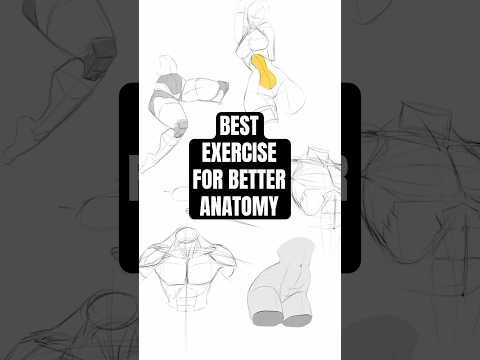
Have you ever tried to draw a human back? Like, the actual anatomy of it? I remember my first attempt. I thought I was channeling my inner artist, but it turned out looking like a stick figure with a bad case of spaghetti-itis! Seriously, it was a mess.
But here’s the thing: drawing anatomy is actually super important for science education. It’s not just about making pretty pictures; it helps us understand how bodies work. You know? Like, when you really see those muscles and bones, it clicks!
Now, there are some pretty innovative techniques to level up your drawing game. We’re talking about stuff that makes anatomy come alive on the page. And that’s what we’re gonna dig into! So grab your sketchpad and let’s have some fun with this.
Mastering Anatomy Drawing: Essential Techniques for Scientific Accuracy and Artistic Skill
When it comes to drawing anatomy, particularly the back, there’s a balance between getting the science right and making your art look awesome. If you’re trying to master this skill, there are a few essential techniques that can really help you out.
- Understanding Proportions: You need to get how the body is put together. The human back has lots of parts—muscles, bones, and skin. Take time to study these structures!
- Reference Material: Always use reference images. This helps in capturing not just the shape but also how light plays on different surfaces.
- Layering Techniques: Start with basic shapes before adding details. Think of building a house: you gotta lay the foundation first! Use light pencil strokes for your underdrawing.
- Anatomical Landmarks: Know where key features are located. The spine’s curve, shoulder blades, and muscle groups can guide your drawing.
- Shading: Get familiar with techniques like hatching and cross-hatching for depth! Shading can make muscles pop and give life to your work.
I remember when I first tried tackling a drawing of someone’s back—let me tell you, it was a struggle! I ended up realizing that my shading was all wrong; it looked flat and lifeless. Then I learned about contrast—how dark shadows against lighter areas could really bring my work to life. It totally changed my perspective.
The thing is, practice makes perfect! Spend time sketching different backs in various poses. This not only builds confidence, but it also helps you understand movement and anatomy better. Even artists like Leonardo da Vinci spent years studying human anatomy before they mastered their craft!
If you want your anatomical drawings for science education to be more than just pretty pictures, think about how you can incorporate educational elements into them too. Like labeling parts or showing how muscle groups connect to bones can be super helpful for students learning anatomy.
You might want to combine all this knowledge with digital drawing tools too! There are apps that let you overlay grids on images or even toggle layers of muscle structure which can aid in understanding complex configurations like the back.
The journey of mastering anatomy drawing is full of ups and downs, but remember that every artist goes through this process. Keep learning! Keep practicing! Following these techniques will surely help bridge that gap between scientific accuracy and artistic skill as you draw your way through anatomy.
Exploring the 7 Laws of Drawing: A Scientific Perspective on Artistic Foundations
Alright, let’s jump into the fascinating world of drawing and how science can give us a leg up, especially when we’re talking about something as intricate as back anatomy. You’d be surprised how the “laws” of drawing can set a solid foundation for both artists and scientists.
The 7 Laws of Drawing are like the building blocks of effective artistic expression. Understanding these principles can transform how we approach drawing, especially something as complex as human anatomy.
- <b.line: Every drawing starts with lines. They define shapes and convey movement. Think about how a spine curves; using lines thoughtfully can show that flow.</b.line:
- <b.shape: This focuses on understanding forms in space. When you look at a back, it’s really about recognizing different shapes—like triangles or cylinders—hidden within the anatomy.</b.shape:
- <b_value: This refers to lightness and darkness in your drawings. Imagine shading the muscles along the spine; it brings depth and realism, making it more lifelike.</b_value:
- Texture: Texture adds richness to your work. For instance, depicting skin versus muscle involves different techniques to mimic their distinct appearances.
- Color: While this might not directly apply when you’re studying anatomy (you often stick to grayscale), understanding color theory helps when you’re illustrating for educational purposes.
- Form: Form is all about three-dimensionality in your drawings. You must capture how each muscle protrudes or recedes on the back’s surface.
- Space: Lastly, don’t forget about space! Knowing how to place elements helps create context—like where the spine sits relative to ribs or shoulder blades.
Now, you might be thinking: “Why do I care about these laws if I’m just trying to draw a back?” Well, here’s the thing: integrating scientific concepts into artistic practices makes for better learning tools in science education!
Let me share this anecdote: A while ago, I observed an art class where students were tasked with sketching human bodies from live models. The instructor emphasized using these seven laws to capture not just what they saw but also what they learned anatomically. The students who grasped these principles were able to portray anatomical features much more accurately than those who focused solely on realistic representation without understanding structure.
When it comes down to it, mastering these laws makes you think critically about body mechanics too! Take back muscles like the latissimus dorsi—the way they connect and influence movement is crucial for any visual representation.
So whether you’re sketching for fun or teaching others about back anatomy through art, tapping into these artistic foundations backed by scientific insights will elevate your work tremendously! It’s all connected—the beauty of art meets the precision of science.
Remember that every stroke tells a story—it’s not just about making it pretty but also capturing reality accurately! And next time you pick up that pencil or charcoal stick, think about those seven laws guiding your hand and see where your creativity takes you!
Top Common Anatomy Drawing Mistakes and How to Avoid Them in Scientific Illustration
So, you’re diving into the world of anatomy drawing, huh? That’s super cool! But let’s be real—there are a bunch of common mistakes that could trip you up. Here’s a look at some frequent pitfalls and how you can dodge them while making your anatomical illustrations shine.
1. Proportions are key
A lot of beginners struggle with getting proportions right. You know, like the size relationship between different body parts? It’s crucial for making your drawings look realistic. If you draw a head that’s way too big compared to the body, it just kinda looks awkward.
To avoid this mistake, measure relative sizes using a pencil or your fingers as a guide! Hold it up against the drawing to check if things are in balance. Sounds simple, but it really helps.
2. Ignoring the skeleton
It’s super tempting to jump straight into muscles and skin without thinking about what’s beneath. Your back muscles, for instance, don’t just float there; they attach to bones and other structures. That means if you’re ignoring the skeleton in your drawings, they’re missing a foundation.
Try sketching out a light outline of the ribs and vertebral column first before layering on muscles like the latissimus dorsi or trapezius. It’ll totally help clarify where everything goes!
3. Overlooking muscle layering
When you’re illustrating muscles, don’t forget that they exist in layers! A common mistake is to draw them all on top of each other without considering how they stack up in real life.
To fix this issue, think about drawing one layer at a time—start with deeper muscles before moving outward. This gives depth to your work and makes it much more realistic.
4. Forgetting dynamic poses
Static poses can make anatomy drawings feel lifeless! It’s easy to fall into the trap of drawing everything from boring angles—like front views only—but human bodies are most interesting when they’re moving.
Instead, try capturing action by using reference photos or even quick sketches from life! Poses that show movement will elevate your illustrations from flat to fab!
5. Not studying from life
Drawing solely from textbooks can be limiting since photos or diagrams often lack the subtle details that live models provide—like how skin folds or how light plays across muscles.
Make an effort to attend figure drawing classes or just observe friends posing casually around you! Getting familiar with real-life anatomy will give your illustrations so much more authenticity.
6. Skipping shading and texture
Flat colors can wash out an otherwise well-drawn figure! Effective use of shading adds depth and dimension which is what transforms a basic sketch into something visually compelling.
Practice shading techniques with varying pencil pressures or even digital tools if that’s your jam! Adding shadows can help distinguish different structures and bring them to life on paper!
In wrapping all this up—it doesn’t hurt to remember that everyone makes mistakes along the way; even seasoned illustrators trip sometimes! Just keep practicing and have fun with it; after all, art is as much about exploration as it is about accuracy!
You know, when I was in school, the whole idea of learning anatomy felt so overwhelming. I remember staring at those intricate diagrams in textbooks, thinking they were just fancy puzzles that made my brain hurt. But now, I see how innovative techniques in back anatomy drawing can really change the game for science education.
So picture this: students today aren’t just stuck with static images anymore. They’re using 3D models and interactive software that let them rotate and zoom in on the spine or muscles like it’s a video game! Imagine understanding the way the vertebrae fit together or how muscles intertwine by literally moving them around with your fingers. It’s pretty mind-blowing when you think about how far we’ve come from flat pictures.
It’s not just about technology, either. Some artists are taking a more artistic approach to these drawings, blending science and art to create stunning visuals that pull you in. These illustrations can convey so much more than just facts—they can evoke feelings and insights about human movement and health too. It’s almost poetic!
Then there’s something like augmented reality (AR). Seriously, this is something straight out of sci-fi movies! With a simple app, you could point your phone at your own back and see layers of muscles or nerves light up right before your eyes. That connection feels so real; it makes all those complex terms so much easier to grasp.
I recall being part of a workshop where we had to sketch anatomical figures ourselves—but with some new techniques taught by an artist specialized in anatomy illustration. Honestly? It transformed the way I viewed anatomy completely! Feeling the shapes beneath my pencil gave me a sense of appreciation for every little detail we often overlook.
I guess what I’m driving at is that these innovative techniques are breaking down barriers and making learning super engaging. You’re not just memorizing terms; you’re experiencing the subject matter firsthand! And who wouldn’t want to learn like that? It’s like turning a dull topic into one you actively want to explore.
So yeah, whether it’s through tech or artistic expression, innovative approaches to back anatomy drawing are definitely reshaping how we educate future scientists—and that’s exciting stuff!