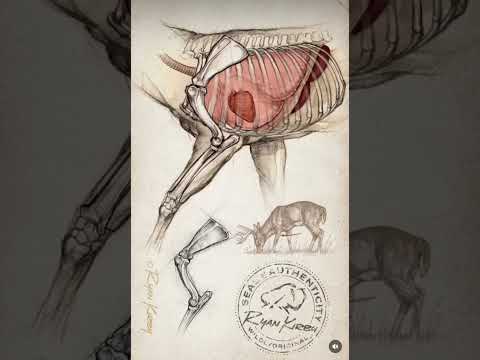
You know what’s wild? Deer can run up to 30 miles per hour! That’s like a fluffy, four-legged blur zooming through the woods. But here’s the thing: it’s not just their legs that make them amazing—check out their organs!
Seriously, deer have some of the coolest adaptations in the animal kingdom. Like, did you know they can see in color? Yeah, it’s not just about those big eyes looking cute. Their bodies are built for survival, and each organ plays a special role in helping them thrive.
When you think about it, understanding these critters isn’t just fun—it kind of connects us to nature. I mean, who doesn’t want to know why Bambi is so good at blending into the forest or dodging predators? It’s like a natural wonderland adventure waiting to be explored!
An In-Depth Exploration of Deer Anatomy: Understanding Organ Structure and Function
Deer are fascinating creatures, and their anatomy is uniquely tailored for survival in various environments. Basically, they come equipped with a bunch of adaptations that help them thrive. Let’s break it down and take a closer look at some of the key organ systems in deer.
First off, the cardiovascular system plays a crucial role. Deer have a four-chambered heart similar to that of humans. This structure allows for efficient blood circulation, which is vital when they need to run away from predators. The heart pumps oxygen-rich blood through their body, helping maintain energy levels during long chases.
Next up is the respiratory system. Deer possess large lungs that enable them to take in lots of oxygen quickly. This is essential because they often need quick bursts of speed to escape danger. Their nostrils can expand as they breathe in, which helps them get even more air when sprinting through forests or fields.
Now, let’s talk about the digestive system. Deer are ruminants, meaning they have a special digestive process that involves multiple stomach compartments—specifically, four! Here’s how it works: They first chew their food lightly and swallow it into the rumen (which is like a big fermentation chamber). Later on, they bring it back up as cud and chew it some more before sending it to the other stomach chambers for digestion. This helps them extract maximum nutrients from tough plant material like leaves and grasses.
Speaking of food, you can’t forget about their lovely teeth. Deer have sharp incisors in their lower jaw for biting off plants and flat molars plus premolars for grinding down tough fibers. It’s like nature’s toolset designed just for munching on greens!
Moving on to the nervous system, deer are equipped with highly developed senses, particularly vision. Their eyes are located on the sides of their heads giving them a broad field of view—almost panoramic! This feature helps detect predators from different angles while feeding or resting.
And then there’s their sense of smell—it’s pretty remarkable too! Deer can pick up scents over great distances thanks to their highly sensitive olfactory receptors. That means they know when danger might be lurking nearby long before we do!
Of course, we can’t ignore their muscular system either. Strong leg muscles allow deer to jump impressive heights and cover vast distances with quick bounds. Imagine leaping gracefully through a forest; those muscles are what make that possible!
Lastly, let’s not gloss over their skin and fur—those play an important role too! The outer layer provides protection against environmental elements while also camouflaging them in various habitats; think about how well they blend into dappled sunlight filtering through trees.
In summary—deer anatomy illustrates an incredible interplay between structure and function designed perfectly for survival. From streamlined hearts pumping efficiently under stress to complex stomachs processing challenging diets, each part fits together like pieces of a puzzle designed by nature itself! So next time you see one grazing peacefully—or bounding away—you’ll have a better appreciation of all the fascinating organs working together inside these amazing animals!
Exploring Female Deer Anatomy: A Comprehensive Study in Wildlife Biology
Sure, let’s chat about female deer anatomy. It’s not just about their graceful movements or those big, brown eyes; there’s a lot going on inside too. So, picture this: you’re in the woods, and a doe gracefully bounds by. You might not think much about it, but her body is finely tuned for survival.
First off, female deer belong to the family Cervidae, and just like any other animal out there, their anatomy is adapted to their lifestyle and environment. One of the coolest things about does is their **reproductive system**. Female deer have a unique estrous cycle that typically lasts about **21 days**. During this time, they can become pregnant if they mate with a buck.
Another important part of female deer anatomy is their **digestive system**. Deer are ruminants, which means they have a specialized stomach with four compartments: the rumen, reticulum, omasum, and abomasum. This setup helps them break down tough plant material like leaves and twigs that make up most of their diet. Basically, they chew food once, swallow it down to the rumen for fermentation—yep!—and then bring it back up to chew it again. Isn’t that wild?
Let’s talk about their legs too! Female deer have long, strong legs which allow them to run fast when danger comes knocking. They can reach speeds up to **30 miles per hour** in short bursts! Those powerful legs also help them jump over obstacles with grace and agility.
Then we have the **senses** part of things! Female deer have excellent vision due to their large eyes positioned on the sides of their heads. This gives them a wide field of vision so they can spot predators easily. However—fun fact—they’re colorblind! They mainly see in shades of blue and yellow but can still pick up movements really well.
And here’s something else: female deers often exhibit maternal behavior that’s quite heartwarming. After giving birth—usually one or two fawns at a time—they tend to hide them in tall grass while they go off foraging for food nearby. This instinct helps protect the little ones from predators because they’re camouflaged pretty well where they’ve been placed.
So yeah, the anatomy of female deer is pretty fascinating if you think about it —it all works together in an intelligent way that maximizes their survival chances in the wild. From how they digest food efficiently to how they run away from predators—or even take care of their fawns—there’s so much we can learn from observing these incredible animals.
If you’re ever out hiking or just enjoying nature, keep an eye out for these beauties! You might see more than you expected if you pay attention to how they move through their environment—it’s like seeing nature’s design in action!
Understanding Deer Anatomy: Insights into Quartering Positions for Wildlife Biology
Deer, with their graceful movements and serene presence in the wild, are really interesting animals. Understanding their anatomy can give us valuable insights not only into wildlife biology but also into how we interact with these creatures.
When we talk about deer anatomy, it’s all about knowing how these animals are built. You’ve got several layers here: from the bones that form the structure to the organs that keep them functioning. Each part plays a vital role in the deer’s survival.
So, let’s break down some key aspects of deer anatomy:
1. Skeletal Structure:
Deer have a lightweight skeletal system, which helps them move quickly through their environment. Their long legs are designed for bounding across land and escaping from predators. The pelvis is especially important for mobility, allowing for those impressive leaps.
2. Muscular System:
The muscular system is what gives deer that speed and agility. Most of their muscles are concentrated in their legs, which allows them to run at high speeds when they need to escape danger or chase after mates during mating season.
3. Digestive System:
Deer are ruminants, which means they have a complex stomach divided into four compartments! This setup helps them break down tough plant materials like grass and leaves more effectively. They graze on various vegetation and can digest it thoroughly thanks to this unique digestive anatomy.
Now let’s touch on something cool—**quartering positions**—which is pretty important in wildlife biology if you’re studying deer and how they behave or interact with their surroundings.
Quartering Positions:
This refers to how a deer positions itself relative to an observer or predator. Here’s what you should know:
Understanding these positions helps biologists study behaviors like feeding habits or territorial displays! For example, when a buck raises its head high while quartering toward a threat, it might be sensing danger!
There’s something personal about seeing these majestic creatures up close in nature too—it makes you appreciate every little detail of their stunning anatomy even more! I remember one chilly fall morning when I was hiking through the woods; suddenly I spotted a doe just standing there under an oak tree munching on acorns like nothing was happening! The way she moved her head side-to-side was such an elegant sight—just thinking about it gives me chills!
In summary, diving into **deer anatomy**, especially regarding quartering positions, opens up so many windows into understanding wildlife biology better! And who knows? It might inspire us all to cherish our natural world just a bit more!
Alright, let’s chat about the anatomy of deer organs. You know, deer are these graceful creatures roaming our forests and fields, and they kinda hold some amazing secrets in their bodies. Like, I once spotted a deer while hiking—it was just chilling by a stream. Such elegance! It made me think about how much we can learn from these animals, especially when it comes to their insides.
The thing is, understanding the anatomy of deer doesn’t just satisfy curiosity; it’s like piecing together a puzzle that helps us comprehend ecosystems better. Deer are herbivores, meaning they munch on plants all day long. Their digestive system is specially designed for that. Ever heard about their four stomachs? They basically chew their food, swallow it, and then bring it back up to chew again—quite a party in there!
And then there’s their heart and lungs. You know how they can sprint away so fast when they sense danger? That’s thanks to a strong cardiovascular system that pumps blood effectively during those mad dashes through the woods. It’s fascinating how nature has this way of equipping them for survival.
But here’s where it gets even more interesting: studying deer anatomy helps scientists understand diseases or changes in environments. If scientists notice something off with the deer organs, like the liver or kidneys not functioning right, it might signal bigger issues in our environment—like pollution or habitat loss. It’s like these deer are telling us a story through their biology.
This whole topic connects to scientific outreach too! When we share findings about deer anatomy with others—maybe through community talks or school programs—it sparks curiosity and respect for wildlife. It opens up conversations about conservation and ecology.
So yeah, by exploring something as seemingly simple as the insides of a deer, we can weave together threads of knowledge about nature’s balance. Next time you see one while out and about, think not just about its grace but also what it’s got going on under the surface!