So, picture this: you’re at a party, and someone casually mentions “Ricci calculus.” The room goes silent. People are suddenly way too interested in their drinks, looking for the nearest exit. But hang on, before you zone out too, let’s talk about why this math lingo is actually super cool!
It sounds fancy, right? But Ricci calculus is like the secret sauce in modern physics and geometry. Seriously! It helps scientists and mathematicians understand the universe better—like, how gravity works and how galaxies are shaped.
You might be wondering how a bunch of equations can do that. I mean, isn’t math just all about numbers and boring stuff? Well, not quite! It’s more like magic but with rules. And trust me, getting into it can feel a bit like unraveling a mystery. You’ve got curves bending space and time in ways that’ll make your head spin—in a good way!
So grab your favorite drink and let’s unravel Ricci calculus together. You’ll see it’s more than just math; it’s a ticket to understanding some of the universe’s deepest secrets!
Understanding Ricci Calculus: A Key Component in Differential Geometry and Theoretical Physics
Alright, let’s talk about Ricci Calculus. It sounds super fancy, but really, it’s a tool used in the fields of differential geometry and theoretical physics. The cool thing about Ricci Calculus is that it helps us understand the shape of space itself! It’s all about how we can describe curved spaces mathematically.
So, here’s the breakdown: Ricci Calculus is part of what’s called tensor calculus, which deals with mathematical objects that can transform their values based on the coordinates we use to observe them. This is important because it allows scientists to describe phenomena in a way that stays consistent regardless of how we look at them.
Let me give you some context. Picture a globe. When you’re on it, straight lines behaving like what we call “geodesics” (the shortest path between two points) actually curve! When discussing our universe or gravity, we need tools like Ricci Calculus to handle these kinds of curves and groups of points in space.
- The Ricci Curvature: This is one big piece of the puzzle. It measures how much volume in a small region differs from standard flat space. You can think of it as measuring curvature but from different angles!
- The Einstein Field Equations: A cornerstone in general relativity, these equations relate the curvature of spacetime to mass-energy content. Here’s where Ricci Calculus shows its muscle! It helps solve these equations for various scenarios.
- Applications beyond Physics: Believe it or not, Ricci Calculus isn’t just for physicists! It’s finding its way into other fields like biology (think modeling living systems), economics (optimizing resources), and even machine learning where understanding spaces gets super crucial!
Now, why should you care? Well, consider this—a few years back when I was trying to understand black holes, I stumbled onto Ricci Calculus. At first glance, I felt lost in all the math-speak! But once I got into it, I realized how beautifully this stuff connects our reality with cosmic phenomena. Black holes aren’t just science fiction; they’re mathematical realities described by this calculus!
The neat part is that as complex as it seems at first glance, Ricci Calculus keeps opening doors to new ideas and findings in science. Every time researchers dive into advanced physics problems using this tool, they’re pushing our understanding further.
Basically, if you’re interested in geometry or physics—or just love piecing together puzzles—getting comfy with Ricci Calculus could be your gateway to exploring some pretty vast concepts!
The Role of Calculus in Advancing Scientific Innovation and Technology
Calculus is like the secret sauce of science and technology, you know? It helps us understand how things change and grow. From physics to biology, it’s everywhere. And when we talk about Ricci calculus, things get even cooler, especially in modern physics and geometry.
So, let’s break this down a bit. First off, calculus is all about rates of change and accumulation. For example, think about how your car speeds up or slows down. That rate of change is what calculus helps us analyze! It’s not just numbers, though; it ties into real-life scenarios.
Ricci calculus, specifically, plays a huge role in understanding the fabric of space-time in physics. It’s part of Einstein’s general relativity theory. Okay, here’s where it gets interesting: imagine the universe as a big rubber sheet. When heavy objects like planets sit on it, they create dimples or curves. Those curves tell other objects how they should move around — kind of like if you were rolling marbles around on that sheet!
- Understanding Gravity: Ricci calculus helps scientists describe gravity more accurately by looking at how mass warps space-time.
- Black Holes: It also contributes to our understanding of black holes and their properties through the equations that govern their dynamics.
- Cosmic Structures: This math helps explain how galaxies form and evolve over time by modeling the energy density of the universe.
You might be wondering why all this matters? Well, without these calculations, we wouldn’t have GPS or even satellite communications! Seriously! Ever heard someone say “the GPS is off”? That could be because calculations are slightly skewed if we don’t consider those space-time curvatures accurately!
The emotional side? Oh man! Think back to when humans first looked up at the stars, wondering what was out there. Calculus stepped in to take those dreams and turn them into something tangible! With Ricci calculus paving the way for mathematical descriptions in physics, we’ve peeled back layers of our universe.
The next time you find yourself gazing at a night sky filled with stars or checking your phone for directions, remember: calculus made that possible! It’s not just some dry math; it shapes our understanding of everything around us.
The Crucial Role of Calculus in Advancing Physics and Scientific Understanding
Calculus—a word that might make some people groan, right? But seriously, calculus is like that unsung hero in the world of physics and science. It’s one of those math tools you didn’t know you needed until you start digging into advanced topics.
So let’s break it down. Calculus helps us understand how things change. This might sound super basic, but think about it—everything in the universe is changing all the time! From the speed of a falling apple to the way stars move in the galaxy, calculus gives us the language to describe these changes.
Now, enter Ricci Calculus. This is a specific type of calculus that plays a key role in modern physics and geometry. You can think of it as a special toolkit for scientists and mathematicians. Imagine trying to figure out how to build something complicated without the right tools. Frustrating, right? That’s where Ricci Calculus comes in!
Here are some key points about its significance:
- General Relativity: Ricci Calculus is fundamental for Einstein’s theory of general relativity, which describes gravity as a curvature of spacetime caused by mass. Without this framework, we wouldn’t fully understand black holes or gravitational waves.
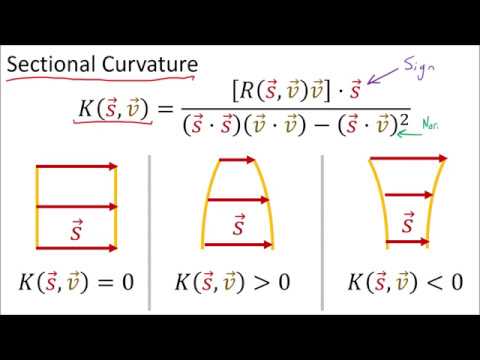
- Curvature: It helps us investigate curvature in different dimensions. Essentially, if you want to know how surfaces bend or twist, Ricci Calculus provides the measurements needed to do just that.
- Cosmology: In studying the universe’s shape and expansion (that’s right—our whole universe is expanding!), Ricci Calculus plays a pivotal role in modeling cosmic phenomena.
Now here’s an anecdote for you: Picture yourself sitting in a café with your best friend, chatting about life while sipping coffee. Suddenly, someone at another table drops their cup—it crashes and spills everywhere! In that split second, there are endless changes happening: the trajectory of the cup as it falls, the splash pattern as coffee hits the ground—each tiny detail could be described using calculus concepts! It’s not so abstract once you think about real-life moments.
Let’s not forget how calculus allows physicists to create models that predict behaviors accurately. You might be amazed at how engineers use these principles when designing roller coasters or predicting weather patterns!
In essence, calculus isn’t just some boring math you learn in school; it’s like the foundation upon which so many scientific mysteries are built. And when you throw Ricci Calculus into this mix? Well, that’s where things get really exciting! It’s magic disguised as math!
So next time you’re struggling with equations or feel overwhelmed by all those numbers and symbols—remember this little chat we had about how it all connects back to understanding our universe. Because who knows? Maybe one day you’ll be explaining these concepts over coffee too!
So, let’s chat about Ricci calculus. It sounds super fancy, but stick with me for a moment. Basically, it’s this mathematical tool that helps us understand how space and time work together in the universe. You know, just casual stuff like describing gravity or the shape of the cosmos!
The first time I really thought about this was during a late-night coffee run with a friend. We ended up at this little café discussing Einstein’s general relativity and how it revolutionized our view of gravity. My friend was all about those big concepts—curved spacetime and black holes—but I kept thinking about the math behind it all. That’s where Ricci calculus steps in.
Now, to break it down a bit: Ricci calculus is part of tensor calculus, which deals with quantities that can change under different conditions and transformations. Kind of like how your mood can change when you hear your favorite song—or when someone steals your fries! Anyway, tensors are these mathematical objects that can carry information about how space bends and stretches.
When we talk about modern physics, especially general relativity, we’re talking about curves and shapes—like how massive objects warp the fabric of spacetime around them. Ricci calculus helps us describe this warping mathematically through something called the Ricci curvature tensor. Without getting too deep into formulas (because who wants that?), let’s just say this tensor gives us insight into how masses interact with the universe around them.
What’s super cool is that this kind of math isn’t just for physicists; it’s also essential in geometry! Think of geometry as giving you all sorts of tools to measure angles and distances in different shapes—like squaring up for a game of basketball or figuring out if your new coffee table fits in your living room without blocking the couch.
In contemporary physics and geometry, Ricci calculus plays a huge role in everything from modeling cosmological phenomena to studying black holes or even string theory. It’s wild to think about how these complex ideas directly impact our understanding of reality!
Sometimes I sit back and marvel at how interconnected everything is—math helping us unlock secrets of existence while wrestling with concepts that seem so far removed from day-to-day life. But every time I hear someone mention black holes or gravitational waves, I can’t help but feel excited knowing there are minds out there using tools like Ricci calculus to uncover what lies beneath the surface.
So yeah, whether you’re into math personally or not, it’s fascinating to see how these abstract concepts have profound implications on our understanding of both space and time—and honestly? It makes me think twice before dismissing those tough math problems from school!