So, picture this: You’re at a party, and someone mentions something about machine learning. Suddenly, the room gets all quiet, and you can see people’s eyes glazing over like donuts. But hey, what if I told you that machine learning is actually super cool and can be your best buddy in scientific research?
I mean, let’s face it: we’re swimming in data these days. There’s so much info out there that finding what matters can feel like searching for a needle in a haystack. That’s where Scikit-Learn comes in—a genius little library that helps you wrangle all that data and make sense of it.
You know those moments when you’re trying to explain something complex to a friend, but they just nod along while their mind wanders? That’s how most people feel about the science behind machine learning. But stick with me! Harnessing tools like Scikit-Learn isn’t as scary as it sounds; it’s more like having a trusty sidekick for your research adventures.
So grab your favorite snacks and settle down because we’re about to dive into why Scikit-Learn is not just for data scientists in lab coats—it’s for anyone who wants to turn numbers into meaningful stories!
Evaluating the Relevance of Scikit-Learn in Modern Scientific Computing and Data Analysis
So, let’s talk about Scikit-Learn. It’s, like, this super handy library in Python that helps you do machine learning without tearing your hair out. Seriously! If you’re diving into modern scientific computing and data analysis, Scikit-Learn is definitely a player you wanna know about.
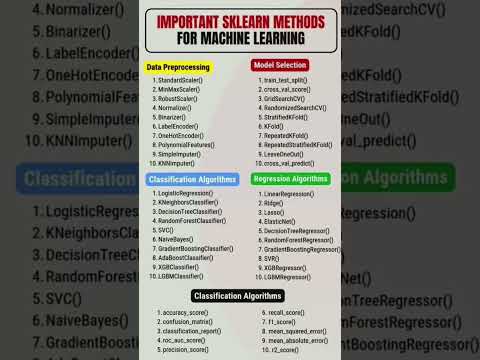
First off, what is Scikit-Learn? Well, it’s an open-source library that makes it easier to work with data. Think of it as having a toolbox filled with all the cool gadgets you need to analyze data and train models. You’ve got tools for classification, regression, clustering – all sorts of stuff! The thing is, it’s designed for simplicity and efficiency.
Now, why is it relevant today? That’s a pretty great question. One reason is its versatility. Whether you’re working in healthcare analyzing patient outcomes or in finance looking at market trends, Scikit-Learn has something for everyone. It gives scientists and researchers the ability to tackle problems from different angles using various algorithms.
You might wonder about its ease of use. Honestly? It’s user-friendly! You can jump right in without needing a PhD in computer science. The documentation is pretty solid too, which helps when you’re stuck on something—like when I was trying to figure out why my model wasn’t practicing what I preached. A little read-through on the docs helped me fix it up!
One of the neat functionalities is how well it integrates with other libraries.
, which handles data manipulation? Check!
, for numerical computing? Yup! And then there’s
, perfect for visualizing your findings. They work together like peanut butter and jelly!
Now let’s talk about model evaluation. This part can get a bit tricky if you’re new to machine learning. But with Scikit-Learn’s tools—like cross-validation and grid search—you can find out how well your models are performing without too much fuss. It’s kind of like having a personal coach telling you if you’re kicking butt or if you need to step up your game.
What’s even cooler is that Scikit-Learn isn’t just reserved for techies at big companies; researchers from small labs or independent projects can benefit too! Imagine a researcher studying climate change using real data to predict future scenarios—Scikit-Learn can help them analyze that data effectively.
I remember chatting with a friend who did some scientific outreach work on pollution levels in cities. They used Scikit-Learn to analyze patterns from collected air quality data before presenting their findings at community meetings. It was rewarding because they could show neighbors the real impact of pollution through clear visuals created using their analyses.
Another point worth mentioning: community support. There’s a robust community around Scikit-Learn where people share knowledge and lend help when someone gets stuck—a total lifesaver! Forums like Stack Overflow are flooded with discussions around common challenges developers face while using the library.
So basically, if you’re involved in scientific research or any kind of data analysis these days, then not knowing about Scikit-Learn would be like going into battle without armor! It streamlines processes and equips you with tools needed to uncover insights from your data.
In short, whether you’re analyzing medical records or trying to make sense of social media trends, Scikit-Learn fits right in there as an essential resource amid modern scientific computing and analysis pursuits—it’s flexible enough for many applications while being easy enough for newbies too! So yeah, it’s pretty darn relevant today!
Exploring the Professional Use of Scikit-Learn in Scientific Research and Data Analysis
You know, when we talk about Scikit-Learn, we’re stepping into the fascinating world of machine learning. Seriously, it’s like giving your computer a brain to learn from data, which is super cool! So many researchers use it because it simplifies things and lets you focus on what really matters—finding answers.
First off, what is Scikit-Learn? Think of it as a toolkit for Python programmers. It’s designed to help you build and analyze models without getting tangled up in complicated math. It has a bunch of built-in algorithms for various tasks, like classification or regression. Basically, you throw data at it, and it helps make sense of patterns.
Now, let’s talk about the professional use in scientific research. Researchers love Scikit-Learn for several reasons:
- User-friendly: Even if you’re not a coding wizard, Scikit-Learn has clean and easy-to-follow documentation. This makes it accessible for scientists from different fields.
- Wide variety of tools: You’ve got options! From decision trees to clustering algorithms, there’s something for almost every kind of analysis.
- Integration: It plays well with other Python libraries like NumPy and Pandas. Imagine you’re baking a cake; these libraries are like the ingredients that make everything come together!
You can think of an example where a biologist might want to predict plant growth based on certain fertilizer types. Using Scikit-Learn, they could easily set up an experiment to analyze historical data on plant growth against various conditions. With just a few lines of code, they might uncover patterns that change farming practices!
But that’s not all; Scikit-Learn’s also great for outreach purposes. Imagine you’re presenting findings at a conference. With such clean visualizations available through libraries like Matplotlib alongside Scikit-Learn’s capabilities, it’s super easy to show how your model works and the results you found.
And don’t forget about reproducibility! In scientific research, being able to reproduce results is crucial. Since much of what you do with Scikit-Learn can be shared as scripts or notebooks with clear steps laid out. This means others can pick up where you left off or even verify your findings.
Another critical point: evaluation metrics! Evaluating how well your model performs is just as essential as building it in the first place. With tools provided by Scikit-Learn—like confusion matrices or ROC curves—you can assess accuracy or precision effectively.
Now here’s where I find it super inspiring: imagine young researchers using this tool globally! They’re not just crunching numbers; they’re discovering insights that might lead to breakthroughs in health care or environmental science—changing lives right from their laptops!
So yeah, Scikit-Learn isn’t just some boring coding library sitting on shelves; it’s an engaging part of modern scientific research that encourages curiosity and innovation on so many levels! Isn’t that something?
Comparative Analysis of PyTorch vs. Scikit-learn for Scientific Computing: Choosing the Right Tool
So, you’re diving into the world of scientific computing and trying to figure out whether to use PyTorch or Scikit-learn? Good choice! Both are popular tools with different strengths and weaknesses. Let’s break it down a bit.
What is PyTorch? It’s primarily a deep learning library, focused on building neural networks. Think of it as your go-to for tasks that need complex computations or when you’re dealing with massive datasets. You can do things like image recognition or natural language processing pretty easily with it. It allows for dynamic computation graphs, which means you can tweak things on the fly—super handy if you’re experimenting.
Now, onto Scikit-learn. This one is more traditional in the sense that it focuses on classical machine learning algorithms. If you’re into regression, clustering, or even simpler models like decision trees and support vector machines, Scikit-learn is your friend. It’s designed to be user-friendly and integrates seamlessly with NumPy and pandas, making it perfect for data preprocessing tasks.
Now let’s dive into some actual comparisons:
- Ease of Use: Scikit-learn has a reputation for being super easy to use. Its API is consistent and intuitive; it feels like you’re just calling functions to get things done! On the other hand, PyTorch has a steeper learning curve because of its added complexity.
- Performance: When we talk about performance, PyTorch generally offers better speed for training large neural networks thanks to GPU acceleration. If you’re doing things at scale or need that extra push in speed, PyTorch might win this round.
- Community Support: Both libraries are very well-supported by communities around the globe. However, PyTorch has gained a lot of traction lately in research circles due to its flexibility and efficiency with deep learning tasks.
- Applications: This is where things get really interesting! If you want to do business analytics, Scikit-learn might have all the tools you need right out of the box. But if you’re tackling advanced topics like computer vision or reinforcement learning? You’ll likely lean toward PyTorch.
Now picture this: there was a time I was working on an environmental project involving satellite imagery—how cool is that? We had tons of data and needed quick results for predictive analytics about climate change impacts. We started off using Scikit-learn because we needed straightforward clustering algorithms at first; it really sped up our initial analyses.
But then we hit a wall when we wanted to dive deeper into image recognition techniques later on. That’s when we switched gears to PyTorch for building more sophisticated neural networks that could identify patterns in those images.
So here’s what you should think about: What kind of project are you working on? Are your needs centered around traditional machine learning methods? Go for Scikit-learn! But if you’re venturing into complex domains demanding heavy lifting through deep learning models, then PyTorch could be your best bet.
Ultimately, both tools have their place in scientific computing; they just shine in different areas! Choose based on what you need most—whether that’s ease-of-use or advanced computational capabilities—and you’ll be all set!
You know, when you think about scientific research, it still blows my mind how much data there is out there. Seriously, we’re producing information at a crazy rate! And that’s where tools like Scikit-Learn come into play. This little gem is like your best buddy when it comes to machine learning in Python. It makes the daunting task of analyzing big data a whole lot easier.
I remember back in college, sitting in front of my computer, trying to figure out how on earth I could make sense of all the numbers from my research project. It felt overwhelming, like trying to find a needle in a haystack. Then I stumbled upon Scikit-Learn and, wow! Suddenly, patterns started to emerge. It was like turning on the lights in a dark room.
So what’s the deal with Scikit-Learn? Well, it’s packed with tools that let you play around with different algorithms for tasks like classification or regression—basically helping you guess what something might be based on its features. For example, let’s say you’re looking at plant growth data. You could train a model to predict how tall a plant might grow based on factors like sunlight exposure and water usage. Fun stuff!
But here’s where it gets really interesting: not only can researchers use this tool for their studies, but they can also share their findings with others easily. Imagine giving a talk and being able to show off some predictions made by your shiny new model! People love visuals and concrete examples—it makes science feel less intimidating and more approachable.
And it’s not just about crunching numbers; it’s also about outreach. When scientists harness tools like Scikit-Learn effectively, they can communicate their results more clearly to the public or even policymakers who might not have a background in science. I mean, nobody wants to sit through an hour-long lecture filled with jargon that sounds more like hieroglyphics than actual language.
But let me tell you—while using these fancy tools can be super beneficial, there are always challenges lurking around the corner. Like making sure your data set is clean! Trust me; nobody wants to find out later that their model was trained on messed-up data. That would feel like pouring your heart into something only for it not to pan out because of something simple.
In any case, harnessing Scikit-Learn isn’t just about doing science better; it’s also about bringing people along for the ride and making scientific findings accessible and exciting. So next time you’re stuck sorting through mountains of data or trying to explain your research, just remember: there are tools available that can lighten the load and help build those crucial connections with others who care about our planet and its wonders as much as we do!