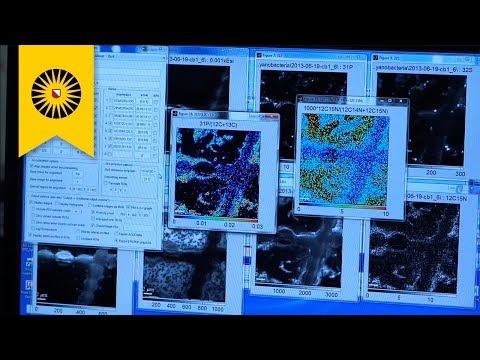
You know what’s cooler than being a detective? Being a scientist who can literally sniff out the tiniest particles in a sample. I’m talking about SIM mass spectrometry, or to keep it casual, SIM Mass Spec.
Imagine this: You’re at a barbecue and you catch a whiff of someone’s secret sauce from miles away. That’s how sensitive this tech is! It can identify compounds in just about anything, from your morning coffee to complex biological samples.
So, scientists are constantly working on making this amazing tool even better. It’s like upgrading your WiFi speed but for molecular detection. And trust me, when they figure it out, it opens up a whole new world of possibilities for research and discovery.
Let me share some of the latest breakthroughs with you—because seriously, this stuff is mind-blowing!
Recent Advancements in SIM Mass Spectrometry for Enhanced Scientific Research
Alright, let’s talk about SIM mass spectrometry and some of the cool stuff happening lately. You might be wondering, what is SIM? Well, SIM stands for Selected Ion Monitoring. It’s a technique used in mass spectrometry that allows scientists to focus on specific ions of interest during an analysis. Kinda neat, right?
One of the big advancements with SIM mass spectrometry is its ability to detect trace levels of compounds. This means that scientists can now identify substances in really small amounts. You know how sometimes you can’t find your keys and you’re searching everywhere? Imagine finding your keys in a pile of leaves! That’s kind of what SIM does—finding those tiny compounds amidst a whole bunch of noise.
Enhanced Sensitivity has been a game changer too! Recent tech improvements have made it possible to boost detection limits significantly. This helps in fields like environmental science, where researchers need to track pollutants at very low concentrations. Like, let’s say you’re monitoring toxic substances in water samples; being able to detect even the smallest traces could make all the difference for public health.
Another exciting area is automation. Automated systems are becoming more common in laboratories, making the whole process smoother and faster. This means less time fiddling with equipment and more time analyzing results! Imagine being able to run multiple tests without having to stay glued to your workstation—that’s a big win for researchers.
Additionally, data acquisition methods are improving too. Researchers can now collect data faster and analyze it more efficiently than ever before. This means they can respond more quickly when there’s an urgent need for results. In emergency situations, like testing for contaminants after a chemical spill, speed is key!
One last thing worth mentioning is collaboration between disciplines. Scientists from chemistry, biology, and even medicine are teaming up like never before! With improved SIM techniques, they can share insights across fields to tackle complex problems together. Think about how disease markers can be detected earlier thanks to this collaboration—it could save lives!
So yeah, recent advancements in SIM mass spectrometry are not just technical upgrades; they’re opening new doors for scientific discovery across various fields and making research more effective every day! Fun times ahead for science!
Recent Advancements in SIM Mass Spectrometry for Enhanced Scientific Research: A Comprehensive Review
SIM (Selected Ion Monitoring) mass spectrometry has made some pretty exciting strides lately. If you’re not familiar, SIM is like having a super-powered magnifying glass for detecting specific ions in a sample. Instead of looking at everything in the soup, it zooms in on just what you want, which can be super handy for scientists.
Recent advancements in SIM mass spectrometry have focused on improving sensitivity and specificity. It’s like upgrading from a regular flashlight to a laser pointer. These enhancements allow researchers to detect even lower concentrations of target compounds, which is crucial when studying complex mixtures like biological samples or environmental pollutants.
One major development is the integration of high-resolution mass spectrometers, which not only separate ions based on their mass but also improve the accuracy of quantifying them. Think of it like making sure that when you’re counting how many apples are in your basket, you don’t accidentally count oranges or bananas by mistake. High resolution helps avoid these mix-ups.
Additionally, there’s been a lot of buzz around automated systems and software that help manage data processing better. You see, in mass spectrometry, data sets can get enormous pretty quickly. Imagine sorting through thousands of photos from your last vacation versus just a handful—it’s way more work! New software tools use algorithms to filter out noise and highlight relevant signals.
Another biggie has been the development of new ionization techniques. For example, techniques like DESI (Desorption Electrospray Ionization) have evolved so scientists can analyze surfaces without extensive sample preparation. This is particularly useful if you’re looking at things like biomolecules right off a tissue sample—no need for time-consuming cleanup!
But let’s get personal here: I remember chatting with a biologist who was excited about using SIM mass spec to track pharmaceuticals in sewage systems. It’s wild that you can monitor how much medicine goes unused and ends up being flushed away! That kind of insight can lead to better waste management practices or drug design.
One challenge that persists, though, is the potential for matrix effects. This means substances present in samples can interfere with accurate readings; imagine trying to hear your friend talk at a loud concert—the noise gets muddled. Addressing matrix effects requires careful method development and sometimes even innovative sampling strategies.
In short, advancements in SIM mass spectrometry are making it easier for scientists to gather more accurate data—whether they’re scoping out new drugs or tracking environmental changes over time. With improvements in resolution, automation, ionization techniques, and data analysis tools hitting the scene recently, it’s an exciting time to be diving into this aspect of scientific research!
Advancements and Future Directions in Mass Spectrometry Imaging: A Comprehensive Review
Mass spectrometry imaging (MSI) is like a high-tech treasure map for scientists. It helps them visualize the distribution of different molecules in a sample. Really, it’s amazing how this technology has evolved. Let me break it down for you.
The basics of MSI are pretty nifty. Imagine slicing a piece of tissue like a loaf of bread. With each slice, you can analyze what’s inside without losing the context of where everything is located. This method helps researchers study things like diseases or drug effects up close and personal.
Recent advancements in mass spectrometry imaging have seriously expanded its capabilities. Here’s what’s been going on:
- Spatial Resolution: Technologies have improved to allow for finer detail, meaning scientists can see even smaller structures within tissues.
- Speed: The newer machines are faster, allowing researchers to get results in real-time rather than waiting days.
- Diverse Applications: Now, MSI isn’t just for studying tissues anymore. It’s being used in environmental science and even food safety!
There was this one time I read about a researcher who used MSI to map out drug distribution within tumors. It was incredible! They could see precisely where the medication was hitting and where it wasn’t working as well. This kind of info can lead to better treatment strategies—all thanks to the magic of mass spectrometry.
Now, let’s talk about future directions for this field. There’s still so much potential waiting to be tapped into!
- Integration with Other Techniques: You might see combinations with techniques like genomics and proteomics for an even deeper understanding of biological systems.
- Data Analysis Improvements: As MSI generates tons of data, using machine learning could help scientists sift through all that info efficiently.
- User-Friendly Interfaces: Making the technology easier to use will mean more scientists can jump on board and utilize these tools effectively.
Imagine walking into a lab where anyone could use this tech without needing years of training! That would really open doors, don’t you think?
In terms of challenges, standardization remains key; everyone needs to be singing from the same hymn sheet when it comes to methods and reporting results. Standard protocols would make it easier for researchers to compare findings across various studies.
So basically, mass spectrometry imaging is on an exciting journey that promises richer insights into biology and medicine. Who knows? One day your doctor might pull out some MSI data tailored just for you! How cool would that be?
You know, the world of scientific research is like a constantly evolving movie, and sometimes it feels like we’re getting new plot twists every other day. One area that’s really been making waves is the advancements in SIM (Selected Ion Monitoring) Mass Spectrometry, or mass spec for short. It’s a bit of a mouthful, but stick with me!
Imagine being a detective trying to solve a mystery. You’d want to focus on the key clues that lead you to the culprit, right? Well, that’s pretty much what SIM does in the realm of mass spec. Instead of scanning everything in sight like a broad-spectrum analysis does, it zeroes in on specific ions—like those all-important hints that will help you crack the case.
I remember when I was working on a project back in college involving environmental science. We had samples from polluted water sources and were trying to identify various toxic compounds. The data we got from traditional methods was often messy and overwhelming. But when my professor introduced us to SIM Mass Spec, it felt like someone handed us a magnifying glass! Suddenly, we could pinpoint exactly what harmful substances were present without sifting through tons of irrelevant data.
But here’s where it gets really interesting: the technology behind SIM has improved by leaps and bounds lately. We’re talking about enhanced sensitivity and accuracy that would have seemed impossible just a few years ago! Scientists can now detect even trace amounts of compounds—like finding a needle in a haystack. This has huge implications for fields ranging from pharmaceuticals to environmental monitoring.
And don’t even get me started on speed! With these advancements, researchers can analyze samples much faster than before. Remember those long nights waiting for results? Yeah, not so much anymore! It opens up crazy possibilities for real-time diagnostics and quicker responses to health crises or environmental disasters.
But with all this tech evolution comes responsibility too—you follow me? Researchers have to stay on top of ethical considerations about how they use these powerful tools. It’s exciting but also makes you think about who benefits from this knowledge and how it should be applied.
So yeah, advancements in SIM Mass Spec aren’t just changing how we do research; they’re shifting our whole understanding of what’s possible in science! It brings both excitement and challenges but ultimately makes us more capable as we tackle some pretty heavy problems facing our planet today. I’m seriously pumped to see where this tech takes us next!