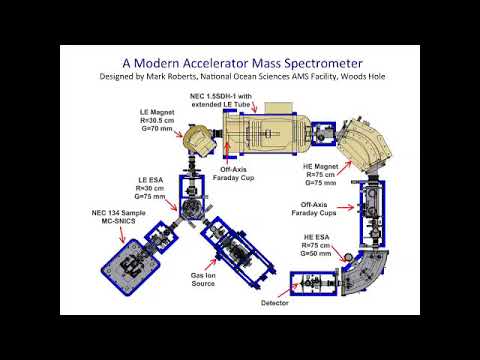
You ever seen one of those sci-fi movies where they whip out this flashy gadget and start analyzing stuff in seconds? Yeah, it’s kinda like that with ion mass spectrometers, but way cooler and way more real.
Imagine you’re at a party and someone hands you a mystery drink. You’d want to know what’s in it, right? That’s exactly what scientists do with these fancy machines. They analyze tiny particles to figure out their mass and identity.
It’s like being a detective for molecules! And trust me, the story behind how we came up with this tech is pretty wild. From chasing down elusive isotopes to revolutionizing everything from medicine to space exploration, ion mass spectrometers are making big waves in research these days. Ready to find out how this all works?
Exploring the Evolution of Mass Spectrometry: A Comprehensive History Presentation
Mass spectrometry is like a treasure hunt for scientists. It helps them identify and quantify molecules based on their mass. You see, understanding how it evolved is kind of like tracing the footsteps of curious minds who wanted answers about the tiny building blocks of everything around us.
Early Beginnings
The story starts back in the early 20th century with J.J. Thomson, who discovered the electron in 1897. This was a game changer! He created the first mass spectrometer around 1912, which was pretty basic compared to what we have today. Basically, he figured out how to measure the mass-to-charge ratio of ions using electric and magnetic fields.
Advancements in Design
Moving on to the 1950s, people like Francis W. Aston were innovating even further. Aston refined Thomson’s design and introduced the positive-ray parabola method. This approach was more accurate and allowed scientists to analyze isotopes—atoms of the same element with different numbers of neutrons. Imagine finally being able to tell apart different flavors of ice cream, but for elements!
The Birth of Modern Mass Spectrometry
By the late 20th century, mass spectrometry hit a new stride with developments in techniques like time-of-flight (TOF). This technique measures how long it takes ions to travel through a vacuum tube after being accelerated by an electric field. The shorter time means a lighter ion; simple as that! It’s kind of like racing your friends in a short sprint—faster runners cross the finish line quicker.
Applications Everywhere
You might not know it, but you encounter mass spectrometry daily! It’s crucial in areas such as medicine for analyzing blood samples or environmental science for detecting pollutants. Just think about forensic science too: it helps detectives trace substances at crime scenes.
A Recent Twist: Ionization Techniques
Now let’s talk about how we get those ions into our instruments. There are several ionization methods that have changed how we use mass spectrometry over time. For instance, Electrospray Ionization (ESI), developed in the 1980s, allows large biomolecules to be ionized without breaking them apart—like carefully lifting a delicate cake instead of smashing it!
The Future Looks Bright
As we move forward, researchers are continually innovating with things like high-resolution mass spectrometry and tandem techniques (which basically means running two mass spec analyses back-to-back). This improves sensitivity and accuracy tremendously! The possibilities feel infinite.
So there you go—mass spectrometry has come a long way from those early experiments over a century ago. As technology continues to advance and our understanding deepens, who knows what exciting discoveries lie ahead? It’s really something special when you think about all those brilliant minds piecing together knowledge bit by bit!
Unlocking the Secrets of Mass Spectrometry: A Nobel Prize Journey in Scientific Innovation
Mass spectrometry is one of those things that sounds like it’s straight out of a sci-fi movie, right? But the truth is, it’s a super powerful tool used in scientific research to analyze the composition of different substances. Basically, you can think of it as a way to figure out what’s in a sample and how much of each component there is.
So, here’s how it works: mass spectrometry measures the mass-to-charge ratio of ions. It does this by first turning molecules into ions. Then, these ions are sorted based on their mass. Pretty neat! This method helps scientists identify compounds and understand complex mixtures better than ever before.
Now, you might be wondering: why all this fuss about mass spectrometry? Well, let me tell you—this technique has played a significant role in many groundbreaking research areas like protein analysis, environmental monitoring, and even space exploration. In fact, if you’ve ever heard about how we analyze samples from Mars or the Moon, mass spectrometry was probably involved!
One particularly cool aspect of this technology is its evolution over time. Looking back at the journey of Nobel Prize winners like Franz-Ulrich Hartl and Christiane Nüsslein-Volhard highlights just how innovative we’ve become. Their work helped shape our understanding at molecular levels and opened up so many avenues for future research.
Here are some key bits that make mass spectrometry so special:
- High Sensitivity: It can detect tiny amounts of substances—think picograms (that’s one trillionth of a gram)!
- Diverse Applications: From pharmaceuticals to forensics; this tech is everywhere.
- Time-saving: Results come quickly compared to traditional methods.
- Quantitative Analysis: You can measure concentrations accurately—very handy for chemists!
Let me tell you about an experience I had once while working in a lab. We were trying to identify some unknown compounds from an ancient soil sample. The excitement was palpable! After running those samples through a mass spectrometer, we discovered remnants of long-lost organic materials that hinted at past ecosystems—it felt like we were connecting with history itself!
Mass spectrometry isn’t just technical mumbo jumbo; it’s reshaping our understanding across fields like medicine and environmental science. So next time you hear about this incredible technology, just know there’s a whole world behind it full of stories waiting to be told!
Comprehensive Review of Mass Spectrometry: Advances, Applications, and Future Directions in Scientific Research
Mass spectrometry: it sounds super fancy, right? But this technique is so cool and surprisingly simple at its core! Basically, it helps scientists figure out what things are made of by measuring the mass of ions. Across different fields, from biology to environmental science, it’s getting a lot of attention for how versatile and powerful it is.
So, let’s break it down. Mass spectrometry has really come a long way. In the beginning, it was just about identifying elements and compounds. But these days? Oh man! It’s all about precision and complexity. Now we can analyze proteins in detail or track down pollutants in water samples. And prices have dropped too; you’ll be seeing more labs using this tech than ever before.
You know when you’re at a party and there’s that one friend who’s just everywhere? That’s mass spectrometry in scientific research—popping up in many applications! Check out some examples:
- Proteomics: This is the study of proteins—and mass spectrometry is a superstar here. It helps identify thousands of proteins in seconds!
- Pharmaceuticals: Ever wonder how new drugs get tested? Scientists use mass spectrometry to check the purity and dosage of those little pills.
- Environmental Science: Mass spectrometry can detect trace levels of pollutants. Think about how important that is for keeping our air and water clean!
What’s exciting are the advancements happening right now. For instance, there’s been a big push towards miniaturization. You know how we love our gadgets to be smaller yet more powerful? Same story here! Compact ion mass spectrometers mean researchers can take their work into the field rather than being stuck in a lab all day.
And let’s not forget automation—mass spec machines are getting smarter every year! With high-throughput analysis becoming a thing, scientists can now analyze hundreds of samples quickly. It frees them up to focus on interpreting results rather than spending hours running tests.
But what does the future hold for this amazing technology? Well, one possibility is even more sensitivity. Imagine detecting even fewer molecules or tiny changes in complex mixtures—how wild would that be? Researchers think they may also improve software algorithms for better data analysis.
Plus, there’s talk about combining mass spectrometry with other techniques like NMR (Nuclear Magnetic Resonance). When you team up methods like these, you get an even clearer picture of what makes up our world!
Now, let me tell you something personal—I remember attending this conference where they showcased some groundbreaking work using mass spec to track disease biomarkers. The excitement in the room was palpable! Everyone was buzzing about how this could change diagnostics forever. It really hit me then just how transformative this tool can be.
So yeah, mass spectrometry isn’t just another lab tool—it’s an evolving beast that keeps pushing boundaries in scientific research. Who knows what groundbreaking discoveries we’ll see next with advancements in ion mass spectrometers? The future is looking bright!
Alright, so ion mass spectrometers – sounds techy, right? But honestly, they’re pretty cool and play a big role in science. Picture this: you’re in a lab, surrounded by all these gadgets, and one of them is this sleek ion mass spectrometer. It’s like a super high-tech detective that helps scientists uncover the identities of molecules by weighing them.
You know, I remember being in college and walking through the chemistry lab for the first time. The smell of chemicals mixed with that buzzing curiosity everyone had was palpable. My professor showed us this massive device sitting in the corner: an older version of an ion mass spectrometer. I was genuinely amazed! It felt like stepping into the future or a science fiction movie; you just knew it was important but couldn’t fully grasp its role yet.
So what exactly do these devices do? Well, to put it simply, they take ions (which are charged particles) and measure their mass. The cool part is how they can separate ions based on their mass-to-charge ratio. Imagine sorting your candy by size—only here, it’s about identifying different substances even in tiny amounts! This capability is huge for things like drug testing, environmental studies, and even analyzing ancient artifacts.
One of the groundbreaking uses has been in proteomics—the study of proteins. Proteins are like the building blocks of life; they’re involved in nearly every process happening in our bodies! When researchers analyze protein samples using these mass spectrometers, they can figure out which proteins are present and their structures. This can lead to breakthroughs in medicine or understanding diseases at a molecular level.
But here’s where it gets truly emotional: think about how lives can change thanks to this technology. For instance, when scientists identify biomarkers for certain diseases using these tools, they might help create targeted therapies that save lives or improve patient care dramatically. That sense of hope—that we might find solutions to some tough health problems—is pretty remarkable.
Now sure, there’s still a lot we don’t know about how everything works on a finer scale or what other mysteries lie ahead for us to uncover with these machines. But it’s exciting to think that every day researchers are using ion mass spectrometers not just to advance science but also to make real-world impacts on health and society.
So yeah, ion mass spectrometers aren’t just fancy gadgets—they’re key players in advancing scientific understanding and improving our lives!