You know, a while ago, I was trying to explain the ammonium ion to a friend. They looked at me like I just spoke in ancient hieroglyphs. Seriously!
I mean, how can something as simple as NH₄⁺ have such an impact? It’s not exactly the life of the party, right? But here’s the kicker: it’s everywhere! From fertilizers that help plants grow to even sneaky little roles in our bodies.
So, let’s chat about molecular geometry and how NH₄⁺ shapes up. You’ll see it’s cooler than you’d think! Seriously, once you get into its structure and bonding vibes, it starts to make sense. Grab a seat; this is going to be fun!
Understanding the Structure of the Ammonium Ion (NH4⁺) in Chemistry
The ammonium ion, which you might see written as NH4+, is a pretty interesting little molecule in the world of chemistry. So, let’s break it down together!
To start off, the ammonium ion is actually formed when ammonia (NH3) gains a proton (that’s just a fancy way of saying it picks up an H+). This makes it positively charged. It’s like ammonia suddenly putting on a superhero cape and saying, “I’m ready to save the day!”
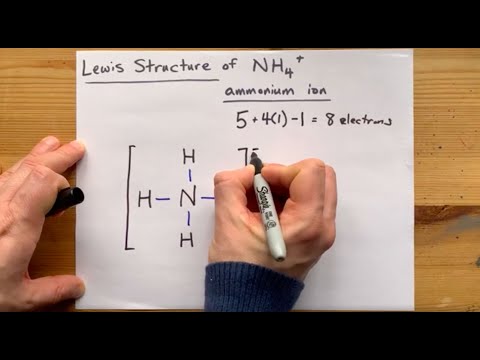
Now, when we look at the **structure** of this ion, we find it’s got four hydrogen atoms bonded to a central nitrogen atom. You can visualize it like this: picture nitrogen at the center of a tetrahedron with hydrogen atoms at each corner. Pretty cool image, right? That specific arrangement is what we call tetrahedral geometry.
Let’s dive into that geometry a bit more:
- Tetrahedral Arrangement: The bonds between nitrogen and hydrogen form angles of about 109.5 degrees. This angle is super important because it helps us understand how molecules interact with each other.
- Bonds: The bonds in NH4+ are covalent bonds. This means that nitrogen shares electrons with hydrogen to stay stable.
- Molecular Shape: Due to its four identical bonds and symmetrical shape, ammonium has no dipole moment; basically, there’s no positive or negative pole in this molecule.
Here’s where it gets even cooler: since there are no lone pairs on the nitrogen atom in NH4+, all electron pairs are shared with those hydrogens. This makes the molecule super symmetrical! You could say it’s like having four friends holding hands in a circle—everyone is equal.
Now, if you think about real-life examples of where you might come across ammonium ions, one big place is in fertilizers! Farmers use compounds that contain NH4+. It’s helpful for plants because it supplies them with nitrogen—a key nutrient they need to grow strong and healthy.
So next time you hear about the ammonium ion or even see it in some chemical reaction equations, just remember its superhero origin from ammonia and how its tetrahedral shape plays a major role in its behavior! Pretty neat for something so small, right?
Understanding the Molecular Geometry of Ammonium Ion (NH4+) in Chemistry
Alright, let’s get into the nitty-gritty of the ammonium ion, or NH4+. This little ion has some interesting geometry that pretty much defines how it behaves.
The ammonium ion is formed when ammonia (NH3) picks up an extra hydrogen ion (H+). So, you now have a positively charged species. Cool, right? But what does it look like? Well, to visualize NH4+, think of it like a tetrahedron.
Molecular Geometry
So the molecular geometry is tetrahedral. This means that if you were to look at it from above, you’d see four hydrogen atoms placed at the corners of a pyramid-like shape with nitrogen sitting right in the center. Imagine if you had four kids holding hands in a circle while one kid stands in the middle—that’s your ammonium ion!
Now, this shape matters a lot because it affects how ammonium interacts with other molecules. The bond angles between those H-N-H connections are around 109.5 degrees. Why’s that important? Well, this specific angle helps reduce repulsion between electron pairs surrounding nitrogen.
Electron Pair Repulsion
Speaking of electrons! It’s all about that repulsion game—they want to be as far away from each other as possible. The whole theory behind this is called VSEPR (Valence Shell Electron Pair Repulsion). Basically, it’s just a fancy way of saying that similar charges repel each other.
You can visualize these bonds and angles using simple models or diagrams—like those fun chemistry kits with little colored balls representing atoms. In this case:
- Nitrogen is often represented by a blue ball.
- Hydrogens could be red or white balls.
- The tetrahedral structure shows how they’re arranged.
Hybridization and Bonding
Now let’s talk about hybridization. When we say nitrogen in NH4+, it goes through something called sp³ hybridization. What this means is that nitrogen mixes its orbitals to form four equivalent orbitals—each one pairing with an electron from hydrogen to form those strong N-H bonds.
This sp³ hybridization makes sense given the tetrahedral shape we talked about earlier; it’s all interconnected! Each bond constitutes overlapping atomic orbitals—a bit like two people shaking hands but with electrons instead.
Real-Life Applications
You might wonder why ammonium ions matter so much beyond their geometric beauty. Well, they play significant roles in various chemical reactions and even in biological systems—like being crucial for plant growth! Ammonium ions are often found in fertilizers… and trust me, plants love them!
To sum things up: Ammonium ion (NH4+) showcases a tetrahedral geometry due to sp³ hybridization and electron pair repulsion principles. This structure not only defines its physical characteristics but also dictates its role in chemistry and biology alike!
So next time you’re pondering chemistry concepts over coffee or hanging out with friends who are clueless about ions, just remember the ammonium ion and its funky shape! It’s all connected—geometry meets chemistry meets life!
Exploring NH4+ Molecular Geometry: Structure, Properties, and Implications in Chemical Science
So, let’s talk about the ammonium ion, which has the formula NH4+. You might be thinking, “What’s so interesting about a bunch of nitrogen and hydrogen?” Well, it turns out that understanding the molecular geometry of NH4+ can really help you grasp some essential concepts in chemistry.
The ammonium ion is formed when ammonia (NH3) picks up a proton (that’s H+, right?). So it’s like taking an already cool nitrogen-bearing molecule and giving it a boost. This positive charge can have some neat implications in chemical reactions and interactions.
Now, talking about its molecular geometry—NH4+ takes on a structure known as tetrahedral. Imagine a pyramid with a triangular base; that’s how it looks! Nitrogen is at the center, while the four hydrogen atoms are at each corner of this pyramid-like shape. There’s no lone pair of electrons pushing down on those hydrogens. Instead, they’re just vibing there evenly spaced apart.
- Tetrahedral Geometry: This means bond angles between the hydrogens are about 109.5 degrees.
- Bonds: Each bond between nitrogen and hydrogen is a single covalent bond.
- Electron Pair Repulsion: The shape comes from minimizing repulsion between those bonding pairs of electrons.
This tetrahedral arrangement impacts lots of things like solubility and reactivity. For example, NH4+ can easily dissolve in water because water is polar, making interactions friendly. And because ammonium can act as an acid (it can donate protons), it plays roles in biological systems too—like being involved in nutrient cycles!
A little fun fact: if you’ve ever been into gardening or hydroponics, ammonium ions are often used as fertilizers. They provide plants with nitrogen directly! Plants take up these ions through their roots which helps them grow strong and healthy.
The properties of NH4+ aren’t just limited to biology or agriculture; they also extend to environmental chemistry. When organic materials decompose in soils or sediments, ammonium ions can form from that breakdown process. This means that understanding its structure can help scientists tackle questions about nutrient availability or pollution.
In summary, looking at NH4+ isn’t just about knowing its formula or structure; it’s really about seeing how this little ion plays big roles across different fields—be it environmental science, biology, or even industrial applications. Who would’ve thought one tiny molecule could pack such a punch?
So, let’s chat about the molecular geometry of the ammonium ion, NH4+. Picture this: you’re in a cozy chemistry class, and your professor is explaining how atoms come together to form shapes. It’s all about what they call “molecular geometry.” Kind of cool, huh?
Now, when we talk about NH4+, it’s a positive ion formed when ammonia (NH3) grabs an extra hydrogen ion (H+). This little guy has a tetrahedral shape. Imagine holding a four-sided die in your hand—it’s like that! Each corner of the die represents one of the hydrogen atoms, while the nitrogen atom sits right in the center. This shape helps to minimize repulsion between those pesky electron pairs around nitrogen, which is super important because they don’t like each other much.
I remember my first chemistry lab vividly. We were trying to build models of different molecules using colorful balls and sticks. I was struggling with ammonium at first, thinking it looked more complicated than it really was. But once I got how those hydrogens arranged themselves around nitrogen, it clicked! It was almost magical to see how simple rules could lead to such intricate structures.
But here’s the kicker: the tetrahedral shape influences how ammonium behaves in reactions. This geometry allows NH4+ to form strong bonds with other molecules and ions; it plays a crucial role in biology and environmental science too—for example, in fertilizers or as a part of amino acids.
So yeah, understanding molecular geometry isn’t just STEM stuff; it helps us appreciate how complex life is built on simple shapes. We often take for granted that these tiny atoms work together so beautifully! And next time you think about chemical compounds, just remember there’s a whole 3D world swirling around us that makes everything tick!