Okay, so picture this: you’re out at a barbecue, and someone mentions nitrate ions. Suddenly, the conversation takes a wild turn, right? I mean, who even thinks about the shape of molecules when flipping burgers?
But here’s the kicker—what if I told you that the shape of something as tiny as a nitrate ion can impact everything from the air we breathe to how plants grow? Crazy, huh?
The truth is, these little guys are more than just science lab jargon. They play a serious role in our environment. Seriously, let’s take a casual stroll through how their molecular geometry shapes our world—pun totally intended!
Molecular Geometry and Bond Angles of the Nitrate Ion (NO3−): An In-Depth Analysis in Chemistry
So, let’s chat about the nitrate ion, which has the formula NO3−. It’s fascinating stuff! You know, even though it seems pretty simple, there’s a lot going on in its molecular structure.
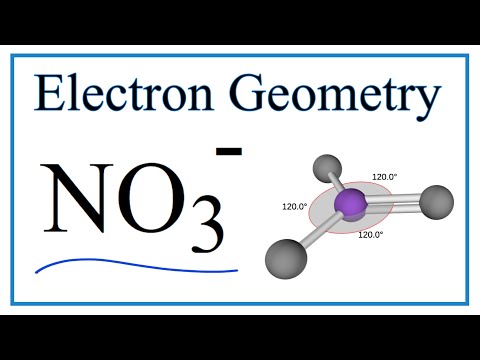
First off, let’s talk about its geometry. The nitrate ion is what you call *planar*. This means all its atoms lie in one flat plane. How does this happen? Well, it’s because of how the electrons around the nitrogen atom arrange themselves.
The **central nitrogen** atom is bonded to three **oxygen** atoms. Each of these bonds involves shared electrons; that’s what keeps everything together. Here’s the deal: nitrogen only has five valence electrons, and when it bonds with three oxygen atoms (which are a bit more electronegative), it shares some of those electrons. This results in a shared arrangement known as resonance.
Now, on to bond angles. You might be thinking, “What’s the big deal with bond angles?” Well, they determine how far apart those oxygen atoms are from each other in a molecule! For nitrate ions, all bond angles are approximately 120 degrees. That’s just perfect for a *trigonal planar* shape.
Now about those resonance structures I mentioned earlier—Nitrate has several ways you can draw it while still keeping the same overall structure. You could have one double bond with one oxygen and two single bonds with others or switch them around! This sharing helps stabilize the ion and explain why all those bond lengths are quite similar.
Key Points:
- The nitrate ion (NO3−) is planar and trigonal in geometry.
- It has three oxygen atoms bonded to a central nitrogen atom.
- The bond angles between each oxygen atom are about 120 degrees.
- The structure exhibits resonance with multiple equivalent forms.
Isn’t that cool? The way these molecules interact shapes so much of our world—from fertilizers to explosives! And every time we break down something like proteins or nucleic acids, that little nitrate ion might just be playing a part that keeps everything in balance.
Understanding molecular geometry isn’t just for chemists; it’s like learning how pieces fit together in a puzzle. When you see how things join up at certain angles or arrangements, it’s easier to grasp why they behave the way they do chemically. So next time someone brings up nitrates at dinner—or maybe not dinner but chemistry class—just know there’s some serious science packed into that little ion!
Unveiling the Molecular Geometry of Nitrate Ions: Insights and Implications in Chemistry
Alright, let’s jump into the world of nitrate ions. You might know them best from fertilizers or maybe even from that little environmental discussion about what happens to rivers and lakes. Nitrate ions are super cool because they play a major role in both ecology and chemistry!
Now, when we say “molecular geometry,” we’re basically talking about the 3D shape of a molecule, which is crucial because it affects how that molecule interacts with others. For nitrate ions, the formula is NO₃⁻. This means it’s made up of one nitrogen atom and three oxygen atoms, plus it has a negative charge. But the real fun begins when you look at how these atoms are arranged.
Nitrate has a triangular planar shape. Imagine trying to arrange three people (the oxygen atoms) around another person (the nitrogen) standing in the middle. They all sit as far away from each other as possible, forming a flat triangle. Each bond angle in this setup is about 120 degrees. That distance helps keep everything balanced and stable.
- The nitrogen atom shares electrons with each of the three oxygens through what’s called covalent bonding.
- This ion also exhibits resonance, which means that the double bond between nitrogen and one oxygen can shift among them. It’s like they’re shifting places on a dance floor!
- This resonance gives nitrate its strength and stability, making it really effective for plants in absorbing nutrients.
You know what’s fascinating? The fact that these structures aren’t just academic; they’re essential for real-world applications! Think about agriculture: farmers apply nitrates for plant growth because it’s a key nutrient. But if too much gets washed into water bodies, it can lead to problems like algal blooms—basically too much plant food makes those waters choke with algae!
Also, it’s worth mentioning that this molecular structure helps us understand how nitrate behaves when interacting with other molecules or ions in chemical reactions. Some reactions will favor nitrate where its molecular geometry allows it to fit into certain pathways effectively—like pieces of a puzzle coming together!
So there you have it, nitrate ions might seem simple at first glance but their molecular geometry—being triangular planar with resonance effects—tells you so much about their behaviour and significance in both nature and science. Pretty cool stuff if you ask me!
Exploring the Electron and Molecular Geometry of NO3: Implications in Chemical Science
Exploring the world of chemistry can be pretty mind-blowing, right? Take the nitrate ion, NO3. It’s not just another molecule; it has a unique structure that plays a crucial role in various chemical processes. So let’s break down what makes nitrate so interesting, shall we?
The nitrate ion is made up of one nitrogen atom (N) and three oxygen atoms (O). When you look at its shape, you’ll see it’s all about geometry, and that relates to something called molecular geometry. This basically describes how the atoms in a molecule are arranged in space. Nitrate has a trigonal planar structure. Imagine a flat triangle where the nitrogen is at the center and each oxygen sits at one corner. The bond angles between these atoms are approximately 120 degrees, giving it that characteristic shape.
Now, let’s talk about electrons for a second. The electron arrangement around the nitrogen atom is vital because it helps determine how these atoms connect with each other. The nitrogen in NO3 has five valence electrons—these are the ones involved in bonding. Each of the three oxygen atoms shares one of their own electrons with nitrogen to form single bonds. And then there’s this one double bond with one of the oxygen atoms!
This arrangement leads to something called resonance. It means that while we can draw different forms of NO3 with different double bonds, they all represent the same molecule’s overall structure! If you were to draw it out, it’d look like this:
- Nitrogen connects to one oxygen through a double bond.
- The other two oxygens connect via single bonds.
- You’ve got three equivalent structures when you consider resonance.
So why should we care about this? Well, nitrate plays serious roles in both nature and industry! For instance, it’s a key player in plant growth because it serves as an essential nutrient. Plants take up nitrates from soil to create proteins—pretty cool how something so small can have such big implications!
But there’s also some downside; nitrates can contribute to pollution if they enter water systems unchecked. Think about algal blooms—they starve aquatic life of oxygen and lead to dead zones in bodies of water.
In summary, understanding nitrate’s electron configuration and molecular geometry isn’t just academic—it has real-world consequences! From helping plants thrive to affecting ecosystems negatively when mismanaged, this little ion packs quite a punch in chemical science!
Alright, so let’s chat about nitrate ions for a second. You know how everything around us is made up of tiny atoms and molecules? Well, when we look at something like the nitrate ion, which is that NO3- group, it’s kind of a big deal in chemistry. Like, it plays a crucial role in the environment and is super important for life.
When you think about nitrate ions, picture those three oxygen atoms hanging out with one nitrogen atom. Now, here’s where it gets interesting! The molecular geometry of this little guy is trigonal planar. That just means that if you were to draw it out, those three oxygen atoms spread out evenly around the nitrogen atom—like they’re all keeping their distance at an easygoing picnic. This arrangement helps minimize any repulsion between them, which creates a stable shape.
Now I remember this one time during my chemistry class when we had to build models using balls and sticks to represent different molecular geometries. Let me tell you, it was like playing with building blocks! Some of my classmates got really into making their models look cool. But what struck me most was seeing how even though these molecules are super tiny and can’t be seen with the naked eye, they have these fascinating structures that determine how they interact with other molecules and how they behave in nature.
And honestly? This whole idea of molecular geometry speaks volumes about the world we live in. We often overlook the unseen forces at work all around us—like how those seemingly simple nitrate ions contribute to plant growth or influence water quality in streams and lakes. It’s kind of humbling if you think about it: something so small playing such an important role in supporting life.
So anyway, next time you hear someone mention nitrates or chemistry in general, remember there’s so much more beneath the surface than just formulas and reactions—it’s all about those intricate relationships at the molecular level that knit together our environment! You follow me?