You know, it might sound super boring at first, but phosphorus trichloride is actually kind of a big deal. I mean, who knew that a molecule with such an odd name could pack a punch in the chemical world?
Picture this: you’re cooking up a storm in the kitchen and have some strange ingredients lying around. Just like you mix stuff together to create something delicious, chemists do the same with molecules. Phosphorus trichloride is one of those funky creations!
So, what’s all the fuss about its molecular geometry? Well, it turns out that how the atoms are arranged plays a huge role in how this compound behaves and what it can do. Stick around! We’re gonna chat about why understanding its shape matters more than you might think. It’s not just chemistry mumbo jumbo; it’s about making connections in the science world!
The Importance of Phosphorus Trichloride in Modern Science and Industry
Phosphorus trichloride, often abbreviated as PCl3, is one of those compounds that you might not think about often, but it plays a big role in science and industry. So what’s the deal with this stuff, anyway? Let’s break it down.
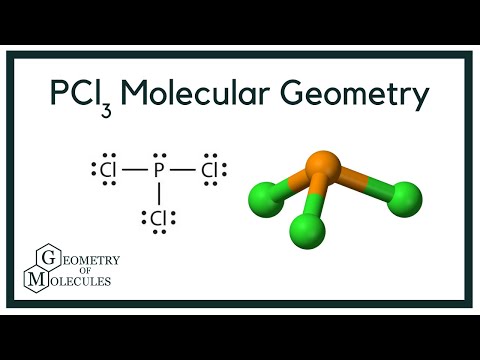
First off, molecular geometry refers to the three-dimensional arrangement of atoms in a molecule. In the case of phosphorus trichloride, we’re looking at a trigonal pyramidal shape. The phosphorus atom sits at the center with three chlorine atoms branching off around it. You can almost imagine a pyramid with chlorine atoms at each corner and phosphorus at the top. The angles between those chlorine bonds are about 107 degrees—this is important because it affects how PCl3 interacts with other substances.
Now, why is this geometry so significant? Well, it influences reactivity. Because of its shape and electron distribution, PCl3 can easily react with many organic compounds. This makes it super useful in creating other chemicals. For example:
- PCl3 is essential for making pesticides.
- It’s also used in the production of flame retardants.
- You’ll find it playing a part in pharmaceuticals too.
So, you see how PCl3 isn’t just sitting around doing nothing! Each time it’s involved in chemical reactions, its shape helps determine what you can create from it.
But let’s not forget that safety is crucial when dealing with these kinds of chemicals. Phosphorus trichloride is toxic and can be corrosive—it’s no joke! Proper handling and safety measures are vital to prevent any accidents.
Thinking back to my college days, I remember working on an experiment using PCl3 for synthesizing some organic compounds. There was this moment when everything went perfectly—like magic! It showed me just how powerful this molecule really is when used correctly.
So yeah, phosphorus trichloride might seem like just another chemical formula on paper, but its molecular structure and reactivity make it a star player in modern chemistry and industry. Whether it’s helping us create vital products or contributing to scientific discoveries, PCl3 has definitely earned its spot in the spotlight!
Understanding Molecular Geometry: Its Significance in Chemistry and Scientific Research
Molecular geometry, you know, is like the shape a molecule takes in space. It’s super important because this shape can influence how molecules interact with each other. Think of it like arranging a bunch of Lego blocks; depending on how you stack them, they can fit together differently and create various structures. The geometry of a molecule determines its properties and reactivity.
Now, let’s take phosphorus trichloride (PCl₃) as our example. This molecule has a pretty interesting shape! It’s classified as trigonal pyramidal. You might be picturing a pyramid with a base of three chlorine atoms and phosphorus sitting at the top. Pretty cool, right? The way these atoms are arranged affects how PCl₃ behaves in chemical reactions.
So, why does the molecular geometry matter? Well, here are some key points to consider:
- Reactivity: The angles between bonds can influence how easily a molecule reacts with others. For PCl₃, the bond angles are about 107 degrees due to the lone pair of electrons on phosphorus pushing down on the chlorine bonds.
- Polarity: Shapes like trigonal pyramidal lead to an uneven distribution of charge—basically giving PCl₃ polar characteristics. This impacts its ability to dissolve in other substances or form strong bonds.
- Biological significance: Many biochemical processes depend heavily on molecular shapes. For example, enzymes have specific shapes that allow them to catalyze reactions efficiently.
- Material properties: In materials science, knowing how molecules are structured helps in creating more efficient materials for tech or medicine.
Understanding this stuff isn’t just for chemists wearing lab coats! It spills into real-world applications too. Take pharmaceuticals: if you design a drug that mimics the structure of a natural molecule by understanding its geometry, you’re closer to making something effective.
The significance stretches beyond just chemistry as well; there’s even implications in environmental science and material engineering! Whether it’s crafting new medicines or understanding climate change through atmospheric chemistry, molecular geometry plays a massive role.
It’s kind of thrilling when you think about how this knowledge impacts everything around us! So next time you’re reading about molecules or glancing at those intriguing chemical formulas, remember there’s neat science behind those shapes—like little puzzle pieces that fit together in fascinating ways.
Understanding the Molecular Structure of Phosphorus Trichloride: A Scientific Exploration
Alright, let’s jump into the world of phosphorus trichloride, or PCl₃, shall we? It might sound super complicated, but don’t worry—I’ll keep it simple.
What is Phosphorus Trichloride?
Okay, so phosphorus trichloride is a chemical compound made up of one phosphorus atom bonded to three chlorine atoms. You can think of it like a little family: phosphorus is the parent and the three chlorines are the kids. They stick together in a very specific way.
Molecular Structure
Now, about that structure—PCl₃ has a trigonal pyramidal geometry. Imagine a pyramid with the phosphorus atom at the top and the chlorine atoms at the corners of a triangle below. Intriguingly, this shape comes from something called lone pairs. Phosphorus has a lone pair of electrons that pushes down on the chlorines. This makes it not just flat like a triangle but more like a pyramid. Pretty cool, right?
Bonds and Angles
The bonds between phosphorus and chlorine are polar covalent. That means they share electrons unevenly because chlorine is more electronegative—basically it has a stronger pull on those electrons. This makes PCl₃ slightly positive on one side (where phosphorus is) and slightly negative on the other side (where all those chlorines are).
Now let’s talk angles! The bond angles in PCl₃ are around 107 degrees. Think of it as being kind of spread out to make room for that lone pair on top.
Why Does This Matter?
You might wonder why we care about this structure, right? Well, phosphorous trichloride plays an important role in various chemical reactions and industrial processes. For example, it’s often used as an intermediate in making pesticides or other chemicals. So understanding its structure helps chemists know how to work with it safely and effectively.
A little story for you: I once heard about someone who was experimenting with PCl₃ for developing new fertilizers. They had to really think about that molecular shape because even small changes in structure can lead to big differences in how things react or behave!
So yeah, understanding the molecular geometry of phosphorus trichloride isn’t just some random science trivia; it opens doors to real-world applications that can impact agriculture and beyond.
Keep those molecules spinning in your mind! There’s always more to discover when you dive into chemistry!
Phosphorus trichloride, or PCl₃ if you want to sound like a chemist, is kind of a big deal in the chemistry world. You see, it’s not just hanging out there; it has this interesting shape that tells you a lot about how it behaves. The molecular geometry of PCl₃ is trigonal pyramidal. Sounds fancy, huh? Basically, what that means is that if you picture the phosphorus atom at the center with three chlorine atoms around it, those chlorines aren’t all in one flat plane. Instead, they form a triangle with the phosphorus at the tip pointing up—like a little pyramid.
So why should you care about this shape? Well, here’s where things get really cool. The molecular geometry affects how substances interact with each other. In this case, PCl₃ is polar because of its shape and the difference in electronegativity between phosphorus and chlorine. This polarity leads to some pretty interesting properties like being an effective solvent for organic compounds and playing roles in various chemical reactions.
But hey, let’s take a step back for a sec. I remember once during my chemistry class when we were learning about these shapes. It was one of those boring afternoons where everyone was half-asleep… until my friend suddenly raised her hand and asked why we even bothered learning this stuff. The teacher smiled and said something along the lines of “Understanding these shapes gives us insight into real-world applications.” That hit home.
For instance, phosphorus trichloride is used to make other chemicals like phosphonates or phosphoric acid—stuff that’s key in fertilizers and flame retardants! So when we joke about chemistry being “just formulas,” we’re downplaying how understanding molecular shapes can solve actual problems out there.
So yeah, next time you’re thinking about some seemingly obscure chemical compound like PCl₃, remember that it’s more than just letters on paper; it’s got relevance! This little trigonal pyramid might be helping feed people or keep our homes safe without us even realizing it. Pretty neat when you think about it!