You know what’s super cool? The shape of a molecule can actually tell you a lot about what it does. I mean, think about it! Take ammonia, for example.
Ever sniffed some cleaning products and thought, “Whoa, that’s intense”? Yeah, that smell is partly due to ammonia (NH3). It’s like the tiny superhero in the world of molecules—small but mighty!
But here’s where it gets interesting. Ammonia isn’t just a random mix of atoms; it has this unique shape that makes it really special. It’s got this pyramidal vibe going on, which helps explain why it’s such a big deal in so many chemical reactions and day-to-day stuff.
So let’s chat about why ammonia’s molecular geometry is not just some textbook thing—it actually affects how this compound behaves in the real world. Curious? Stick around!
Exploring the Molecular Geometry of Ammonia (NH3): A Scientific Perspective
So, let’s talk about ammonia, or as the cool kids call it, NH3. You might have come across it when cleaning or even in fertilizers. But what’s really interesting is its molecular geometry. It’s like the shape of the molecule tells us a whole lot about how it behaves and interacts with other substances.
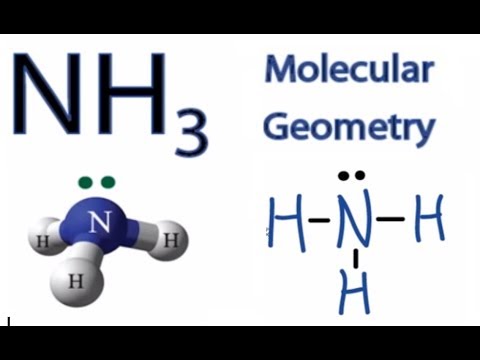
First off, ammonia has a trigonal pyramidal shape. Imagine a pyramid with a triangular base; that’s kind of how NH3 looks, but with one atom at the top and three at the bottom corners. The nitrogen atom is sitting at the center while those three hydrogen atoms are hanging out at the corners of that base.
Now, you probably know that nitrogen has five electrons in its outer shell. But here’s the thing: it only bonds with three hydrogens to form NH3. Why? Well, each of those hydrogen atoms donates one electron to pair up with nitrogen’s unpaired ones—this way they share electrons and create those strong covalent bonds we hear so much about.
But here’s where things get really fun: we’ve got to consider lone pairs! Nitrogen has one lone pair of electrons that isn’t involved in bonding. This lone pair takes up space too and pushes down on those hydrogen atoms, causing them to arrange themselves in a way that makes NH3 stand out from other molecules, you know?
Let’s break down some key points about ammonia’s molecular geometry:
- Bond Angles: The angle between those hydrogen atoms is about 107 degrees. It’s not quite 109.5 degrees like water (which has a tetrahedral shape) because that lone pair repels more strongly than bonding pairs.
- Lone Pairs: Remember that lone pair? It not only helps determine the shape but also physical properties like boiling point and polarity.
- Polarity: Ammonia is polar due to its asymmetric shape and electronegativity differences between nitrogen and hydrogen. This gives it some pretty cool properties when it comes to solubility in water.
Thinking back to my high school days, I remember struggling to grasp why these shapes matter so much until my teacher brought a model kit into class. We built ammonia together, and seeing how everything fit together was an lightbulb moment for me!
In terms of practical applications, knowing ammonia’s geometry helps chemists predict reactions and behaviors in different environments—it’s crucial for things like understanding how fertilizers work or even how certain pollutants behave in our atmosphere.
So there you have it! Molecular geometry might sound all complicated at first glance, but once you break it down into pieces like this—shapes, angles, lone pairs—it all starts making sense in this beautiful dance of chemistry!
Molecular Geometry of Ammonia (NH3): A Comprehensive Scientific Analysis
So, let’s chat about the molecular geometry of ammonia, or NH3. This little molecule is pretty cool, and it has some interesting features that really make it stand out.
First, you gotta know that ammonia consists of one nitrogen atom bonded to three hydrogen atoms. The nitrogen atom sits in the center, while the hydrogen atoms are kind of like the three friends hanging out around it. This setup creates a shape called a **trigonal pyramidal geometry**. Imagine a pyramid with a triangular base; that’s sort of what NH3 looks like.
Now, here’s where it gets a bit more technical but not too crazy! Nitrogen has five electrons in its outer shell, and when it bonds with hydrogen, it shares three of those electrons—one with each hydrogen atom. The nitrogen atom also has a lone pair of electrons that isn’t involved in bonding. This lone pair pushes down on the hydrogen atoms because like charges repel each other (you know how magnets work?). So you end up with this pyramid-like shape instead of a flat triangle.
Why does this matter? Well, the arrangement affects ammonia’s properties significantly. For example:
You can think of it as trying to squeeze into a crowded elevator; you have to adjust your position based on who’s around you! That lone pair basically compresses those bond angles.
Here’s another fun fact: Ammonia’s geometry contributes to its polarity. Because nitrogen is more electronegative than hydrogen (which just means it attracts those shared electrons more), there’s an uneven distribution of charge within the molecule. So yeah, NH3 acts like a tiny magnet—it has a positive side and a negative side—which allows it to dissolve in water quite well!
Anyway, all these little features make ammonia not just interesting but also super useful in real-life applications. It plays key roles in fertilizers and cleaning products because it’s great at reacting with other substances thanks to its polar nature.
So there you have it! The molecular geometry of ammonia isn’t just some abstract idea; it’s all about how those atoms interact and what they can do together!
Understanding the Molecular Geometry of NH3: Insights from Chemistry and Structural Analysis
Molecular geometry sounds all technical and stuff, but it’s really about how molecules are shaped. Let’s talk about ammonia, or NH3, because it’s an interesting case!
First off, the molecular formula NH3 means you’ve got one nitrogen atom and three hydrogen atoms. But what’s cool is how these atoms arrange themselves in space. You see, nitrogen has five valence electrons, and it wants to share some with hydrogen to feel stable. Best way to visualize this is to think of the bonds between nitrogen and hydrogen like a set of hands reaching out for high fives!
Now, because nitrogen makes three bonds with hydrogen, it also has a lone pair of electrons that doesn’t bond with anything. That lone pair really impacts the shape of the molecule! It pushes down on the hydrogen atoms, creating an angle that’s about 107 degrees between those N-H bonds. This arrangement forms a shape called a trigonal pyramidal geometry—kind of like a pyramid with a triangle base.
When scientists analyze these shapes using techniques like X-ray crystallography or computational models, they can see how different forces act inside the molecule. You know how when you’re in a crowded room and everyone is trying to find their personal space? Molecules do that too! The repulsion among electron pairs keeps them as far apart as possible.
So why does this matter? Well, understanding molecular geometry helps explain many properties of ammonia! For instance:
A cool side note: if you ever tried cooking with ammonia (not exactly recommended), you’ll know its pungent smell! That chemical structure affects not just physical traits but also reactivity in various chemical reactions.
So there you have it! Ammonia’s structure isn’t just science jargon; it opens up whole worlds of chemistry insight that impact everything from agriculture to cleaning products. Understanding these shapes helps us appreciate what makes each substance unique!
You know, when you think about the air around us, it’s easy to overlook the incredible little molecules doing their thing. Take ammonia, for example. Its formula is NH3—just three hydrogen atoms bonded to one nitrogen atom. But what’s cool is how this simple arrangement defines its molecular geometry, which plays a huge role in its properties and behavior.
The structure of ammonia is often described as “trigonal pyramidal.” Imagine a pyramid where the nitrogen sits at the top, and the hydrogens form a base on the bottom. It’s like a little pyramid party! This shape happens because of something called “lone pairs.” Nitrogen has a pair of unbonded electrons that push down on those bonded hydrogen atoms, giving that pyramid shape. It’s kind of like squeezing a balloon at the bottom—everything moves up!
I remember my first chemistry class where we got to model molecules with those cute little colored balls and sticks. I was fiddling with these pieces while thinking about how this tiny structure had massive implications in real life. Ammonia isn’t just floating around doing nothing; it’s crucial for fertilizers and even cleaning products. The geometry influences how it interacts with other substances too; that pyramid shape makes it polar, which means it has partial positive and negative ends.
So, yeah, understanding ammonia’s molecular geometry isn’t just academic; it’s about grasping how these tiny building blocks create the world we live in. It’s pretty neat to realize that something so small can have such big effects! Sometimes it blows my mind how all these unseen forces are practically running our lives without us even noticing them!