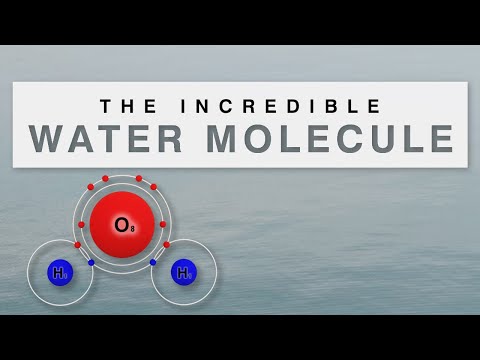
You know that moment when you just can’t figure out why your coffee spills all over the table? Yeah, it’s annoying. But believe it or not, it’s all about the shape of water molecules!
So, water is this weird stuff that seems super simple at first glance. But dive a little deeper, and it gets interesting—like a science party trick! The way those tiny hydrogen and oxygen atoms team up shapes how water behaves. Seriously!
Imagine pouring a glass of water. That’s more than just H2O splashing around; it’s a tale of angles and bonds playing out right before your eyes!
Stick around as we unravel the funky geometry of water and why it matters in our everyday lives. Spoiler alert: it’s not just about coffee—there’s ice skating and climate involved too!
The Impact of Water Molecule Shape on Chemical Behavior: Insights from Molecular Chemistry
So, let’s break down this whole water molecule shape thing. We’re talking about H2O, right? Water is like the superstar of molecules. It’s everywhere and plays a key role in all sorts of chemical reactions and biological processes. But what makes it so special? Well, it’s all about its **shape**—and that shape has a big impact on how it behaves chemically.
First off, the water molecule has a **bent shape**. Imagine holding up your two fingers to form a V—kind of like a peace sign, but not quite. That angle between the hydrogen atoms is about **104.5 degrees**. This bent structure is what gives water some of its unique properties.
You see, each oxygen atom carries a bit more weight in its electrical charge compared to hydrogen atoms. This makes oxygen slightly negative and the hydrogen atoms slightly positive. So because of this difference in electrical charge, which we call **polarity**, water molecules end up attracting each other like magnets!
- Hydrogen bonds are formed due to this polarity. These bonds are pretty weak individually but can create strong interactions when many molecules are involved.
- This leads to some cool things like high surface tension, which lets insects skate on ponds and helps plants draw water from roots.
- Water also has high specific heat capacity, meaning it can absorb lots of heat without changing temperature too quickly—great for moderating climate and helping organisms maintain stable internal temperatures.
Now think about ice! When water freezes, it actually expands because the molecules arrange themselves in a way that takes up more space due to those hydrogen bonds getting locked into place. That’s why ice floats! So you have this fascinating scenario where the shape and bond angles are literally reshaping nature as we know it.
When we get into chemical reactions, that bent shape affects how water interacts with other substances too. Because it’s polar, it can dissolve many ionic compounds and polar molecules easily (that’s why salt dissolves in water). It helps carry nutrients in your body and acts as a solvent for countless reactions—like making your morning coffee!
So yeah, if you ever take a moment to think about how basic water is yet how much it influences our lives and environment—it’s pretty mind-blowing! Those little *H2O* shapes are impacting everything from weather patterns to how our cells function.
To sum it up: The way H2O is shaped isn’t just some abstract detail; it’s crucial for explaining why this molecule behaves the way it does chemically—and believe me, that’s seriously important for life on Earth!
Exploring the Molecular Geometry of H2O: Insights into Water’s Unique Structure and Properties in Chemistry
Okay, let’s talk about water—everyone’s favorite liquid. You probably know it as H2O, but there’s so much going on in its molecular structure that makes it really special. The shape of water isn’t just cute; it actually plays a huge role in how it behaves and interacts with other substances.
First off, the geometry of water is important to understand. Water molecules have a bent shape, kind of like a V. This is due to something called bond angles. The actual angle between the two hydrogen atoms is about 104.5 degrees, which might seem small, but it has big implications for how water acts.
Now, why this bent shape? Well, it’s all about the oxygen atom at the center. Oxygen has two lone pairs of electrons that push down on the hydrogen atoms. This creates that distinct angle we talked about earlier. This unique geometry leads to polar covalent bonds, where one end of the molecule (the oxygen side) carries a slight negative charge and the hydrogen side carries a slight positive charge.
The polarity gives rise to some interesting properties of water! For instance:
- High surface tension: Because water molecules stick together tightly due to these polar interactions, they form a sort of “skin” on their surface.
- Solvent abilities: Water can dissolve many substances—like salt and sugar—because its polar nature helps it pull apart ionic and polar compounds.
- High specific heat capacity: Water can absorb quite a bit of heat before it gets hot. This means climates near large bodies of water tend to be milder because water moderates temperature changes.
I remember learning about this in school and being amazed by how something as simple as a little molecule could have such grand effects on our environment! Like when you’re at the beach and you feel that refreshing coolness from ocean waves—it’s all thanks to these properties!
If we look closer at those hydrogen bonds formed between water molecules (which happen because one molecule’s slightly positive part attracts another’s slightly negative part), we see why ice floats on water. The way these bonds organize when freezing creates an open structure that’s less dense than liquid water. So ice floats—a lifesaver for life below like fish in ponds during winter!
The behavior of H2O goes beyond just forming droplets or making things wet; it’s essential for life as we know it. The molecular geometry impacts everything from weather patterns to biological processes—all because of how this single molecule interacts with others!
This amazing capability for bonding allows nature to create habitats like wetlands or even impacts your daily life when you drink your morning coffee or splash through puddles on your way to work.
You see? Beneath its simple surface, H2O is anything but ordinary! And that bent little shape makes all the difference in shaping our world—literally!
Understanding the VSEPR Shape of H2O: A Comprehensive Guide to Molecular Geometry in Chemistry
Alright, let’s break down the shape of H2O, or water, in a fun and simple way. You see, water is super important for life, but have you ever sat back and thought about its shape? It’s not just a plain old molecule; it actually has a specific structure that affects everything from how it behaves to why it’s so essential for us.
So, first off, let’s talk about VSEPR theory. This stands for **Valence Shell Electron Pair Repulsion**. Sounds kinda fancy, huh? But really, it just means that molecules will take on shapes that keep their electrons as far apart from each other as possible. You got that? Cool!
In water, we have one oxygen atom bonded to two hydrogen atoms. So that’s O plus H2—H2O! The oxygen atom has six electrons in its outer shell, and it shares one electron with each hydrogen atom to form covalent bonds. But here’s the kicker: oxygen also has two lone pairs of electrons that are not involved in bonding. This is where things get interesting.
When you look at the arrangement of those electrons around the oxygen atom, they don’t just hang out randomly. Instead, they push each other away to minimize repulsion. This creates a bent shape or an angle—specifically around 104.5 degrees between the hydrogen atoms! That angle is crucial because it leads to water being polar.
Now you might be wondering: “Why does that even matter?” Well, because of its bent shape and polarity, water molecules are quite good at attracting each other through hydrogen bonding! This gives water some pretty awesome properties like being a great solvent and having high surface tension.
To sum up what we’ve learned about the VSEPR shape of H2O:
- Water’s Shape: Water has a bent geometry.
- Bond Angles: The angle between the two hydrogen atoms is about 104.5 degrees.
- Lone Pairs: Oxygen has two lone pairs that influence its shape.
- Polarity: The bent structure makes water polar which affects its interactions with other substances.
Think back to when you play with those little models made of balls and sticks; this is kind of like what’s happening at the molecular level! So next time you’re sipping on some water or splashing in a pool, remember that tiny little molecules are doing their dance all around you based on VSEPR theory! Pretty wild stuff right?
Water is one of those things you might take for granted, right? I mean, it’s everywhere! You drink it, swim in it, and even just stare at it while zoning out. But have you ever stopped to think about its molecular shape? Yeah, we’re diving into the geeky side of H2O today!
So, here’s the deal: water isn’t just a boring little molecule floating around. Its shape plays a huge part in how it behaves. Picture this: a water molecule consists of two hydrogen atoms and one oxygen atom, which is like a little family reunion but with atoms. These three come together in a V-shape or bent configuration. It’s not like they’re chillin’ perfectly aligned; instead, they’re creating an angle of about 104.5 degrees between those hydrogen atoms. That’s kinda cute, right?
But why does this matter? Well, this angle makes water polar—meaning one end has a bit of a positive charge and the other end is slightly negative. Imagine your best friend and you holding hands but with different vibes; that’s what water molecules are doing! This polarity leads to all sorts of fun behavior: from forming hydrogen bonds that help water stick together (hello, surface tension!) to being an amazing solvent.
I remember when I was a kid trying to mix oil and water for some science experiment—classic mistake! They completely refused to blend because oil is nonpolar while water’s got that strong polarity vibe going on. It was frustrating but also made me fascinated by how the world works on this molecular level.
And here’s another thing that gets me excited: if you look at how ice forms from water, you’ll see this whole geometric dance happening again! The arrangement creates those beautiful crystal shapes because as water cools down, the molecules stick together in a way that takes up more space than when they’re all jumbled up as liquid—hence ice floats! That’s not just cool (pun intended); it actually affects ecosystems and weather patterns.
So next time you sip your drink or splash around in the pool, take a moment and think about those little V-shaped molecules working behind the scenes. Water’s structure is like nature’s magic trick—it explains why it’s such an essential part of life on Earth while being beautifully complex at the same time. Isn’t that kinda mind-blowing?