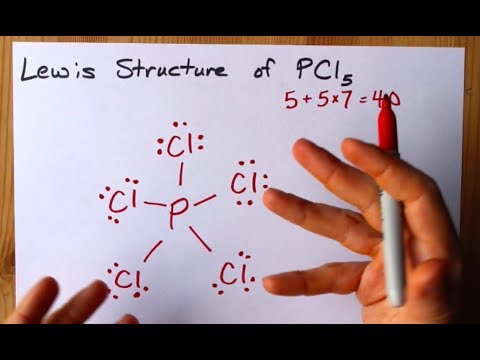
Did you know that some molecules can be a little dramatic? Like, they’ve got personalities! Take phosphorus pentachloride (PCl5), for instance.
You’d think it’s just a boring chemical structure, right? But this one’s actually got some cool tricks up its sleeve. Imagine a party where phosphorus is the life of the gathering, and chlorine’s are the guests—fancy guests! It really knows how to keep things interesting.
So, let’s chat about how PCl5 struts its stuff in the molecular geometry world. You’ll discover why this isn’t your average molecule, but a real showstopper in bonding and structure. And who knows? You might just find yourself looking at molecules with fresh eyes!
Exploring the Structure and Geometry of Phosphorus Pentachloride (PCl5) in Chemical Science
Phosphorus Pentachloride, or PCl5, is one of those molecules that can really make you appreciate chemistry. It’s made up of one phosphorus atom surrounded by five chlorine atoms. Pretty wild, huh?
One of the coolest things about PCl5 is its **molecular geometry**. It has this funky trigonal bipyramidal shape. Imagine a pyramid with a triangular base sitting on top of another pyramid. This setup helps make sure that all the bonds are nice and even, reducing any overcrowding between the chlorine atoms.
When you think about bonding in PCl5, it’s like each chlorine grabs onto phosphorus using what we call covalent bonds. Basically, they share electrons to fill their outer shells, making them more stable. Since phosphorus sits in group 15 of the periodic table, it’s got a bit of extra flexibility to take on five bonds instead of just three—like having a bigger backpack to carry more stuff.
Now, let’s talk about angles! The angles between the bonds are important for understanding how everything fits together. The three chlorines in the equatorial plane form angles of 120 degrees from each other while the two axial chlorines sit above and below this plane at angles of 90 degrees. Picture a merry-go-round with friends—some standing out to the side and others hanging around above or below.
But wait! Have you heard about polarity? Well, PCl5 is nonpolar because its symmetrical shape balances out any dipole moments. If you think about it like a game where everyone is evenly spaced out on a soccer field—the forces kind of cancel each other out.
It’s also interesting that PCl5 can behave differently in various situations. For example, if you heat it up or mix it with certain solvents, it can turn into phosphorous trichloride (PCl3) and chlorine gas! Talk about chemistry shaking things up!
So there ya have it—PCl5 may have five clinging chlorines and fancy geometry, but it’s all in balance. Understanding these structures helps chemists predict how substances will act and interact with each other in reactions or solutions.
In short:
- Structure: Phosphorus atom at the center surrounded by five chlorine atoms.
- Molecular Geometry: Trigonal bipyramidal shape.
- Bonding: Covalent bonds through shared electrons.
- Bond Angles: 120 degrees in equatorial positions; 90 degrees for axial positions.
- Polarity: Nonpolar due to symmetrical shape.
Learning about molecules like PCl5 makes science feel less daunting and way cooler!
Understanding the Molecular Shape of PCl: Insights from Chemistry
Alright, let’s chat about the molecular shape of phosphorus pentachloride, or PCl5. Sounds a bit fancy, right? But hang tight—it’s not that complicated! In essence, understanding how this molecule looks can give us insights into its chemistry and how it reacts with other substances.
So, imagine phosphorus (P) sitting in the center of this structure. It’s like the main character in a movie, and around it are five chlorine (Cl) atoms. Now, these chlorines aren’t just sitting there all haphazardly; they’re arranged in a special way to minimize the tension between them. This arrangement is crucial!
- Molecular Geometry: PCl5 has a trigonal bipyramidal shape. Picture two pyramids stuck together at their bases. Three chlorine atoms form a triangle around the equator of the phosphorus while the other two sit above and below it.
- Bonds: Each P-Cl bond is formed through shared electrons. Phosphorus can make five bonds because it has empty d-orbitals that allow it to hold more than eight electrons overall, which is pretty neat!
- Bond Angles: In this setup, you’ve got angles of 120 degrees between the chlorines around the equator and 90 degrees between those on top and bottom—this keeps everyone happy and balanced.
You know what’s cool? The reason for this specific geometry all boils down to something called valence shell electron pair repulsion theory (VSEPR). Basically, it suggests that electron pairs will spread out as much as possible to avoid repelling each other. So, by arranging themselves as far apart as they can in space, our chlorine friends respect each other’s personal bubbles!
The shape isn’t just for show either. It affects how PCl5 interacts with other molecules. For instance, when PCl5 reacts with water or certain organic compounds, it can transform into different structures altogether! You see? Those angles and shapes play a huge role in chemical reactions.
A little story comes to mind here: I once tried mixing some household chemicals—big mistake! One thing I learned was that even tiny changes at a molecular level could lead to explosions or toxic gases. Understanding molecular shapes helps scientists predict those outcomes before things get wild!
This discussion on PCl5‘s geometry might seem academic but it’s super important for real-world applications like making certain types of plastics or other chemicals. When chemists know how molecules behave based on their shapes, they can design reactions more effectively.
The next time you hear about phosphorus pentachloride—perhaps from a friend who’s majoring in chemistry—you’ll have an idea about its unique shape and why it’s significant. Understanding these things connects deeper into our everyday lives than we might think!
Understanding the Geometry of PCl5 Through VSEPR Theory in Chemistry
Alright, let’s chat about the geometry of PCl5 using VSEPR theory. Sounds complex, but I promise it’s not as hard as it might seem. So, what is PCl5? Well, it’s a molecule made up of one phosphorus (P) atom and five chlorine (Cl) atoms. That’s where the name comes from: P for phosphorus and Cl for chlorine.
Now, VSEPR stands for **Valence Shell Electron Pair Repulsion**. It’s a fancy way to say that molecules take shape because the electrons around the central atom repel each other. You see, electrons are negative, and like charges repel. So basically, these electron pairs want to get as far away from each other as possible.
In the case of PCl5:
1. Central Atom: Phosphorus is your central atom here. It has five bonding pairs of electrons because it forms five bonds with the chlorine atoms.
2. Electron Configuration: Phosphorus has an electron configuration of 1s² 2s² 2p⁶ 3s² 3p³. In simpler terms, this means it can handle more than four bonds thanks to its ability to expand its octet by utilizing d orbitals—basically a “party” with more friends!
3. Geometry: The arrangement here is what’s called **trigonal bipyramidal**. Imagine an equatorial plane where three Cl atoms are sitting like the points on a triangle, and then two others above and below this plane—that’s your bipyramid shape!
4. Angles: So what about the angles? The bond angles between those three Cl atoms in the equatorial plane are about 120 degrees apart—think of them as spreading out for comfort! The bond angles between these equatorial ones and those sitting at the top or bottom? They’re at 90 degrees—perfectly efficient!
I remember learning this in chemistry class; it felt like connecting dots on a paper rather than just memorizing facts. It made me realize how cool it is that shapes are so crucial to understanding how molecules behave.
5. Polarity: Another interesting aspect here is polarity! Since phosphorus is less electronegative than chlorine, PCl5 ends up being a nonpolar molecule overall despite having polar P-Cl bonds due to its symmetrical shape.
So why does all this matter? Well, understanding molecular geometry helps us predict how substances interact chemically—and that’s key when designing reactions or figuring out how materials will behave together in different environments.
In short: PCl5 offers great insight into how we can use VSEPR theory to understand shapes in chemistry! You follow me so far? This stuff gets exciting once you realize how much shapes affect reactions and properties in real life!
So, let’s chat about PCl5, or phosphorus pentachloride for those who enjoy the full names of things. It’s one of those molecules that gives you a pretty neat glimpse into how atoms can dance together to create something bigger.
Imagine phosphorus as a cozy little center, surrounded by five chlorine atoms like friends at a party. The structure is actually shaped like a trigonal bipyramid. Sounds fancy, right? Basically, it means you’ve got three chlorine atoms hanging out in a flat plane around the phosphorus and two more above and below that plane. You gotta picture it: like a table with some guests standing up on either end. This arrangement helps minimize repulsion between those negatively charged electron pairs—like when friends stand evenly spaced to avoid any awkward bumps!
Now, bonding-wise, it gets even more interesting! Phosphorus has five valence electrons, while each chlorine brings seven to the party. They all come together to share electrons through covalent bonds. But here’s where it gets fun: phosphorus can get a little greedy (in a good way!) and use its empty d orbitals to form those extra bonds with chlorine—something you don’t see every day with other elements. It’s like inviting extra buddies over when there’s room at the table!
I remember back in school when we first tackled topics like this in chemistry class; my teacher whipped out a model of PCl5 and I was just mesmerized watching how everything fit together—and how understanding these structures could explain reactions we studied later on. It felt like uncovering secrets about how nature works.
But let’s not forget that this isn’t just academic stuff—it has real-world implications too! PCl5 is used in making other chemicals and can even act as a chlorinating agent in various reactions. Knowing its geometry helps scientists predict these behaviors, which is super essential in research and industry.
So yeah, whether it’s bonding styles or shapes, PCl5 gives us major insights into molecular interactions—a whole world that unfolds just by looking at how elements come together! And isn’t it awesome to think about all the intricate designs nature has just waiting for us to discover?