So, picture this: you’re at a party, and someone brings up carbon tetrachloride. Everyone looks blank, right? But hear me out! This stuff is actually super interesting.
Carbon tetrachloride, or CCl4 for short, isn’t just some chemical name that sounds fancy. It’s a liquid that used to be in tons of household products. Yeah, like those old-school cleaning solutions! But now it gets a bad rap because of its potential health risks.
But what’s cooler is how it looks at the molecular level. Imagine little atoms forming a team—perfectly arranged and working together like a well-rehearsed dance squad. That’s the molecular geometry of CCl4!
Stick around as we break down what makes this molecule tick, and trust me, it’s gonna be pretty wild!
Molecular Geometry of Carbon Tetrachloride (CCl4): A Scientific Analysis
Alright, let’s chat about carbon tetrachloride, or CCl4. It’s one of those compounds that you might not think about daily, yet it serves as a cool example to understand molecular geometry. So, what exactly defines the shape of this molecule?
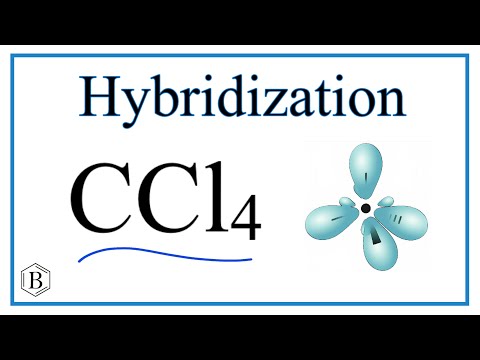
First off, the structure of CCl4 is tetrahedral. Imagine a pyramid with a triangular base sitting in the center of a ball. The carbon atom is at the center with four chlorine atoms at each corner of the tetrahedron. This arrangement minimizes repulsion between electron pairs surrounding the central atom, which gives it that neat and balanced shape.
The reason for this tetrahedral shape lies in something called VSEPR theory, which stands for Valence Shell Electron Pair Repulsion theory. Basically, this theory tells us that electrons want to stay as far apart from each other as possible because they carry the same negative charge. So they spread out to form this tetrahedral structure.
- The bond angles in CCl4 are about 109.5 degrees. This angle reflects how these atoms hang out around carbon.
- This cool shape contributes to its non-polarity. Since chlorine atoms pull on shared electrons more than carbon does, you’d expect some polar character. But because of the symmetrical arrangement, their effects cancel out!
- CCl4‘s tetrahedral symmetry makes it really useful for certain applications like being a solvent and even in fire extinguishers!
A little story here! Once I was working on a school project and accidentally spilled some CCl4. It was traumatic watching my model dissolve! But hey, that taught me just how powerful this compound can be when used appropriately.
Chemistry is never just black and white; there’s always something interesting happening underneath. For instance, although we don’t use CCl4 as much today due to its harmful effects on ozone layer depletion, its geometry plays an essential role in understanding molecular shapes overall.
The bottom line? The molecular geometry of carbon tetrachloride teaches us not only about how molecules fit together but also about broader concepts in chemistry like polarity and reactivity. Each molecule has its story—and CCl4‘s tetrahedral tale is definitely worth knowing!
Understanding the Molecular Geometry and Structural Properties of Carbon Tetrachloride (CCl4) in Chemistry
So, let’s chat about carbon tetrachloride, or CCl4, if you want to get all chemistry-savvy. It’s a pretty cool molecule with some unique stuff going on at the atomic level.
First off, carbon tetrachloride consists of one carbon atom and four chlorine atoms. You got that? The carbon’s sitting in the center, while those four chlorines are like the arms of a clock pointing out in every direction. This setup is crucial for understanding how the molecule behaves.
Now, the molecular geometry of CCl4 is described as tetrahedral. What this means is that if you could look at it from a distance, it kinda looks like a pyramid with a triangular base. This shape happens because of something called electron pair repulsion. The electron pairs around the central carbon want to be as far apart from each other as they can get—like when you’re trying to avoid your friend’s annoying dance moves at the club!
Here’s where things get interesting:
Another thing you should know is that every C-Cl bond in this molecule is a single bond. So, it’s not like they’re sharing more than one pair of electrons; they’ve got their setup just right for stability.
Now let’s talk about some crucial properties too. CCl4 is nonpolar due to its symmetrical structure—this means that even though chlorine is more electronegative than carbon, all those bonds cancel each other out when you look at the whole molecule. Basically, it doesn’t have any positive or negative ends sticking out.
And here’s an interesting tidbit—
Just imagine it: hundreds of gallons swirling around machines helping keep things cool! However, we have to be careful; it can be harmful to health and toxic for our air if it’s released into the environment.
So there you have it! Carbon tetrachloride isn’t just another chemical formula floating around; it’s got some serious style with its tetrahedral geometry and cool properties. Understanding how these molecules work helps us appreciate everything from cleaning clothes to how different substances interact in nature—makes chemistry feel a bit like magic sometimes!
Understanding the Molecular Geometry of CCl4: Bent or Linear?
So, let’s chat about carbon tetrachloride, or CCl4 for short. When you hear the term “molecular geometry,” it might sound a bit fancy, but it’s really just about how those atoms are arranged in space. And, here’s where it gets interesting: is CCl4 bent or linear?
To kick things off, CCl4 has a **tetrahedral molecular geometry**. That’s a big word, but it essentially means that the carbon atom is at the center with four chlorine atoms surrounding it. Imagine a pyramid with a square base; that’s kind of what we’re working with here!
Now, let’s break this down further. Carbon has four valence electrons and needs to bond with chlorine to fill its outer shell — which they do by sharing electrons. Each chlorine atom brings one electron to form a single bond with carbon. So now you’ve got four bonds in total.
But here’s something crucial: **molecular shape isn’t just about bonding**; you also have to think about lone pairs of electrons (those that don’t take part in bonding). If there were any lone pairs on the central atom—like if we were talking about water (H2O), which has two bonded hydrogen atoms and two lone pairs—the angle would change and give us a bent structure instead.
However, that’s not what’s happening with CCl4. All those chlorine atoms snugly bond around carbon without any lone pair interference.
You might wonder why all this matters—like what does molecular geometry even do? Well, it affects things like polarity and how substances interact with each other! In case of CCl4, its symmetrical tetrahedral shape actually makes it **nonpolar** despite having polar bonds between carbon and chlorine. This is because the dipoles balance out.
So when someone tries to tell you that CCl4 is bent or linear—just nod along politely! Because no! It’s tetrahedral all the way through. This kind of organization plays into some pretty cool science stuff down the line too—like how solvents work in chemistry or even industrial applications where they used to use CCl4 as a cleaning solvent before we figured out how harmful it could be.
In short: Carbon tetrachloride = tetrahedral = not bent or linear. Clear as day? I hope so!
Alright, let’s chat about carbon tetrachloride, or CCl4 for short. It’s one of those molecules that seem a little daunting at first, but once you break it down, it’s not so complicated.
So, carbon is a little superstar in the molecular world. It can bond with a bunch of different elements and create all sorts of structures. In CCl4, carbon is hanging out with four chlorine atoms. And here’s where it gets interesting: the way these atoms are arranged is what we call molecular geometry.
Imagine you’re at a family gathering with your siblings and cousins—all around the dinner table. If you were to picture carbon as the host sitting in the middle, its four chlorine friends would be like chairs evenly placed around the table, making sure everyone has enough space and feels comfortable. This specific arrangement is called tetrahedral geometry.
Tetrahedral means that if you could see this molecule in three dimensions (like I hope you can picture it), each chlorine atom sits at the corner of an imaginary tetrahedron while carbon is right at the center. It’s almost like they’re holding hands in a big hug but making sure no one’s squished.
Thinking back to my school days, I remember sitting in chemistry class and feeling totally lost when we got into shapes and bonds. But then my teacher shared this really cool analogy about how molecules are like tiny dancers on a stage—always trying to find balance while performing their routines. That just clicked for me!
In terms of bonds—CCl4 has single covalent bonds between carbon and each chlorine atom. So basically, they’re sharing electrons like trading cards; each chlorine grabs onto one from carbon to form a bond. The result? A stable molecule that doesn’t lose its cool too easily!
And here’s another fun fact: because of this symmetry and even distribution of charge around CCl4, it’s nonpolar! That means it doesn’t have distinct positive or negative ends like other molecules do. Kind of fascinating how something so seemingly simple can have such interesting properties…
So yeah, understanding CCl4’s molecular geometry isn’t just about memorizing facts; it’s actually about grasping how atoms dance together to create stability—and maybe even finding ways those tiny parties impact our lives today!