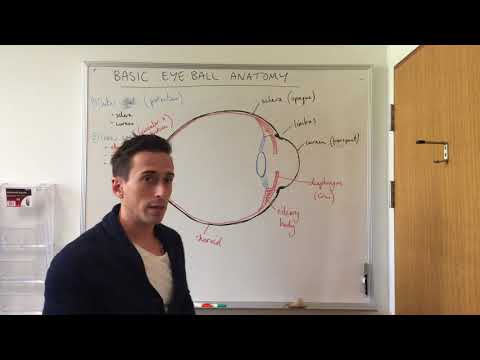
You ever hear someone say “the eyes are the window to the soul”? I mean, what does that even mean, right? But it kinda makes sense when you think about how much we rely on our eyes for everything!
Imagine trying to navigate life without them. Walking around bumping into things? No thank you! Our eyes are super cool, filled with all sorts of amazing parts that work together to help us see this beautiful, wild world.
So, let’s take a little trip through the anatomy of those peepers of yours. Seriously, it’s like a mini science adventure right in your face! You’ll be surprised by just how much is going on behind those lovely irises. Ready to roll?
Understanding the Eye: The 7 Key Structures Explained in Order
Alright, let’s talk about the eye. It’s a pretty amazing piece of anatomy, for real. When you look at someone, or they look at you, there’s a lot going on beneath the surface. So here are the seven key structures of the human eye, all laid out in a way that makes sense.
The Cornea
Think of the cornea as the eye’s window. It’s the clear dome that covers the front part of your eye. This structure helps focus light as it enters your eye—kind of like how a camera lens works. The cornea also protects your eye from dirt and germs, sort of like a superhero shield!
Aqueous Humor
Right behind the cornea is this watery fluid called aqueous humor. It fills the space between the cornea and the lens. This fluid not only nourishes these structures but also maintains pressure to keep your eye firm. Imagine it like having tire air pressure, just enough so things stay in shape and work smoothly.
The Lens
Next up is the lens—this flexible part adjusts to help you focus on things that are near or far away. When you want to see something close, like reading a book, your lens changes shape to make sure that image hits just right on your retina (we’ll get to that in a minute). Over time, though, some people might have trouble with their lenses getting stiff—hello presbyopia!
The Iris
You know that colorful part of your eye? That’s the iris! It’s basically what gives your eyes their unique color—blue? Green? Brown? The iris controls how much light comes into your eye by changing size; it gets smaller in bright light and larger in dim light. Think of it like adjusting curtains based on how sunny it is outside.
Pupil
The pupil is actually an opening in the middle of your iris—not a separate thing! When light hits it, its size changes depending on surrounding light levels. If it’s dark, it opens wide to let more light in; if it’s bright out, it squints down smaller so you’re not blinded by all that brightness!
Retina
Now we get to one of my favorite parts—the retina! Located at the back inside of your eyeball, this layer is filled with photoreceptors called rods and cones. Rods are great for low-light situations while cones handle color vision during daylight hours. Everything we see gets converted into signals here before heading off to be processed by our brains.
Optic Nerve
Finally, there’s the optic nerve—the messenger that takes visual information from your retina straight to your brain where all those signals get interpreted into what you’re actually seeing! Without this little guy doing its job right, you wouldn’t really register any images at all—you’d be seeing blackness instead.
So there you have it: **the cornea**, **aqueous humor**, **lens**, **iris**, **pupil**, **retina**, and **optic nerve**—all working together as an intricate system so you can take in everything around you every single day! Pretty neat stuff when you think about how these parts play vital roles without us even realizing it most times!
Exploring the 12 Key Structures of the Eye: A Comprehensive Guide in Ocular Science
Alright, let’s chat about the eye! You know, our eyes are like little windows to the world. They’re super complex and packed with structures that help us see. Oh, it’s mind-blowing when you think about all the parts working together. Here’s a breakdown of those key structures and what they do.
The Cornea is the clear front layer of your eye. It’s like a protective shield that covers the eye. It helps to focus light as it enters. So whenever you look at something, think about your cornea going to work right away!
Then there’s the Aqueous Humor, which is this watery fluid behind the cornea. It provides nutrients and keeps your eye inflated—kind of like blowing air into a balloon!
Moving on to the Iris, you might recognize it because that’s the colorful part of your eye! The iris controls how much light gets through by adjusting the size of the pupil, which is just a hole in its center—but more on that later!
Now let’s talk about the Pupil. It may look simple, but it plays a huge role in vision. Depending on light conditions, it can expand or shrink to regulate how much light hits your retina.
Next up is the Lens. This transparent structure sits behind the pupil and changes shape to help focus images sharply on our retina. It’s like adjusting a camera lens for clarity.
The Vitreous Humor is another jelly-like substance filling up most of your eyeball behind the lens. It helps maintain shape while allowing light to pass through easily.
Now we get to our main event: Retina! Located at the back of your eye, this thin layer contains millions of photoreceptor cells called rods and cones. Rods help us see in dim light, while cones are all about color and detail. Imagine seeing a beautiful sunset—thank your retina for capturing that moment!
Afterwards comes the Macula, which is part of the retina responsible for central vision and color perception. It’s where you’ll find a high concentration of cones—basically where all those details pop out!
Surrounding all this action is something called Sclera, which forms the tough white outer coating of your eyeball. Think of it as protective armor keeping everything inside safe.
Now don’t forget about that amazing little spot called Optic Nerve. It carries visual information from your retina straight to your brain so you can process what you’re seeing—like magic!
Lastly, there are those tiny structures called Ciliary Muscles. They attach to our lens and help change its shape for focusing on objects near or far away—it works kinda like zooming in or out when you’re taking photos.
All these pieces fit together perfectly! When you blink or move your eyes, they all coordinate smoothly without missing a beat? Seriously impressive if you ask me!
So next time you’re looking around at life’s wonders—like clouds drifting by or leaves rustling—you’re not just seeing with an eye; you’re experiencing with an intricate assembly of structures working in harmony! Isn’t anatomy just wild?
Exploring the Structure and Function of the Human Eye: A Comprehensive Analysis in Vision Science
The human eye is like a little miracle of nature, isn’t it? Seriously, think about it. This small organ can capture light and transform it into the images we see every day. Let’s break down its structure and how it works, piece by piece.
The Anatomy of the Eye
First up, let’s talk about the major components of the eye:
- Cornea: This is the clear front layer of your eye. It acts like a camera lens, bending light to help focus it.
- Iris: The colorful part you see! It controls how much light enters by adjusting the size of the pupil.
- Pupil: The black circle in the middle of your eye. It opens and closes to let in more or less light depending on conditions.
- Lens: Behind the pupil, this flexible structure fine-tunes focus so you can see objects clearly at different distances.
- Retina: This is where magic happens—light hits the retina at the back of your eye and gets turned into signals that go to your brain.
- Optic Nerve: Think of this as the communication line—it sends those signals from your retina to your brain.
Pretty neat, huh? Each part plays a crucial role in helping us see.
The Functionality
Now that we’ve got that down, let’s dive into how these parts work together.
When light enters through the cornea, it’s bent towards the lens. The lens changes shape (thanks to some cool muscles) to adjust for whatever you’re looking at—whether it’s that book on your lap or a distant mountain. Then, once that light has been properly focused, it reaches the retina, which is loaded with special cells called photoreceptors. There are two types: cones and rods.
- Cones: These are for color and details! You can think of them as high-definition vision gear—perfect for bright environments.
- Rods: They work better in low light. They’re all about helping us see when it’s dark outside—like when you’re trying to find your way at night!
Once those photoreceptors do their thing and convert light into electrical signals, they send these through
the optic nerve. Your brain then takes this information and makes sense out of it—you know, transforming those signals into what you actually see.
A Little Anecdote
I remember one night walking through a park with friends. It was pitch dark apart from some distant street lamps. I felt like I was relying so much on my rods just to navigate without tripping over anything! Funny enough, even though I couldn’t see much detail or color, my eyes were still doing their job pretty well because they adapted quickly to low light.
The Importance of Eye Health
Keeping our eyes healthy is super important too! Regular check-ups can help catch issues like glaucoma or cataracts before they become big problems. Things like eating carrots (which do help with vision!) or using protective eyewear can also make a difference.
In short, our eyes are complex tools that not only allow us to navigate our world but also enrich our experiences with color and depth. So next time you look around, remember all those incredible components working together behind what you’re seeing!
You know, the human eye is pretty remarkable. I mean, just think about it for a second: we can see colors, shapes, and all these little details around us. It’s like having a front-row ticket to the greatest show on Earth—life itself. So, let’s chat about how this amazing organ works.
The eyeball might look simple from the outside—just a round ball—but it’s packed with intricate parts that work together like a finely-tuned orchestra. You’ve got the cornea in the front. That’s the clear cover that protects everything inside and helps focus light. It’s kind of like your favorite window that you always want to keep clean because it lets in beautiful views.
Then there’s the pupil, which is basically an opening in your eye that expands or contracts to let more or less light in. Ever been in a dark room after being outside? Your pupils go all big and round as they try to gather as much light as possible! Sometimes I find myself just staring at someone when their pupils expand; it’s fascinating how our bodies react.
And let me not forget about the lens—it sits right behind the pupil, doing its thing by focusing light onto the back of your eye where all the magic happens! Honestly, this part reminds me of those old-school cameras with adjustable lenses; it’s just so cool how we can change focus quickly on different things.
Now, once light hits the retina at the back of your eye, it’s transformed into signals sent to your brain through something called the optic nerve. It’s like sending little messages across town but way faster! Have you ever tried to convey something important and had that rush of adrenaline because you want them to get it? That’s what these signals are doing—conveying images like they’re racing towards someone who needs them!
And then there’s one more thing—the whole process is done while we blink automatically without even thinking about it! Seriously, every time you blink, you’re cleaning and moisturizing your eyes without any effort at all—like having an automatic windshield wiper for your vision!
Once I was watching my little niece play outside; she was trying to catch fireflies. She’d squint her eyes then suddenly widen them when she spotted one glowing under a bush! Seeing her excitement reminded me how our eyes aren’t just functional—they’re tied so closely to our emotions and experiences.
So yeah, next time you admire a sunset or marvel at nature around you, take a moment and appreciate all those tiny components working together seamlessly. The human eye isn’t just an organ; it’s a gateway to experience this colorful world around us—one glance at a time!