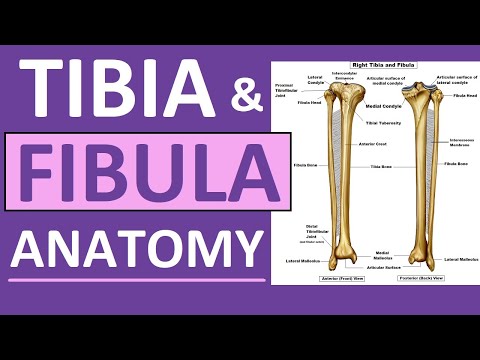
You know what’s funny? I once thought my shinbone was just called the shinbone. Turns out, it has a fancy name: the tibia! Wild, right?
This little bone plays a huge role in keeping us upright and moving around without looking like a total mess. Seriously, imagine trying to walk if your tibia wasn’t there—it’d be chaos!
So, let’s talk about this crucial player in our anatomy. We’ll break down what it does and why you should care about it. Spoiler alert: you really should! Buckle up for some tibia talk that might just make you appreciate your bones a whole lot more.
Understanding the Structure and Function of the Tibia in Human Anatomy
The tibia, often called the shinbone, is one of the most crucial bones in your body. You know, it’s the larger and stronger of the two bones in your lower leg, the other being the fibula. The tibia plays a vital role in supporting your weight and allowing movement. So, let’s break it down!
First off, let’s talk about its structure. The tibia is shaped like a long cylinder with three main parts:
This is where the tibia meets your knee joint. It has two prominent surfaces called condyles that interact with the femur (the thigh bone) to form your knee.
This is the long middle section of the bone. It’s designed to withstand a lot of stress, thanks to its sturdy structure and shape.
Down at this end, you’ll find a part that connects with the ankle bones. This area forms what we call the ankle joint.
Now, you might be curious about its function. Well, apart from being a key player in weight-bearing activities like walking or running—seriously, think about how much pressure that puts on it!—the tibia also serves as an anchor for muscles and ligaments.
Muscle attachment is super important for movement. Several muscles that help flex and extend your foot are attached to various points on the tibia through tendons. For instance, when you walk or run, those muscles pull on the tibia to create movement at your ankle.
Also worth mentioning are some common injuries related to this bone. Ever heard of shin splints? They happen when there’s inflammation along or around your tibia due to overuse—very common among runners!
What’s fascinating is how well our body heals itself too; if you ever break your tibia (which isn’t fun), that broken piece will eventually heal into a solid bone again after some time with proper care. It’s like nature’s own little repair shop!
And hey, while we’re at it—keeping your bones healthy matters! Things like calcium intake and regular exercise play big roles in making sure your tibia stays strong throughout life.
So there you have it! The tibia isn’t just another boring bone; it’s an essential part of our anatomy helping us move around everyday!
The Main Function of the Tibialis Muscle: An Overview in Human Anatomy and Physiology
The tibialis muscle is like a hidden hero in your leg that plays a crucial role. This muscle actually comes in two parts: the **tibialis anterior** and the **tibialis posterior**. They both help keep you moving, but in slightly different ways.
The Tibialis Anterior
This muscle is right on the front of your shin, and it’s important for lifting your foot when you walk or run. Imagine walking down the street and tripping over your own feet. That’s often because the tibialis anterior isn’t doing its job well enough! It helps prevent dragging your toes and ensures a smoother stride.
Functions of Tibialis Anterior
- Dorsiflexion: This fancy term just means lifting your foot up towards your shin. You do this all the time, especially when you’re walking or climbing stairs.
- Stability: It helps stabilize your ankle by controlling how far it can tilt forward.
Now, here’s a little story: I was once hiking with friends when one of them tripped on a rock and fell flat on his face. Turns out he didn’t lift his foot high enough due to weakness in his tibialis anterior. He laughed it off, but it made me think about how easily we take these muscles for granted!
The Tibialis Posterior
Now let’s switch gears to the tibialis posterior, which hangs out behind your shin bone (the tibia). This muscle has its own set of important jobs.
Functions of Tibialis Posterior
- Plantarflexion: This means pointing your toes down, like when you stand on tiptoes or push off while running.
- Arch support: It plays a key role in maintaining that lovely arch in your foot, which is super important for balance and movement.
- Ankle stability: It helps stabilize the ankle joint when you’re walking or jumping—think about how many times you rely on it every day!
Both muscles work together seamlessly. When you walk or run, they’re like a well-coordinated dance team — tibialis anterior lifts while tibialis posterior pushes off.
If either muscle gets weak or injured, you could end up with problems like **shin splints** or even issues with flat feet. It’s kind of wild how one little thing can throw everything off balance!
So there you have it! The **tibialis muscles** are vital for keeping us active and balanced. Next time you take a step or leap into action, remember these unsung heroes working behind the scenes to keep things smooth!
The Role of the Tibia in Human Locomotion: Is Walking Possible Without It?
Let’s get straight into it. The tibia, also known as the shinbone, plays a massive role in how we move around. Without it? Well, walking would be a real challenge, to put it mildly. Let me break this down for you.
The tibia is the larger of the two bones in your lower leg. It connects your knee to your ankle. Imagine trying to balance on just your fibula, the thinner bone next to it. Not very stable, right?
- Weight-bearing support: The tibia is seriously strong; it bears most of your body weight when you walk or run. Without it, you’d struggle to stay upright!
- Mobility: When you walk, the tibia helps in moving your foot forward with each step. It’s like a key player in a sports team; without that player, the game changes drastically.
- Knee and ankle connection: The tibia forms crucial joints with both the knee and ankle. It helps synchronize movements between these joints when you’re striding or even just standing still.
Let’s think about this more personally for a sec. Picture yourself going for a walk at sunset—feeling that cool breeze and hearing leaves crunch underfoot. Now imagine doing that without a tibia! You’d probably just end up hopping awkwardly or maybe even rolling around on your side trying to find some balance.
The anatomy of the tibia includes sections called the proximal end (near your knee) and distal end (near your ankle). Each section has its own job to do in keeping everything functioning smoothly.
- Proximal end: This area has flat surfaces that connect with the knee joint allowing for flexion and extension as you bend and straighten your leg.
- Distal end: This part fits into the ankle joint helping stabilize that area during movement.
If we’re being honest here, walking without a tibia sounds pretty grim. You wouldn’t just need crutches; you’d likely require some serious assistance or an entirely new way of moving through life altogether!
This all leads us to one solid conclusion: while our bodies are amazing at finding workarounds—for example, using prosthetics or relying more on other muscles—the reality is that walking as we know it today relies heavily on having those shin bones intact and doing their job well.
So, next time you’re strolling down the street or running up a flight of stairs, give some love to those tibias! They’re doing more for you than you might ever realize.
Alright, so let’s talk about the tibia. You know, that big bone in your lower leg? It’s the one that really takes a beating when you run, jump, or just try to keep yourself upright. Honestly, I remember when I was a kid and took a nasty fall while playing soccer. I ended up sitting on the sidelines with ice wrapped around my leg, thinking about how easy it is to take this bone for granted.
So here’s the deal: the tibia, or shinbone as some folks call it, is not just any bone. It’s like a sturdy pillar that supports your weight. It connects your knee to your ankle and is one of the two bones in your lower leg—the other being the fibula. While the fibula is kind of like a sidekick—thinner and not bearing much weight—the tibia is right there holding it all together.
If we break down its structure a bit (pun intended!), you have this flat top part called the plateau that forms the knee joint. It’s designed to fit snugly with your thigh bone, which helps make walking and running possible without feeling like you’re wobbling all over the place. Plus, there are these cool little bumps at either end of the tibia called condyles—think of them as cushions that help with shock absorption when you land on your feet.
And don’t even get me started on its function! The tibia plays an essential role in movement and balance. Every step you take relies on this bad boy doing its job properly. Without it? Well, good luck walking without hopping or rolling over!
Beyond just being a supporting actor in our movement saga, it also houses marrow—a soft substance inside bones that’s crucial for making blood cells. So hey, even though it’s mainly known for keeping us upright when we walk from couch to fridge (or wherever), there’s more going on inside than meets the eye.
In essence, appreciating our body parts goes beyond knowing their names or where they are; it’s about understanding how they work together like pieces of an orchestra! So next time you’re out running or playing sports (be careful out there!), remember to give a little nod to your tibia—it’s got quite a story to tell!