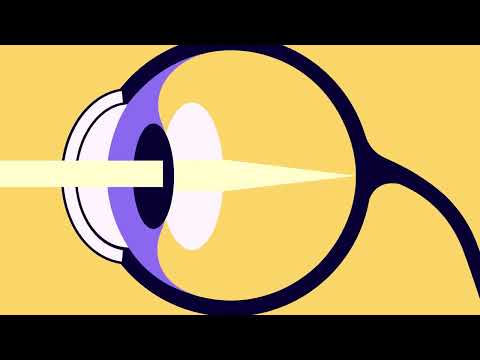
Did you know that your eye can distinguish about 10 million different colors? Seriously, that’s like being a human rainbow!
But here’s the kicker: your eye isn’t just a simple camera that captures images. It’s this crazy intricate design, like a Marvel superhero in the world of biology.
Imagine trying to explain how your favorite song works to a toddler. You’d start with the basics, right? Well, that’s kinda how we’ll explore the eye.
From the way light bends when it hits your retina to how those signals get transformed into images in your brain—it’s wild! You might find yourself seeing things differently once you get into all this eye science. So, grab a snack and let’s unravel this neat little mystery together!
Understanding the 30-30-30 Rule: A Scientific Approach to Eye Health and Digital Eye Strain Prevention
So, let’s chat about this 30-30-30 rule. You know, it’s one of those simple yet effective ways to tackle the strain our eyes feel from staring at screens all day. Ever notice how your eyes get tired or even a bit sore after too much screen time? Yeah, it’s a real thing called digital eye strain. And that’s where this rule comes in handy.
The essence of the **30-30-30 rule** is pretty straightforward. Basically, for every **30 minutes** you spend looking at a digital screen, take a break and look at something **at least 30 feet away** for about **30 seconds**. It’s like giving your eyes a little vacation!
But why does this work? Well, when we fixate on our screens, our eyes focus on that close-up image for too long. This causes the muscles in your eyes to get tired—kind of like running a marathon without stopping to catch your breath. When you look away at something farther away, you’re allowing those eye muscles to relax and reset.
You might be wondering what kinds of things to look at during those breaks. Seriously, just glance out the window at some trees or maybe even some clouds floating by in the sky. Or if you’re indoors, check out a poster or any part of the room that’s not so close up.
Now let’s break down some key points about why following this rule matters:
- Reduces Fatigue: Staring closely can lead to discomfort and fatigue over time.
- Prevents Dry Eyes: When you’re focused on screens, you tend to blink less often.
- Improves Focus: Giving your eyes a chance to rest can actually help improve concentration when you return.
Funny story: I remember once I was deep into an article online for way too long—probably over an hour without blinking much! When I finally looked up, everything around me seemed blurry for just a second; it was like my vision was telling me “Hey buddy, give me a break!”
Oh! And if you think it’s too simple or doesn’t really matter—think again. Eye health is super crucial nowadays since we tend to be glued to our gadgets more than ever before. The science behind how our eyeballs work is intricate and beautiful; they’re not just lenses getting used all day long.
Instead of ignoring those little signs from your body (like headaches or tired eyes), try sticking with this 30-30-30 plan regularly! Your peepers will thank you later—you’ll probably find yourself feeling better overall—and who doesn’t want that?
Understanding the Evolutionary Biology Behind the Development of the Human Eye
So, the human eye is like this incredible piece of biological art, right? It’s fascinating to think about how it evolved over millions of years. The story of our eyes is a bit like that classic tale of trial and error, survival and adaptation.
First off, let’s talk about the basics: the eye isn’t just a single structure; it’s made up of several components working together. You’ve got the cornea, which helps focus light; the lens, that fine-tunes everything; and then there’s the retina at the back—where all that visual magic happens.
Now, here’s where it gets cool! The evolution of eyes began with simple light-sensitive cells in ancient organisms. Imagine tiny creatures swimming around in primordial oceans. These cells could tell if it was light or dark. Over time, these primitive sensory cells started to clump together and form rudimentary “light organs.” At this point, they could detect direction and intensity of light—like a baby step toward more complex vision.
And here’s a fun fact: some animals have developed all sorts of eye types! Think about squids and octopuses! Their eyes are quite similar to ours but evolved through completely different pathways. Instead of being built from inside out like ours, theirs formed from outside in—a whole different game plan!
As creatures became more complex and their lifestyles adapted to new environments, eyes also underwent changes. For instance:
- Optical refinement: Early eyes were blurry blobs; over time they evolved lenses made from flexible proteins for clearer vision.
- Color vision: Many species developed color perception to help them find food or avoid predators.
- Movement detection: Eyes became better at spotting motion—a big deal for survival!
Take vertebrates—their eye design is super neat! Consider fish with lateral line systems for sensing movements in water versus mammals needing sharper focus for hunting on land. Each environment shaped their visual needs!
It’s also worth mentioning how evolution isn’t a straight line—it’s more like a tangled web. Sometimes eyes even got reduced or lost altogether if that worked better for survival! Like cave-dwelling fish have lost their sight over generations because they don’t need it in total darkness.
But here comes an emotional twist! Picture our ancestors exploring vast savannas under bright sunlight. Having great eyesight meant seeing prey from afar or spotting predators before they got too close—pretty important stuff if you want to survive! Those with stronger eyesight had better chances to thrive, leading to gradual enhancements over countless generations.
The human eye today, while amazing, isn’t perfect either—it has its quirks! We’ve all experienced things like blind spots or issues with nearsightedness or farsightedness because our evolutionary journey wasn’t aimed at creating perfection but rather adaptability.
So there you have it—a peek into how we got these beautiful windows to our world! From ancient single-celled organisms to today’s incredibly intricate human eye—it’s all about evolution playing its slow hand through nature’s workshop!
Exploring the Human Eye: Nature’s Marvel and Its Significance in Science
The human eye is like a little miracle, don’t you think? It’s not just a simple organ; it’s this incredibly complex structure that lets us see the world around us. Imagine trying to take in all those beautiful colors, the shapes of trees, or even the expressions on your friend’s face—so much magic happens, and it all starts with the eye.
First off, let’s chat about its structure. The human eye has several key parts, each playing its own role in helping us see. You’ve got your cornea, which is the clear front part—kind of like a protective window. Then there’s the pupil, which adjusts in size to let light in. The amount of light determines how much we can see clearly. You follow me?
Next up is the lens, which focuses that light onto the retina at the back of the eye. The retina contains these special cells called photoreceptors—there are rods for low light and cones for color vision. It’s wild! These cells convert light into signals that travel along the optic nerve to your brain. Just like that! Your brain then interprets those signals as images.
It’s crazy to think about how small this process seems when you break it down in steps; yet it happens in an instant! From catching a glimpse of sunlight filtering through leaves to spotting a shooting star at night—the eye adapts and works non-stop.
Now let’s talk about color vision. The cones I mentioned before come into play here. Humans typically have three types of cone cells: red, green, and blue-sensitive cones. Mixing signals from these cones allows us to perceive millions of colors! Isn’t that just mind-blowing? Some folks have more cones or different types altogether, which leads to color blindness or enhanced color perception.
But wait—there’s more! Ever heard of depth perception? That’s when your eyes work together to give you a sense of 3D space. Each eye captures a slightly different image due to their distance apart, and your brain combines these images to help gauge how far away things are. It’s why we can instinctively catch a ball thrown from across the room!
And get this: our eyes are also crucial for more than just seeing stuff; they’re key players in science too! Research into how our eyes function has led to breakthroughs in technology and medicine—from advancements in optical devices like glasses or contact lenses to treatments for conditions like cataracts or macular degeneration.
Just think back to when I was little—I remember my first pair of glasses vividly! I was watching my friends play outside without being able to see details clearly until I put them on… suddenly everything transformed from blurry blobs into vibrant shapes full of life! That experience really made me appreciate how essential our eyes are.
So here we are—navigating through this fascinating world with our incredible eyes as our guides. They’re not just organs; they’re windows into nature’s masterpiece and reflections of science’s ongoing journey into understanding human biology better every day.
In short:
- Structure: Cornea, pupil, lens, retina—all work together.
- Color Vision: Three cone types allow millions of colors.
- Depth Perception: Two eyes create 3D space awareness.
- Scientific Significance: Eye research informs tech & medical breakthroughs.
The human eye is both simple and profoundly intricate—a true wonder worth celebrating every single day!
You know, the human eye is one of those things that just blows your mind when you stop and think about it. Seriously! I remember this one time in school, we were learning about how our eyes work, and I was just sitting there, staring at everyone else, thinking about how cool it is that we can see all this stuff around us. Like, how can a simple organ do so much?
So, let’s break it down a bit. Your eye kind of looks like a little camera. You’ve got the lens that focuses light, the iris which controls how much light comes in—sort of like adjusting the settings on your phone’s camera—and then there’s the retina, which takes all that light and turns it into images your brain can understand. It’s wild to think about how much goes on just to let you see your favorite pizza or the beautiful sunset.
But here’s where it gets really nifty: not only do eyes help us see colors and shapes, but they also allow us to perceive depth and movement. Think about it—when you’re catching a ball or trying to avoid stepping on that unexpected Lego piece in the dark… yeah, that’s all thanks to this intricate design!
And here’s an interesting tidbit: did you know that some animals have way better eyesight than we do? Like eagles can literally spot their dinner from miles away. It’s humbling to realize just how special our own eyes are while also being part of this broader picture of life on Earth.
Plus, there are those moments when you catch someone’s gaze at just the right time and everything else fades away for a second—it’s like a connection without words! That makes all this science feel even more profound.
So yeah, next time you’re outside enjoying the colors of fall or watching your pet do something silly, take a moment to appreciate not just what you see but how complex and amazing your eyes really are. They’re pretty magical when you think about it!