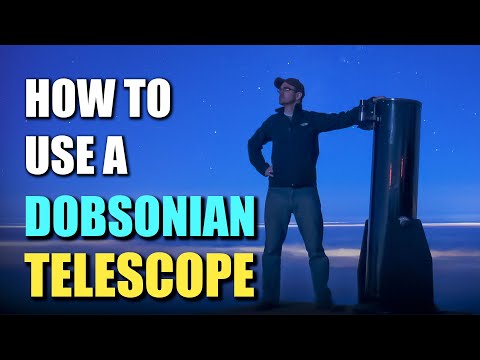
You ever tried to find a star on a cloudy night? Yeah, it’s pretty much like searching for your keys in the fridge. Frustrating, right?
Now, imagine you have this awesome telescope that makes all those twinkling gems in the sky pop out like they’re saying, “Hey there!” That’s where the Skywatcher 8 Dobsonian Telescope comes into play.
It’s not just any old telescope; it’s like having your personal VIP pass to the universe. Seriously, with this baby, you’ll see craters on the moon and rings around Saturn as if you’re peeking through a cosmic window.
So, if you’re ready to take your stargazing game up a notch and feel like an astronomer in your own backyard, let’s chat about what makes this telescope so cool!
Exploring the Limitations of Dobsonian Telescopes for Astrophotography: A Scientific Perspective
Dobsonian telescopes are popular among amateur astronomers, mostly thanks to their simplicity and affordability. Designed by John Dobson in the 1960s, they’re essentially a Newtonian reflector on a simple base that allows easy movement around the sky. However, if you’re thinking about jumping into astrophotography with a Skywatcher 8 Dobsonian, you should probably consider some limitations.
One big issue is tracking accuracy. Dobsonians are awesome for visual observations but not built for long-exposure photography. When you want to capture those stunning night sky images, even a slight move can blur your shot. Most Dobsonians don’t have motorized mounts that keep up with celestial objects as they move across the sky. So when you’re trying to snap pictures of things like distant galaxies or the Moon, you might find it tricky to keep them centered in your frame.
Another limitation comes from light pollution. If you’re stargazing in an area where lights from streets and buildings drown out the stars, capturing deep-sky objects will be a challenge. You’ll need a dark site or at least some filters to help reduce that light washout. Those deep-sky photos often require different setups than what Dobsonians offer.
Then there’s aperture size. While an 8-inch mirror is decent for gathering light and seeing brighter objects, astrophotography often benefits from larger apertures to capture fainter details. If you’re serious about getting those jaw-dropping shots of nebulae or star clusters, you may find yourself wanting more than what an 8-inch can give you.
Vibration issues can also play a role when you’re taking photos. Any little bump or shake—from wind or even your own movements—can mess up long exposures. Some people might use weights or sandbags to stabilize their setup, but it’s just another thing to think about.
And lastly—don’t forget about image processing. While this isn’t specific just to Dobsonians, it’s important when it comes to astrophotography in general! You’ll likely need software that can help stack and edit your images after you’ve taken them. This extra step adds another layer of complexity compared to simply viewing through the eyepiece.
To sum things up:
- Tracking: Most Dobsonians lack motorized tracking systems.
- Light Pollution: Capturing faint objects gets tough in bright areas.
- Aperture Limits: An 8-inch mirror may not be enough for all targets.
- Vibration: Stability is key; any shake can ruin clear shots.
- Post-Processing: Editing is essential for great astrophotos.
In the end, if you’re really keen on using an 8 Dobsonian for astrophotography, it’s not impossible! Just know you’ll face some challenges and might spend a little extra time tinkering with your setup and techniques before achieving that perfect shot of the cosmos. Keep experimenting and enjoying the journey!
Exploring the Cosmos: Viewing Galaxies with a Dobsonian Telescope
So, you’re thinking about taking a peek at the cosmos, huh? That sounds amazing! There’s just something enchanting about gazing up at the night sky. It’s like looking back in time and seeing the light from stars that’s traveled for millions, or even billions, of years to reach us. One cool way to get started on this galactic adventure is with a **Dobsonian telescope**.
Basically, a Dobsonian telescope is your ticket to some serious stargazing. It’s a type of reflecting telescope that’s super user-friendly. The design makes it easy to move around and set up. You might have heard folks say it’s great for beginners—well, they’re not wrong!
When you look through one of these beauties, you can see **galaxies**, which are massive collections of stars, gas, dust, and dark matter. The thing is that galaxies can be hard to spot with just your eyes because they’re so far away. With a Dobsonian telescope though? You’ll be blown away by what you can see!
Here’s what makes spotting galaxies with a Dobsonian so special:
- Simple Setup: You don’t need to be an expert to set this up. Just point and look!
- Stability: The mount is rock solid—you want your telescope steady when you’re viewing something that could be millions of light-years away.
- Amazing Light Gathering: Reflectors capture more light than smaller scopes allowing you to view fainter objects.
Let’s say you’re curious about the **Andromeda Galaxy**, which is our closest neighbor in terms of galaxies! It’s about 2.5 million light years away (mind-blowing, right?). On a clear night, with your Dobsonian aimed right and maybe a little patience (remember—it doesn’t hurt to enjoy the journey), you’ll see it as a fuzzy patch in the sky.
But here’s where it gets even cooler! If you’re using something like an **8-inch Skywatcher Dobsonian**, you’ll have enough power to not just see Andromeda but might also catch glimpses of its satellite galaxies.
Now picture this: You’re out under the stars with friends or family. You’ve got snacks and blankets spread out while taking turns peeking through the scope. Everyone’s buzzing with excitement as they spot brilliant nebulae or clusters—totally connecting with those ancient stars they’re looking at together.
You know how everyone loves stories? Well, each galaxy has its own story too—like how our own Milky Way collided with other galaxies over billions of years to become what it is today.
You’ll find that many people get hooked on stargazing because every time you look through your scope; it’s like plunging headfirst into uncharted territory! Each galaxy offers new wonders waiting for discovery—it’s almost poetic if you think about it.
So whether you’re gazing at stars or wanting to lose yourself in swirling galaxies, using a Dobsonian telescope really feels like holding space in your hands. It’s all within reach if you’re willing to explore!
Exploring the Disadvantages of Dobsonian Telescopes in Astronomical Research
So, let’s chat about Dobsonian telescopes and why they might not be the go-to choice for serious astronomical research. I mean, they definitely have their fans—like the whole community of stargazers who love their simplicity and ease of use. But there are some disadvantages we should consider when you’re thinking about serious celestial studies.
First off, Dobsonians are generally known for their large apertures. This is great for gathering light, but it comes with some trade-offs. Their size makes them less portable. If you want to haul it out to a dark sky location, you might need a friend or two to help carry it! You feel me?
Another thing is the mounting system. Dobsonian telescopes often have this simplistic alt-azimuth design, which can be a bit limiting for research purposes. Basically, while it’s easy to point and track objects in the sky when they’re moving slowly, trying to follow something like a comet? It can get tricky. You may end up chasing something that’s darting across your field of view.
Tracking accuracy can also be an issue. Unlike equatorial mounts that can follow celestial objects as Earth rotates, Dobsonians just don’t have that capability built in. So you’re left constantly adjusting your aim manually, which isn’t ideal if you’re trying to capture data or images over longer periods.
Aperture loss at higher magnification is another concern. When you crank up the power on a Dobsonian—trying to see finer details—you might actually start losing clarity instead of gaining it because of atmospheric turbulence or optical aberrations in the telescope itself. For serious astrophotographers or researchers hunting down fine details in galaxies or nebulae? This could be a deal-breaker.
You know what else? The accessory options. While some creative folks make their own gadgets and upgrades for Dobsonians, they often don’t come with fancy tracking systems or advanced filters right out of the box compared to other telescope types tailored specifically for research.
An emotional memory comes to mind; I remember my buddy who was super pumped about his new Dobsonian setup. He had this dream of capturing images of Saturn’s rings and spent hours outside under the stars only to find out that tracking by hand was more annoying than he thought! Frustrating moments like those really highlight how certain features matter when diving deep into astronomy.
So yeah, while Dobsonian telescopes are fantastic for casual stargazing and enjoying what the universe has to offer, they do come with these limitations when it gets serious. If you’re gearing up for some real astronomical research, you might want to check out different telescope types that allow for better tracking and higher magnifications without sacrificing quality.
So, you know when you’re lying on the grass, staring up at the night sky, and you feel that magical connection with the universe? Yeah, that’s stargazing for you. It’s an experience that can really blow your mind. But let me tell you, it’s like a whole different ball game when you’ve got a telescope in hand—like the Skywatcher 8 Dobsonian telescope, for example.
I remember one night I took this telescope out to a friend’s backyard. We set it up, and honestly, it felt like we were prepping for an expedition into outer space. The excitement was palpable! Once we pointed it toward the stars, something incredible happened. The craters on the Moon popped into view so clearly; I swear I could almost see Neil Armstrong’s footprints! Totally surreal!
The thing about using a Dobsonian telescope is that they’re super user-friendly. It’s all about simplicity with these guys. You just point and look—no fussing around with complicated gadgets or settings. So even if you’re new to this whole astronomy scene, you can totally jump in and start exploring right away.
One of my favorite moments that evening was spotting Saturn. Wow! It looked so stunning through the lens; those rings were just breathtaking! It reminded me of how vast our universe is and how tiny we are in comparison.
But wait—let’s not overlook those quiet moments when you’re just sitting there with friends or family. You share stories under the stars while looking through a telescope that connects us all to something greater than ourselves. It’s kind of humbling but also exhilarating at the same time.
Investing in something like a Skywatcher 8 Dobsonian takes your stargazing experience up another notch or two (or three!). Suddenly, you’re not just an observer—you become part of an adventure filled with laughter and awe as you explore distant galaxies together.
In short, if you’ve got even a hint of curiosity about what lies above us, getting your hands on a good telescope can really transform those casual nights spent gazing into cosmic wonderlands into full-on celestial journeys. And who wouldn’t want that?