You know that feeling when you’re trying to figure out if two Netflix shows are related? Like, you see actors pop up in both, and you just can’t resist piecing it together. That’s a bit like what scientists do with DNA sequences!
Now, here’s the kicker: there’s this cool algorithm called Smith-Waterman that helps with that puzzle. Imagine it as a superhero sidekick for researchers, diving deep into sequences and finding similarities.
This isn’t just some nerdy math talk; it’s about understanding life at a molecular level. So, grab your favorite snack and let’s unravel how this algorithm is shaking things up in the world of biology!
Advanced Smith-Waterman Algorithm Calculator for Optimizing Sequence Alignment in Bioinformatics
So, let’s talk about the **Smith-Waterman Algorithm**. You might not have heard of it unless you’re deep into the bioinformatics rabbit hole, but it’s like a superstar when it comes to comparing biological sequences. Basically, this algorithm helps scientists figure out how similar DNA, RNA, or protein sequences are to each other. And trust me, that can tell you a lot about their functions or relationships!
First off, what does this algorithm actually do? Well, it optimizes **local sequence alignment**. Picture trying to find the best match between two strings of letters that represent biological sequences. The Smith-Waterman Algorithm breaks that down into smaller pieces and finds the most relevant alignments. It’s like searching for a needle in a haystack but finding all the best needles along the way.
Now, here’s where things get interesting: advancements have been made to create advanced Smith-Waterman calculators. These calculators use sophisticated techniques to speed up the process without losing accuracy. They can handle massive datasets! Imagine having millions of sequences to compare – these advanced versions work through them much quicker than simpler models.
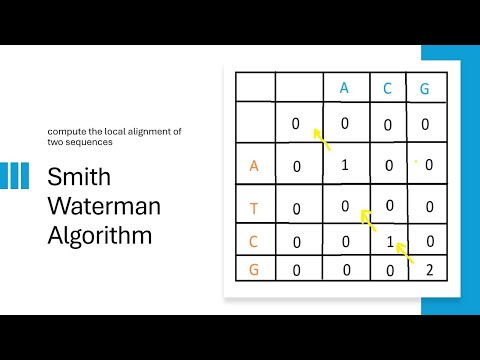
But how does it work? The algorithm assigns scores based on matches and mismatches and includes penalties for gaps in sequences. It builds a matrix where each cell represents a score for aligning portions of these sequences. The fun part? You trace back through this matrix to determine the optimal alignment path.
And just so you know, there are several key points about these advancements:
Now you might ask yourself why all this matters? Well, accurate sequence alignment is essential for tasks such as identifying genes associated with diseases or figuring out evolutionary relationships between different species. For example, consider two species that look alike but may have crucial genetic differences; understanding those differences through effective alignment is key!
In sum, while the Smith-Waterman Algorithm has been around for a bit now, its enhancements keep pushing bioinformatics forward! Whether it’s speeding up calculations or making results more accessible, these advancements help scientists answer complex questions in biology more efficiently than ever before!
Understanding the Smith-Waterman Algorithm in Computational Biology: Detailed Explanation and Solved Example
Alright, let’s chat about the Smith-Waterman algorithm. It’s a big deal in computational biology, especially when it comes to comparing biological sequences like DNA or proteins. Seriously, if you ever wondered how scientists figure out how closely related different species are, this is part of the magic behind that!
What is the Smith-Waterman Algorithm? In simple terms, it’s an algorithm used for local sequence alignment. This means instead of trying to compare two sequences from start to finish, it looks for the best possible match within smaller segments. Think of it like finding a missing puzzle piece that fits perfectly into a little part of your picture instead of trying to jam the whole piece in.
How does it work? Imagine you have two strings of DNA:
– Sequence A: AGCTGAC
– Sequence B: GCTAGT
The algorithm sets up a grid where each sequence runs along one axis. Then, it scores matches and mismatches by assigning points. Matches get a positive score (like +2), while mismatches or gaps might get a negative score (like -1). If you spot a perfect letter match between the two sequences, you score high; if they don’t match? Not so much!
This scoring helps build up scores in each cell of your grid until you find the absolute best local alignment. Now let’s break down the process:
- Create a scoring matrix: Set your rows and columns based on your sequences.
- Assign scores: For each cell in this matrix, calculate based on previous cells.
- Traceback: Once you’ve filled out your grid, you find where the highest score is and trace back to see which letters contributed to that score.
So what happens in our example? Well, the scoring might look something like this:
1. Initializing our matrix starts with zeros.
2. As we go through both sequences, we’ll fill out scores based on matches at each step.
3. Eventually, after inserting everything into our grid and working through it step-by-step—matching G’s with G’s and so forth—you land on a perfect local alignment.
Say you got this nifty result:
– From Sequence A: GCT
– From Sequence B: GCT
Yup! That’s your alignment.
But why does this matter? Well, being able to align these sequences helps scientists understand evolutionary relationships and predict functions for genes or proteins whose roles we don’t fully grasp yet. It’s like reading nature’s instruction manual!
In summary, if you’re ever curious about how scientists align genetic information or research evolutionary biology at its core level—remember the Smith-Waterman algorithm sailing smoothly through those complex waters! It’s all about finding those local gems amid longer sequences—fitting tiles together perfectly!
Exploring the Smith-Waterman Algorithm: A Comprehensive Example in Computational Biology
The Smith-Waterman algorithm is one of those cool pieces of tech that really changed the game in computational biology. It’s all about sequence alignment, which, in the simplest terms, means putting DNA, RNA, or protein sequences next to each other to find out how they might be related. You know when you try to piece together a puzzle? That’s a bit like what the algorithm does but with biological data.
So here’s what you need to know: this algorithm works by comparing sequences and finding the best possible match, or alignment, between them. It’s kind of like a scoring system. Each time it finds a match—like an “A” lining up with another “A”—it gets points. But if things don’t match up perfectly? Well, then there are penalties. Think of it as a game where you want to maximize your score!
Let’s break down how it works. Imagine we have two sequences:
– Sequence A: ACTG
– Sequence B: ACG
When you align them using Smith-Waterman, you start filling out a grid or matrix. Each cell in that grid represents the score for aligning parts of the sequences.
Here’s where it gets interesting! For each cell filled in, you either take your current score from above, left, or diagonal (which checks if there was a match) and add or subtract points as necessary.
Let me give you an example with our sequences:
– If you compare A from both sequences (match!), you’d get positive points.
– But if an “A” aligns with “C” instead (oops!), that would mean a mismatch and lead to losing some points.
Once you’ve filled out the entire matrix, the highest score will tell you where the best alignment occurs. That high point is essentially saying “Hey! This part of the sequence is aligned super well!”
Now here’s why this matters so much: understandings relationships between genes can lead us down paths for researching diseases, developing medicines, or even tracing evolutionary lines—how cool is that? You’re literally piecing together bits of life itself.
But here’s a twist: Smith-Waterman can be super detailed but also slow when comparing long sequences because it looks at every possibility before deciding on the best alignment. There are faster methods out there like BLAST for more massive databases but hey, when accuracy matters most? Smith-Waterman shines.
In essence, while there are many ways to look at biological data these days—the Smith-Waterman algorithm continues to be one of those foundational tools helping biologists solve puzzles about life itself!
Okay, so sequence alignment might sound super technical, but it’s really just about matching up sequences of DNA, RNA, or proteins to figure out how similar they are. It’s sort of like trying to find the similarities between you and your best friend’s taste in music—like you both love rock but in different decades.
Now, let’s talk about this Smith-Waterman algorithm. This thing is a real game-changer in bioinformatics. Imagine you just had a huge fight with your bestie over whose music playlist is better—awkward, right? But then you sit down together and start finding all the songs you actually agree on. That’s kind of what the Smith-Waterman algorithm does; it takes two sequences and finds the best possible matches between them.
The cool part is that this algorithm looks for local alignments—meaning it doesn’t just take the whole sequences as a whole but rather sniffs out the best parts that line up well together. Picture yourself scrolling through your old texts with your friend and laughing at all those inside jokes you shared—that’s what this algorithm does; it highlights where things connect beautifully.
But here’s where it gets emotional for me: I remember the day my grandmother shared her family recipes with me. She’d talk about how each ingredient was carefully chosen, like a perfect sequence that combined to create something special. Just like those ingredients coming together, the Smith-Waterman algorithm brings out relationships in biological data that might not be obvious at first glance.
There are some compromises when using it though—it can be slow if you’re comparing really long sequences. It’s like when you’re trying to pick a movie for movie night: sometimes narrowing down choices can take longer than watching the actual film! Still, researchers have tweaked this method over time, making it faster and more efficient without losing its essence.
So yeah, advancements in sequence alignment through algorithms like Smith-Waterman show us how much connections matter—not just in biology but also in our daily lives and relationships too. It’s fascinating to think how technology helps us uncover these hidden links between life forms on a molecular level while reminding us of our own human connections.Who knew scientific algorithms could hit so close to home?