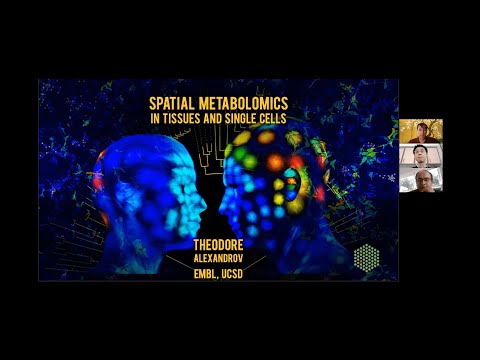
Alright, imagine this: you just took a deep breath after running up a flight of stairs, and suddenly, your brain starts buzzing with thoughts. “What’s going on in my body right now?” you wonder. Seriously, it’s like a microscopic party happening under your skin!
Now, here’s the kicker—there are countless tiny molecules going about their business in your tissues. They’re like little workers bustling around with different jobs. Some are building blocks for your cells, while others are there to signal when something’s not quite right.
That’s where spatial metabolomics comes into play. Sounds fancy, huh? But it’s super cool! Basically, it’s all about mapping out these molecules in biological tissues to see what they’re doing and where. Think of it like creating a treasure map of your body—only instead of gold, we’re hunting for the secrets hidden in our cells.
So buckle up! We’re about to dig into this fascinating world together and find out how scientists are peeking inside our tissues. You ready? Let’s go!
Spatial Metabolomics: Advanced Molecular Mapping Techniques for Analyzing Biological Tissues
Spatial metabolomics is like a treasure map for scientists, helping them find and understand the molecules in biological tissues. Imagine you’re going on a hike, and you have a map that shows exactly where to find all the cool stuff, like waterfalls and hidden caves. Spatial metabolomics does that for molecules!
What does it involve? Well, let’s break it down a bit:
So, why is this significant? Let’s say you’re studying the brain. Different regions have different functions, right? Spatial metabolomics can show how various neurotransmitters are distributed across brain areas. Amazing! You could discover how certain conditions affect these distributions or even reveal potential targets for new treatments.
A cool example of this is research done on plants. Scientists have used spatial metabolomics to see how nutrients move through plant tissues when they’re under stress from drought or disease. By mapping the location of metabolites involved in stress responses, they can figure out which pathways might be altered.
But it’s not all smooth sailing; there are challenges too! The technology requires expensive equipment and can be quite complex to analyze. Data interpretation needs strong computational skills since you’re dealing with tons of information all at once!
In sum, spatial metabolomics opens up whole new worlds in science by showing us not just what molecules are there but also where they live within biological tissues. With more research in this area, we could unlock better understandings of health and disease—who wouldn’t want that?
Advancements in Spatial Metabolomics: Mapping Molecular Distribution in Biological Tissues
Spatial metabolomics is like holding a magnifying glass over the tiny worlds inside our tissues. Imagine trying to find a specific Lego piece in a huge pile of blocks; that’s sort of what scientists do when they want to understand how different molecules are spread out in biological samples.
When you think about metabolomics, you’re really diving into the study of metabolites—those small molecules that are the byproducts of biochemical processes. Now, traditional metabolomics usually gives us an average reading from a sample, kind of like taking one big scoop of soup and trying to guess all its flavors. What’s super cool about spatial metabolomics is that it lets us see where those molecules hang out in tissues. This is crucial because the location can tell us so much about how they behave or interact.
So, why does this matter? Well, consider cancer research. Tumors aren’t just blobs; they have zones with different characteristics and metabolic profiles. By mapping metabolites in this way, scientists can identify which areas are more aggressive or resistant to treatment. For instance, some parts might be thriving due to high nutrient levels while others could be starved for resources. This info could lead to better-targeted therapies.
To get technical for a second—there’s a variety of techniques involved here, like **mass spectrometry** and **imaging mass spectrometry** (IMS). Mass spectrometry can tell you what’s there, but IMS allows you to see where everything is located on the tissue slice. It’s like getting a beautiful postcard picture rather than just seeing some words on it.
Another technique you might hear about is **NMR spectroscopy** (nuclear magnetic resonance). It’s good for figuring out molecular structures and concentrations right within tissues too! Imagine being able to analyze someone’s liver while they’re still alive—that’s pretty neat!
But these high-tech methods come with challenges. For one thing, preparing samples needs precision—one wrong move can mess with the data completely. Also, interpreting all those results can be overwhelming because there’s so much information packed into tiny spots.
Researchers are working hard on improving these technologies every day though! They’re developing better algorithms and software for analyzing spatial data quickly and accurately. Plus, combining spatial metabolomics with other technologies like proteomics (which studies proteins) creates a big picture view of biological functions.
So yeah, advancements in spatial metabolomics really open up stuff that we’re only beginning to understand! They allow scientists not just to ask “what” but also “where” when it comes to metabolism within cells and tissues—a game-changer for understanding health and disease at unprecedented levels!
Advancements in Spatial Metabolomics: Mapping Molecular Landscapes within Brain Tissues
So, let’s talk about spatial metabolomics. It’s a pretty cool area of science that focuses on understanding how small molecules in our bodies behave and interact, especially in places like brain tissues. Imagine if you had a map of your favorite city, showing not just the streets but also where the coffee shops, parks, and art galleries are located. That’s what spatial metabolomics does—but for the molecular landscape inside our brains!
Now, what exactly do we mean by metabolomics? Well, it’s basically the study of metabolites, which are tiny chemical compounds produced during metabolism. They’re kind of like the end products of all those complex processes happening in your body. In simple terms, they help you figure out what your cells are doing.
One huge advancement in this field is the ability to visualize these metabolites within specific regions of brain tissue. It used to be super challenging to see where these molecules were hanging out. Now, with sophisticated techniques like mass spectrometry imaging and laser ablation, scientists can literally see where different metabolites are located in the brain.
Here’s a little on how it works:
- Mass Spectrometry Imaging: This fancy term involves using mass spectrometers to measure the mass-to-charge ratio of ions from tissues. It allows researchers to create detailed maps showing where various molecules are situated.
- Laser Ablation: This technique lets scientists remove tiny sections of brain tissue for analysis without disturbing surrounding areas. You can think of it as using a laser scalpel to peek into specific spots.
These methods have totally changed how we view brain tissues. For instance, researchers can spot changes in metabolite distributions that might relate to conditions like Alzheimer’s disease or stroke. If someone has Alzheimer’s, certain metabolites might cluster unnaturally or disappear altogether from particular parts of the brain.
A personal story comes to mind here—a friend once shared how their grandmother struggled with memory loss before being diagnosed with Alzheimer’s. It’s heart-wrenching because they felt powerless watching someone they loved change so drastically. Advances like spatial metabolomics could one day lead us to earlier diagnostics or even treatments that hold some hope against such diseases.
Another exciting point is that spatial metabolomics isn’t just about disease; it also helps us understand healthy brain function better! For example, when studying neurotransmitter dynamics—these chemicals that help transmit signals between neurons—we get clearer insights into how they operate in real-time during tasks like learning or memory retrieval.
In short, advancements in spatial metabolomics allow us not only to see molecular landscapes within brain tissues but also offer promises for new diagnostic tools and therapies down the line. So next time you’re sipping coffee at your favorite shop—or park maybe—think about all those little molecules working hard behind the scenes in your body!
Spatial metabolomics, huh? It’s kind of a mouthful, but it’s an exciting area in science that’s all about understanding how molecules behave in living tissues. Imagine walking through a bustling city. Each street, building, and corner has its own vibe, right? That’s sort of what spatial metabolomics does for biology—it helps us map out the “streets” of metabolism in different cells and tissues.
I remember this one time in college when I was really struggling with my biochemistry class. We had to visualize metabolic pathways using drawings and diagrams. It felt so abstract! But now, with tools like spatial metabolomics, scientists can actually see how these pathways play out in real life. It’s like moving from a dull book to an immersive video game where you can see everything unfold right before your eyes.
So here’s the deal: when researchers use spatial metabolomics, they’re basically capturing the distribution of small molecules—like metabolites—within tissues. These little guys are crucial because they tell us about the health and function of cells. Think of them as tiny messengers carrying information about what’s going on in every nook and cranny of your body. By mapping them out, scientists can find out how diseases develop or progress. This could totally change how we approach things like cancer treatment or even metabolic disorders.
Now picture this: let’s say you’re looking at a slice of tissue under a microscope, right? Instead of just seeing blobs that represent groups of cells—not super informative—you’d get a detailed map showing where every molecule is hanging out. You’d spot areas where certain metabolites pile up or disappear altogether. Those patterns say a lot more than just numbers on a sheet; they tell stories about what each part is doing.
But it’s not all rainbows and butterflies; there are challenges too! The techniques can be super complex and require some serious technology to get it all done accurately. Still, as scientists work through these hurdles, it feels like we’re unlocking secrets that have been hidden for ages.
In essence, spatial metabolomics isn’t just about mapping molecules; it’s about understanding life at its most tiny level—the stuff that makes up who we are. So when you think about your body next time you’re tackling some tough homework or going for that run, remember there’s a whole world of tiny molecules working hard behind the scenes! Every little bit counts in this elaborate dance of life.